Heritage Analysis: The Round Shield of Mühlberg – A Synthesis of Power, Adornment, and Spiritual Meaning
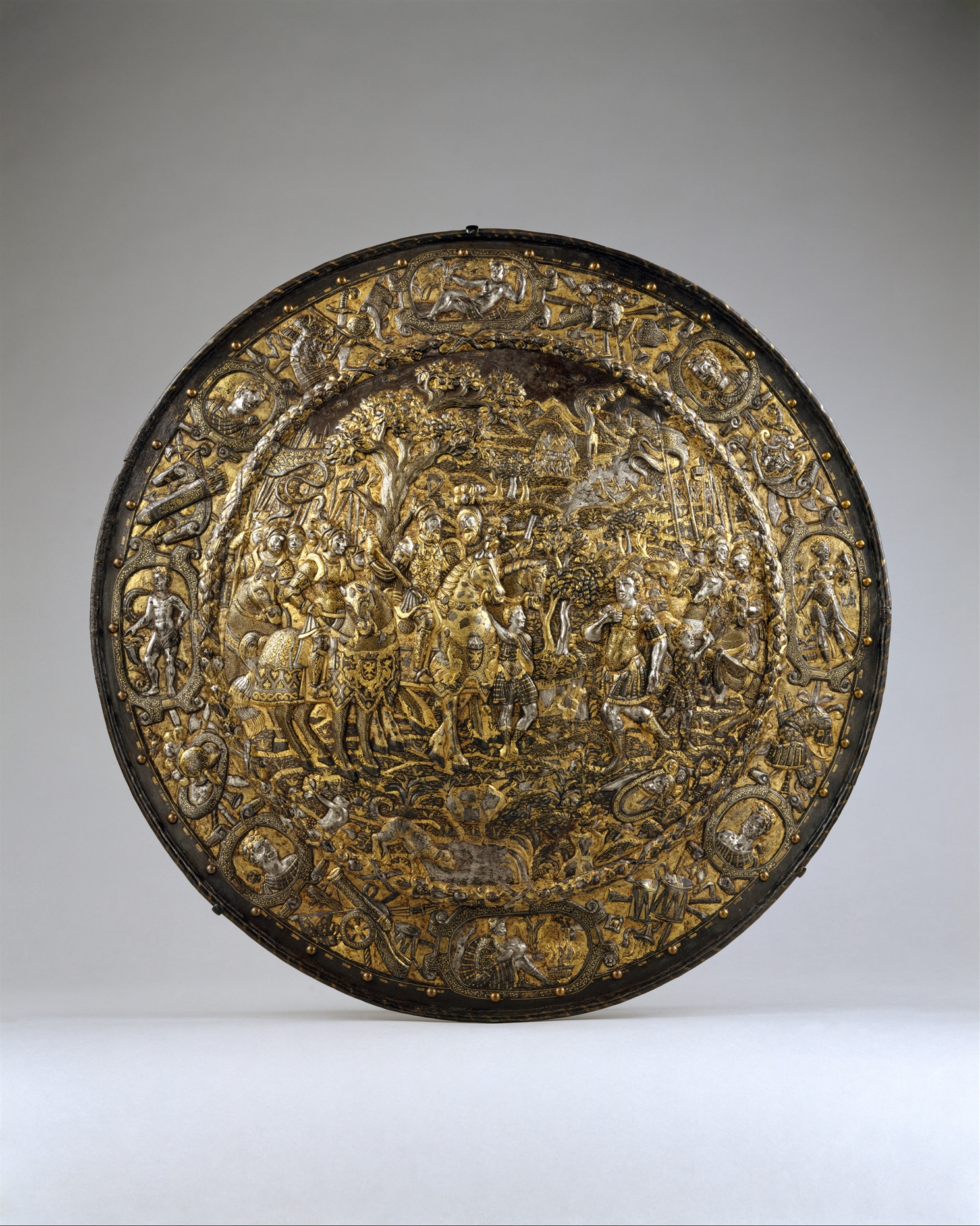
As Lead Heritage Curator for Katherine Fashion Lab, I present this strategic analysis of a singular artifact: the Round Shield with the Surrender of the Elector of Saxony at Mühlberg. Crafted in Milan, Italy, from steel, gold, and silver, this shield is not merely a defensive armament but a masterwork of Renaissance propaganda, spiritual expression, and elite adornment. Its study offers profound insights for a 2026 high-end luxury strategy, where heritage, symbolism, and craftsmanship converge to define brand authority.
Symbolic Power: The Shield as Political Theater
The shield commemorates the 1547 Battle of Mühlberg, where Emperor Charles V defeated the Protestant Schmalkaldic League, capturing Elector John Frederick I of Saxony. This event was pivotal in the Habsburg consolidation of power. The shield’s iconography—depicting the surrender scene—transforms a military victory into a permanent, wearable monument. For the 16th-century Milanese patron, likely a noble or courtier, owning such a piece was an assertion of loyalty to the emperor and a display of political alignment.
Visual Narrative as Authority
The composition employs a hierarchical perspective: the emperor, larger than life, receives the kneeling elector. This visual language, borrowed from Roman imperial reliefs, legitimizes Charles V as a divine-right ruler. The inclusion of gold and silver highlights—gilded armor, silver banners—directs the viewer’s eye to the victor, reinforcing the message that power is both military and divinely sanctioned. In a luxury context, this technique mirrors how high-end brands use visual hierarchy to emphasize their heritage and exclusivity. For Katherine Fashion Lab, this suggests that a 2026 collection could integrate symbolic narratives—perhaps through embroidered or embossed motifs—that tell a story of conquest, resilience, or cultural ascendancy.
Strategic Implications for 2026
Modern luxury consumers seek narratives of power that transcend mere aesthetics. A brand that references historical moments of triumph—such as Mühlberg—can position itself as a custodian of authority. For Katherine Fashion Lab, this could manifest in a capsule collection titled “The Surrender,” using metallic accents, layered textures, and asymmetrical silhouettes that echo the shield’s dynamic tension between conflict and resolution. The key is to avoid overt militarism; instead, focus on the symbolic weight of submission and sovereignty—a duality that resonates in luxury’s interplay of dominance and desire.
Historical Adornment: Craftsmanship as Status Currency
The shield’s medium—steel, gold, and silver—marks it as an object of immense wealth and technical mastery. Milan in the 16th century was a hub of armor production, where artisans like the Missaglia family elevated metalwork to an art form. The shield’s surface combines repoussé, chasing, and gilding, techniques that required years of apprenticeship. The gold and silver are not merely decorative; they are status signals, visible even from a distance. In a courtly setting, such a shield would be displayed in a gallery or carried in processions, functioning as a portable treasure.
Material Culture and Luxury Codes
The use of precious metals on a functional object—steel—creates a dialectic between utility and opulence. This tension is central to high-end luxury today. For example, a Hermès Birkin bag combines fine leather with hand-stitching, transforming a practical item into a symbol of status. Similarly, the shield’s gold and silver accents elevate it from weaponry to art. For Katherine Fashion Lab, this suggests that 2026 offerings should emphasize material juxtaposition: pairing industrial materials (e.g., brushed steel) with precious inlays (e.g., gold thread, silver embroidery) to create pieces that are both functional and ceremonial.
Craftsmanship as Brand DNA
The shield’s Milanese origin underscores the importance of geographic authenticity. Milan remains a global capital of fashion and metalwork, from Prada to Bvlgari. For Katherine Fashion Lab, a strategic 2026 initiative could involve collaborating with Italian artisans who preserve these traditional techniques—such as embossing and filigree—to produce limited-edition accessories. This not only honors heritage but also creates a scarcity narrative that appeals to ultra-high-net-worth clients. The shield teaches us that craftsmanship is not a cost but an investment in brand immortality.
Spiritual Meaning: The Shield as Sacred Armor
Beyond politics and status, the shield carries deep spiritual resonance. In Christian iconography, the shield symbolizes divine protection—the “shield of faith” from Ephesians 6:16. The Surrender of the Elector of Saxony, a Protestant leader, to the Catholic emperor, imbues the object with a triumphalist religious message. The gold halos and celestial rays in the scene suggest that Charles V’s victory was ordained by God. For its original owner, the shield was not just a trophy but a talisman, a reminder of the cosmic order upheld by the Habsburg dynasty.
Sacred Adornment in Modern Luxury
Contemporary high-end consumers increasingly seek objects with spiritual meaning. Brands like Cartier and Van Cleef & Arpels have long used motifs such as the cross, the clover, and the lotus to evoke luck, protection, or transcendence. The shield’s spiritual layer offers a blueprint: luxury can be a vessel for inner power. For Katherine Fashion Lab, this could translate into a jewelry line featuring shield-shaped pendants or rings, engraved with subtle symbols of resilience (e.g., laurel wreaths, sunbursts). The spiritual meaning is not overtly religious but universal—a call to personal sovereignty.
2026 Strategy: The Shield as Archetype
In a fragmented world, the shield archetype—protection, strength, honor—resonates deeply. A 2026 campaign could position Katherine Fashion Lab as a guardian of timeless values: craftsmanship, integrity, and cultural memory. This aligns with the growing trend of “quiet luxury,” where meaning matters more than logos. The shield’s spiritual dimension suggests that luxury can be a form of armor for the soul, offering consumers not just beauty but a sense of purpose. Limited-edition pieces could be accompanied by a heritage certificate explaining their symbolic origins, transforming each purchase into a personal ritual.
Strategic Synthesis: From Artifact to Brand Legacy
The Round Shield of Mühlberg is a microcosm of Renaissance luxury: a fusion of political narrative, artisanal mastery, and spiritual depth. For Katherine Fashion Lab, its analysis yields three strategic pillars for 2026:
1. Narrative Authority: Use historical or mythological storytelling to imbue collections with symbolic power. The shield’s depiction of surrender and triumph can inspire a design language of contrasting forces—hard and soft, dark and light, submission and dominance.
2. Material Integrity: Prioritize rare materials and artisanal techniques that signal exclusivity and permanence. Collaborate with Milanese or other heritage workshops to create pieces that are heirlooms, not commodities.
3. Spiritual Resonance: Embed archetypal symbols (shields, halos, celestial motifs) that speak to the consumer’s desire for protection and meaning. Position the brand as a curator of inner power, not just outer beauty.
In conclusion, this shield is not a relic but a living template. For Katherine Fashion Lab, it offers a roadmap to transcend seasonal trends and achieve the cultural immortality that defines the world’s most enduring luxury houses. The 2026 strategy must be bold, intentional, and rooted in the kind of symbolic rigor that made a Milanese shield—forged in steel and gold—a statement of power for centuries.