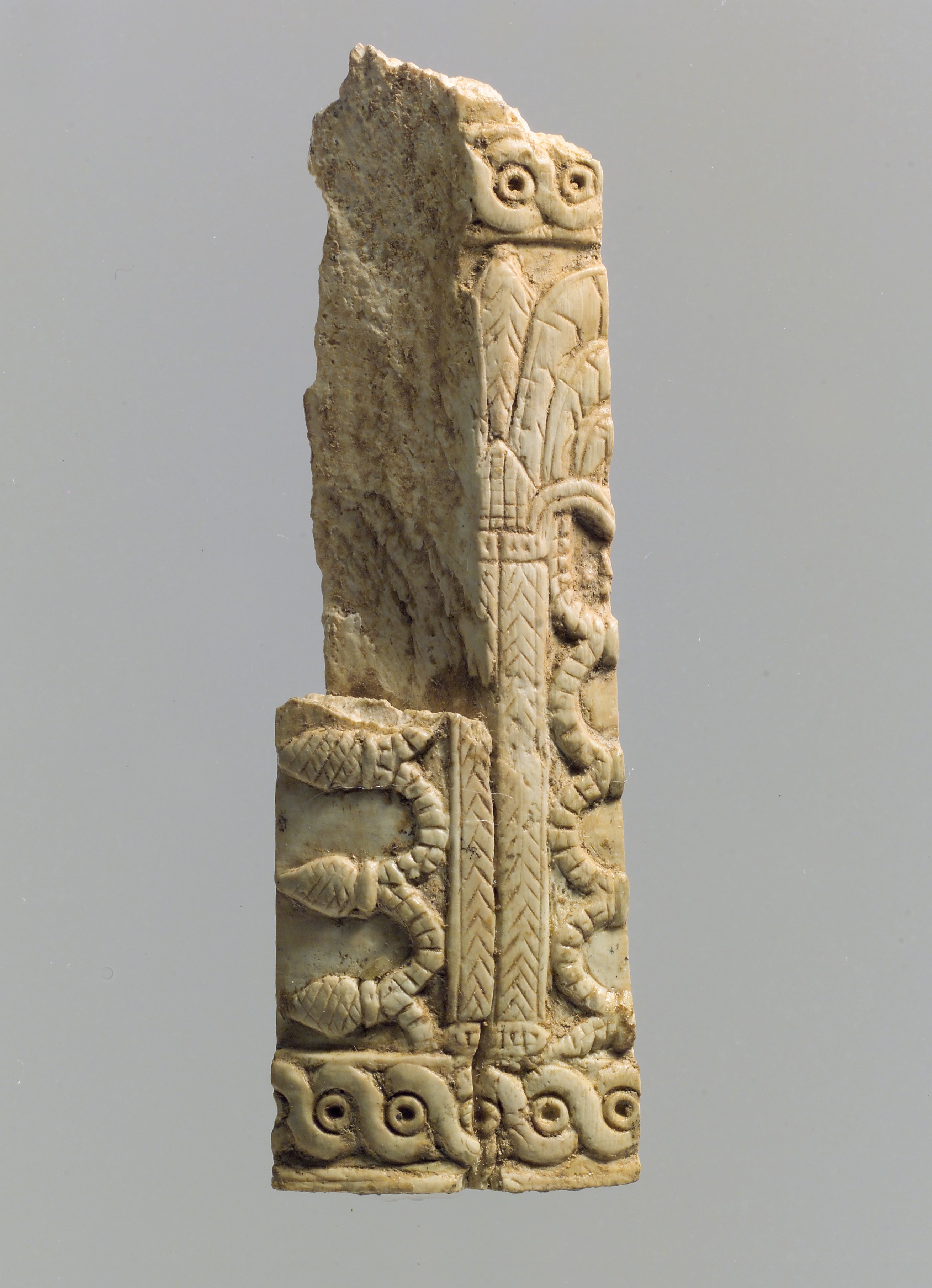
Heritage Analysis: The Pyxis Fragment of Iran – Symbolic Power, Historical Adornment, and Strategic Luxury Application
Introduction: The Object as a Threshold of Meaning
The Pyxis fragment, carved from ivory and originating from pre-Islamic Iran, represents far more than a mere decorative relic. As a cylindrical container traditionally used for cosmetics, unguents, or sacred substances, the pyxis occupied a liminal space between the mundane and the divine. Its fragmented state—a shard of a once-complete vessel—invites a profound reflection on the nature of legacy, loss, and the enduring power of symbolic form. For Katherine Fashion Lab, this artifact offers a uniquely resonant foundation for a 2026 high-end luxury strategy rooted not in ostentation, but in narrative depth, material intelligence, and spiritual authenticity.
Symbolic Power: The Vessel as a Microcosm of Sovereignty and Sanctity
In Iranian antiquity, the pyxis was not merely a utilitarian object; it was a container of transformation. The act of opening a pyxis to retrieve precious oils or pigments was analogous to unlocking a microcosm of power. The circular form, often adorned with hunting scenes, royal figures, or mythological creatures, symbolized the cyclical nature of time, authority, and the cosmos. The ivory medium itself—derived from elephant tusks, imported from distant lands—carried connotations of exotic wealth, imperial reach, and the subjugation of nature to human artistry.
The fragment’s symbolic power lies in its incompleteness. A complete pyxis speaks of closure, of a finished narrative. A fragment, however, demands interpretation. It invites the viewer to reconstruct meaning, to engage in an act of intellectual and aesthetic co-creation. This aligns directly with the contemporary luxury consumer’s desire for objects that are not merely consumed but contemplated. The fragment becomes a metaphor for the modern elite’s search for authenticity in a world of mass production: it is a piece of a lost whole, a token of a civilization that valued permanence, precision, and spiritual resonance.
Historical Adornment: Ivory as a Marker of Status and Sacred Craft
Ivory carving in Iran reached its zenith during the Achaemenid and Sasanian periods, where it was reserved for the courtly elite and religious institutions. The material’s rarity and difficulty of working made it a marker of supreme status. The pyxis fragment, with its residual traces of carving—perhaps a leaping ibex, a stylized palmette, or a royal figure—reveals a sophisticated understanding of negative space and tactile luxury. The surface, once polished to a luminous sheen, would have reflected light in a way that mimicked the skin of the goddess or the sheen of sacred oil.
Historical adornment in this context was not decorative in the modern sense; it was hieratic. Every curve, every incision, carried ritual weight. The pyxis would have been used in ceremonies of anointing, where the application of scented oils was both a physical and spiritual act. The ivory’s natural warmth and subtle translucency created an intimate relationship between the object and the user’s hand. This haptic quality—the sensation of holding a smooth, cool, yet living material—is a sensory experience that modern luxury brands strive to replicate through weight, texture, and finish.
For Katherine Fashion Lab, the historical adornment of ivory offers a cautionary and inspirational lesson. While ivory itself is ethically untenable in contemporary production, its visual language—the interplay of matte and polished surfaces, the use of organic motifs, the emphasis on negative space—can be translated into sustainable materials such as polished resin, bone china, or responsibly sourced tagua nut. The spirit of ivory adornment, not its literal substance, becomes the design principle.
Spiritual Meaning: The Pyxis as a Reliquary of the Soul
The spiritual dimension of the pyxis fragment is perhaps its most potent asset for a luxury strategy. In Zoroastrian cosmology, which permeated Iranian culture, containers held profound symbolic weight. They were not merely holders of matter but vessels for the soul’s journey. The pyxis, used for sacred oils, was a reliquary for substances that bridged the physical and the divine. The act of anointing was a purification ritual, a micro-ritual of rebirth and protection.
The fragment’s broken state introduces a spiritual tension. It is a relic of a ritual cycle that has been interrupted. This evokes the concept of impermanence—a value deeply resonant with the modern luxury consumer who seeks meaning beyond material accumulation. The fragment does not pretend to be whole; it accepts its incompleteness as a form of truth. This aligns with the growing trend in high-end design toward wabi-sabi aesthetics and the celebration of patina, wear, and history.
Spiritually, the pyxis fragment functions as a memento mori for the luxury industry. It reminds us that true value lies not in pristine perfection but in the story of survival. For Katherine Fashion Lab, this suggests a strategy where products are presented not as flawless novelties but as artifacts of a personal journey. Limited editions, numbered fragments of a larger narrative, and designs that incorporate intentional “imperfections” (such as hand-carved irregularities) can evoke the same spiritual gravitas.
2026 High-End Luxury Strategy: Translating the Fragment into Brand Capital
Based on the heritage analysis of the Pyxis fragment, Katherine Fashion Lab should adopt the following strategic pillars for its 2026 luxury collection:
1. Narrative Fragmentation as a Design Language. Rather than offering complete, “closed” collections, the brand should release thematic “fragments”—capsule collections that reference a specific cultural or spiritual theme, with each piece intentionally incomplete in narrative terms. For example, a jewelry line might feature pendants that are asymmetrical, suggesting a broken circle, or textiles with deliberately frayed edges. The consumer becomes a co-author of the story.
2. Material Ethics as Spiritual Practice. The ethical repudiation of ivory must be transformed into a positive design constraint. Materials such as lab-grown minerals, recycled precious metals, and plant-based resins should be treated with the same reverence as ivory. The production process—carving, polishing, assembling—should be documented and celebrated as a ritual. This creates a transparent aura of authenticity that aligns with the spiritual meaning of the pyxis.
3. Haptic Luxury and the Ritual of Touch. The pyxis fragment teaches us that luxury is a sensory, not just visual, experience. Katherine Fashion Lab should invest in weight, texture, and thermal conductivity for all products. Packaging, for instance, could mimic the feel of polished ivory through ceramic or stone finishes. The unboxing experience should be a ritualized act, akin to opening a pyxis, with each layer revealing a deeper symbolic meaning.
4. The Fragment as a Collectible Asset. In 2026, the luxury market will increasingly value objects that appreciate in cultural and financial value. The pyxis fragment model suggests a strategy of limited-edition “relics”—pieces that are numbered, authenticated with blockchain provenance, and tied to a specific historical or spiritual narrative. These are not mere accessories but portable artifacts that carry the weight of centuries.
5. Spiritual Storytelling in Brand Communications. The brand’s marketing should shift from aspirational lifestyle imagery to contemplative narrative. Campaigns could feature the pyxis fragment as a muse, exploring themes of loss, preservation, and resurrection. Collaborations with archaeologists, historians, and spiritual practitioners can lend intellectual credibility. The goal is to position Katherine Fashion Lab not as a seller of goods but as a curator of meaning.
Conclusion: The Fragment as a Strategic Imperative
The Pyxis fragment from Iran is a masterclass in symbolic economy. It demonstrates that true luxury is not about completeness or perfection but about depth, authenticity, and the invitation to contemplate. For Katherine Fashion Lab, this artifact provides a rigorous framework for a 2026 strategy that is both commercially viable and spiritually resonant. By embracing the fragment—its material integrity, its historical weight, its spiritual incompleteness—the brand can transcend the ephemeral nature of fashion and enter the realm of enduring cultural significance. The fragment is not a limitation; it is a lens through which the future of luxury can be reimagined.