Deconstructing Heritage: The Fragment as a Couture Statement
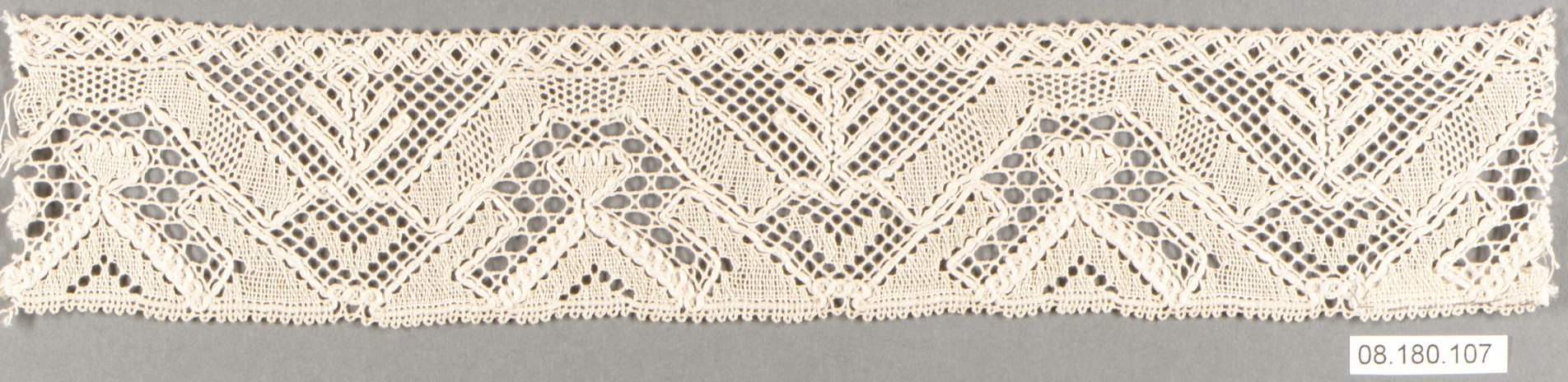
In the rarefied world of haute couture, where innovation often masquerades as disruption, Katherine Fashion Lab presents a compelling counter-narrative with its latest standalone study, “Fragment.” This collection is not a mere exercise in garment construction; it is a profound meditation on the nature of memory, materiality, and the very essence of heritage. By selecting bobbin lace as its primary medium—a craft deeply rooted in global heritage—the Lab transforms a traditional textile into a vehicle for contemporary artistic expression. The result is a couture analysis that challenges the viewer to reconsider the relationship between the whole and its parts, the preserved and the decayed.
The Conceptual Framework: Fragmentation as Narrative
At its core, the Fragment study eschews the conventional pursuit of seamless perfection. Instead, it embraces incompleteness as a deliberate aesthetic and intellectual choice. Bobbin lace, historically a symbol of meticulous craftsmanship and familial legacy, is here deconstructed into its elemental components. The Lab’s curatorial vision posits that a fragment is not a failure but a repository of stories—each broken thread, each interrupted pattern, speaks to the passage of time and the resilience of cultural memory. This approach aligns with the broader discourse in luxury fashion, where the value of an object is increasingly measured not by its pristine condition but by its ability to evoke emotion and provoke thought.
The selection of bobbin lace is particularly strategic. Originating in 16th-century Europe and later disseminated across continents through trade and colonization, this textile embodies a global heritage that is both shared and contested. By focusing on fragments, Katherine Fashion Lab avoids the pitfalls of cultural appropriation. Instead, it honors the craft’s origins while recontextualizing it within a modern, cosmopolitan framework. Each piece in the study is a standalone artifact, yet together they form a cohesive dialogue about how heritage is preserved, reinterpreted, and sometimes lost.
Material Mastery: Bobbin Lace Reimagined
The technical execution of the Fragment study is nothing short of extraordinary. Bobbin lace is notoriously labor-intensive, requiring hours of intricate handwork to create its characteristic openwork patterns. In this collection, the Lab’s artisans have deliberately interrupted the weaving process, leaving threads untied, patterns unfinished, and edges raw. This is not a sign of negligence but a calculated artistic decision. The fragments are then assembled using invisible micro-stitching, creating a tension between the delicate lace and the structural integrity of the garment. The result is a textile that appears to be in a state of becoming—both fragile and resilient.
From a material science perspective, the Lab has also experimented with hybrid fiber compositions. Traditional linen and cotton threads are interwoven with fine metallic filaments and recycled silk, adding a subtle luminosity that catches the light differently from every angle. This interplay of textures—matte and sheen, soft and rigid—mirrors the conceptual tension between heritage and modernity. The fragments are often suspended over sheer organza bases, creating a shadow play that emphasizes the negative space, a hallmark of bobbin lace design. This technique elevates the fabric from a decorative element to a structural one, challenging the hierarchy of materials in couture.
Global Heritage in a Localized Context
While bobbin lace has strong European roots—particularly in Flanders, France, and Italy—Katherine Fashion Lab’s interpretation is deliberately polyglot. The fragments reference patterns from diverse traditions: the geometric precision of Maltese lace, the floral motifs of Chantilly, and the geometric abstraction of Russian Vologda lace. By blending these influences, the Lab creates a new visual lexicon that is neither derivative nor nostalgic. Instead, it suggests a global heritage that is fluid and adaptive, capable of being reimagined without losing its essence.
This approach is particularly resonant in an era where fashion houses are increasingly scrutinized for their cultural sensitivity. The Fragment study does not claim to represent any single tradition authentically; rather, it uses the fragment as a metaphor for the fragmented nature of global identity itself. In a world of diasporas and hybrid identities, the incomplete lace pattern becomes a symbol of the stories we carry but can never fully tell. This intellectual depth is what distinguishes the Lab’s work from mere decorative craft.
Standalone Study: The Power of Singularity
The decision to present Fragment as a standalone study is a bold curatorial move. In an industry dominated by seasonal collections and commercial pressures, the Lab deliberately removes the work from the context of a full runway show or retail cycle. Each piece is exhibited as an independent artwork, accompanied by detailed provenance notes that trace the origin of the lace fragments—whether sourced from a 19th-century Belgian convent or a contemporary Indian atelier. This transparency adds a layer of authenticity and invites the viewer to engage with the object on its own terms.
The standalone format also allows for a deeper exploration of scale and proportion. One piece, for instance, features a single lace fragment the size of a hand, framed within a minimalist silk column dress. Another presents a cascading waterfall of lace remnants that form a full-length cape. The juxtaposition of the minuscule and the monumental underscores the fragment’s dual nature: it is both a part and a whole, a detail and a statement. This duality is the intellectual core of the study, challenging the notion that couture must be grandiose to be meaningful.
Market Implications and Strategic Positioning
From a business strategy perspective, the Fragment study positions Katherine Fashion Lab at the vanguard of conceptual luxury. In a market saturated with logo-driven branding and fast fashion, the Lab’s emphasis on craftsmanship, narrative, and material integrity appeals to a discerning clientele seeking investment pieces that transcend trends. The use of bobbin lace fragments also introduces a sustainable dimension: by repurposing historical remnants, the Lab reduces waste while honoring artisanal labor. This aligns with the growing demand for circular fashion and ethical production.
The standalone study model further offers a unique revenue stream. Rather than producing a full collection, the Lab can sell individual pieces as limited-edition artworks, commanding premium prices due to their scarcity and conceptual value. This approach also mitigates inventory risk and allows for greater creative freedom. For the luxury consumer, owning a Fragment piece is akin to acquiring a museum-quality artifact—a tangible connection to global heritage and contemporary artistry.
Conclusion: The Enduring Allure of the Incomplete
Katherine Fashion Lab’s Fragment study is a masterclass in couture as intellectual inquiry. By elevating bobbin lace from its historical roots to a medium of conceptual deconstruction, the Lab demonstrates that heritage is not a static relic but a living, evolving dialogue. The fragment, in its incompleteness, becomes more complete than any finished garment could ever be—it invites interpretation, sparks curiosity, and honors the hands that shaped it. In a world that often demands wholeness and certainty, this collection reminds us that beauty lies in the broken, the partial, and the remembered. For the connoisseur of fashion as art, Fragment is not merely a study; it is a revelation.