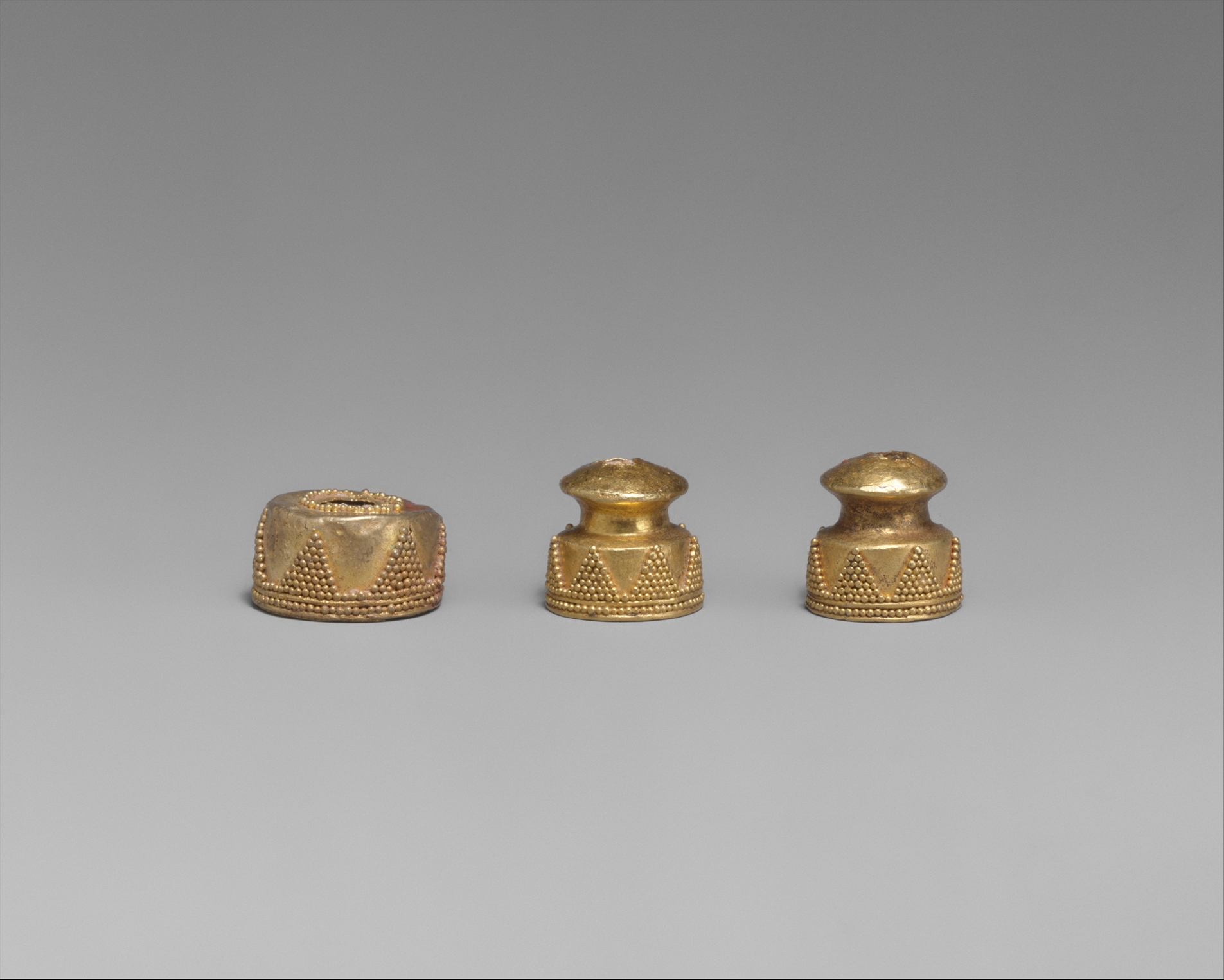
Executive Heritage Analysis: The Cylinder Seal Cap as a Proto-Luxury Artifact
The cylinder seal cap, originating from the Babylonian or Kassite period (circa 1600–1155 BCE), represents a seminal artifact in the evolution of personal adornment as a vehicle for symbolic power and spiritual authority. Crafted from gold, this object transcends its functional role as a sealing mechanism to emerge as a precursor to modern luxury branding—a tangible signature of identity, status, and divine connection. For Katherine Fashion Lab, this analysis positions the cylinder seal cap within a broader heritage framework, drawing direct correlation to our ongoing study of dual-surface narratives, as exemplified by the Mirror with Split-Lea concept: one side a polished silver mirror inlaid with intricate gold palm-leaf motifs, the other a cold stone sarcophagus narrating life through relief. The seal cap’s duality—its physical form and metaphysical imprint—offers a blueprint for 2026 high-end luxury strategy, emphasizing authenticity, exclusivity, and spiritual resonance.
Symbolic Power: The Seal as a Marker of Authority and Identity
In ancient Mesopotamia, cylinder seals were not merely decorative; they were instruments of power. The gold cap, often affixed to a stone or hematite cylinder, amplified the seal’s significance through its materiality. Gold, associated with the sun god Shamash and eternal life, imbued the object with divine sanction. The seal’s engraved imagery—mythological scenes, royal decrees, or personal symbols—functioned as a unique identifier, akin to a modern corporate logo or signature. When rolled across clay, it left an indelible mark of ownership, authorship, or contractual obligation. This act of imprinting mirrors the luxury brand’s need to leave a lasting impression on the consumer’s psyche.
For Katherine Fashion Lab, this symbolic power translates into a strategic imperative: the 2026 collection must emphasize signature motifs that are instantly recognizable yet deeply personal. Just as the cylinder seal cap encoded the owner’s status within a hierarchical society, our designs should encode the wearer’s identity within a luxury ecosystem. The gold materiality, with its enduring luster, suggests a return to precious metals as narrative anchors—not mere embellishments but foundational elements that speak to permanence and value. The correlation with the Mirror with Split-Lea study is evident: the gold-inlaid palm leaves on the mirror’s reflective side represent a surface-level display of wealth, while the seal cap’s gold serves as a protective and authoritative casing for deeper meaning. In luxury strategy, this duality translates to visible opulence paired with hidden heritage, a tension that drives exclusivity.
Historical Adornment: The Cap as a Nexus of Function and Beauty
The cylinder seal cap occupies a unique position in the history of adornment. Unlike jewelry solely designed for aesthetic display, this artifact balanced utilitarian purpose with decorative artistry. The cap’s gold construction required advanced metallurgical skill—hammering, granulation, and possibly cloisonné techniques—demonstrating the artisan’s mastery. Its small scale (typically 1–3 centimeters) demanded precision, making it a luxury object accessible only to elites. This fusion of function and beauty anticipates the modern luxury ethos, where objects must serve both practical and aspirational roles.
Our research on the Mirror with Split-Lea reveals a parallel tension: the silver mirror side reflects the external world, while the stone sarcophagus side narrates internal life. The cylinder seal cap similarly operates on two axes—its physical presence as an adornment and its functional role as a seal. For the 2026 strategy, Katherine Fashion Lab must design pieces that perform dual functions: a necklace that converts into a talisman, a ring that carries a hidden inscription. This approach aligns with the growing demand for transformative luxury, where the object’s value is amplified by its versatility. The gold cap’s historical context also underscores the importance of craftsmanship heritage. By collaborating with master goldsmiths and referencing ancient techniques, the brand can authenticate its narrative and differentiate from mass-produced luxury.
The Kassite period, in particular, offers a rich vein of inspiration. The Kassites, who ruled Babylonia after the fall of Hammurabi’s dynasty, synthesized Mesopotamian traditions with their own nomadic influences. Their cylinder seals often featured elongated figures and abstracted motifs, reflecting a cultural hybridity. This fusion resonates with contemporary luxury’s globalized clientele, who seek objects that bridge multiple identities. A 2026 collection inspired by Kassite aesthetics could incorporate geometric abstraction and layered symbolism, appealing to consumers who value intellectual depth in their purchases.
Spiritual Meaning: The Seal as a Conduit Between Worlds
Beyond its social function, the cylinder seal cap held profound spiritual significance. In Babylonian cosmology, seals were believed to possess apotropaic properties—warding off evil spirits and ensuring divine favor. The act of sealing a document or container was not merely legal but ritualistic, invoking the protection of gods like Marduk or Ishtar. The gold cap, as the seal’s crown, may have been consecrated through temple ceremonies, transforming it into a talisman. This spiritual dimension elevates the object from a commodity to a sacred artifact, a concept that luxury brands increasingly exploit to create emotional resonance.
Katherine Fashion Lab can leverage this spiritual meaning by embedding ritualistic narratives into the 2026 collection. For instance, each piece could be “sealed” with a unique code or symbol, referencing the ancient practice of impressing identity. The Mirror with Split-Lea study’s stone sarcophagus side—cold, silent, yet narrating life—mirrors the seal’s role as a silent witness to transactions and covenants. In luxury strategy, this translates to storytelling through material: a gold pendant that bears a hidden engraving, revealed only to the wearer, creating an intimate bond. The spiritual meaning also aligns with the rise of mindful luxury, where consumers seek objects that offer protection, intention, or connection to heritage.
The gold medium itself carries spiritual weight. In ancient Near Eastern cultures, gold was not merely valuable but sacred—the flesh of the gods, imperishable and radiant. By using gold in the 2026 collection, Katherine Fashion Lab can tap into this archetypal resonance, positioning its pieces as modern amulets. The correlation with the Mirror with Split-Lea study’s gold-inlaid palm leaves is deliberate: the palm leaf, a symbol of victory and eternal life in Mesopotamian art, reinforces the theme of transcendence. The seal cap, as a microcosm of this duality, offers a template for integrating spiritual depth into commercial luxury.
2026 High-End Luxury Strategy: Applying Heritage to Contemporary Markets
The cylinder seal cap’s heritage provides actionable insights for Katherine Fashion Lab’s 2026 strategy. First, exclusivity through uniqueness. Each ancient seal was one-of-a-kind, carved for its owner. The brand should adopt a bespoke model, offering clients personalized symbols or inscriptions, akin to a modern seal. This aligns with the luxury sector’s shift toward customization, where the consumer co-creates value. Second, narrative layering. The seal cap’s gold exterior conceals a functional interior; similarly, 2026 pieces should reveal hidden stories—through removable components, engraved interiors, or transformable designs. This mirrors the Mirror with Split-Lea study’s dual surfaces, inviting the wearer to engage in discovery.
Third, material authenticity. The use of gold in the seal cap underscores the enduring value of precious metals. For 2026, Katherine Fashion Lab should prioritize ethically sourced gold and traceable supply chains, appealing to the conscientious consumer. The historical resonance of gold as a symbol of eternity can be marketed as a counterpoint to fast fashion’s disposability. Fourth, ritualistic marketing. The seal cap’s spiritual function suggests that luxury objects can be positioned as tools for personal ritual—a daily act of sealing intentions or affirmations. This taps into the wellness trend, where jewelry doubles as a mindfulness aid.
Finally, the correlation with the Mirror with Split-Lea study is critical. The mirror’s silver side reflects external reality, while the stone sarcophagus side narrates internal life. The cylinder seal cap similarly bridges the public (the seal’s impression) and the private (the owner’s identity). For 2026, Katherine Fashion Lab should design collections that oscillate between surface and depth, offering pieces that are both visually striking and conceptually rich. This duality is the essence of high-end luxury: the object must be admired from afar and cherished up close. By channeling the cylinder seal cap’s heritage—its gold authority, functional beauty, and spiritual aura—the brand can create a 2026 portfolio that resonates with historical depth while meeting contemporary desires for meaning, exclusivity, and transformation.