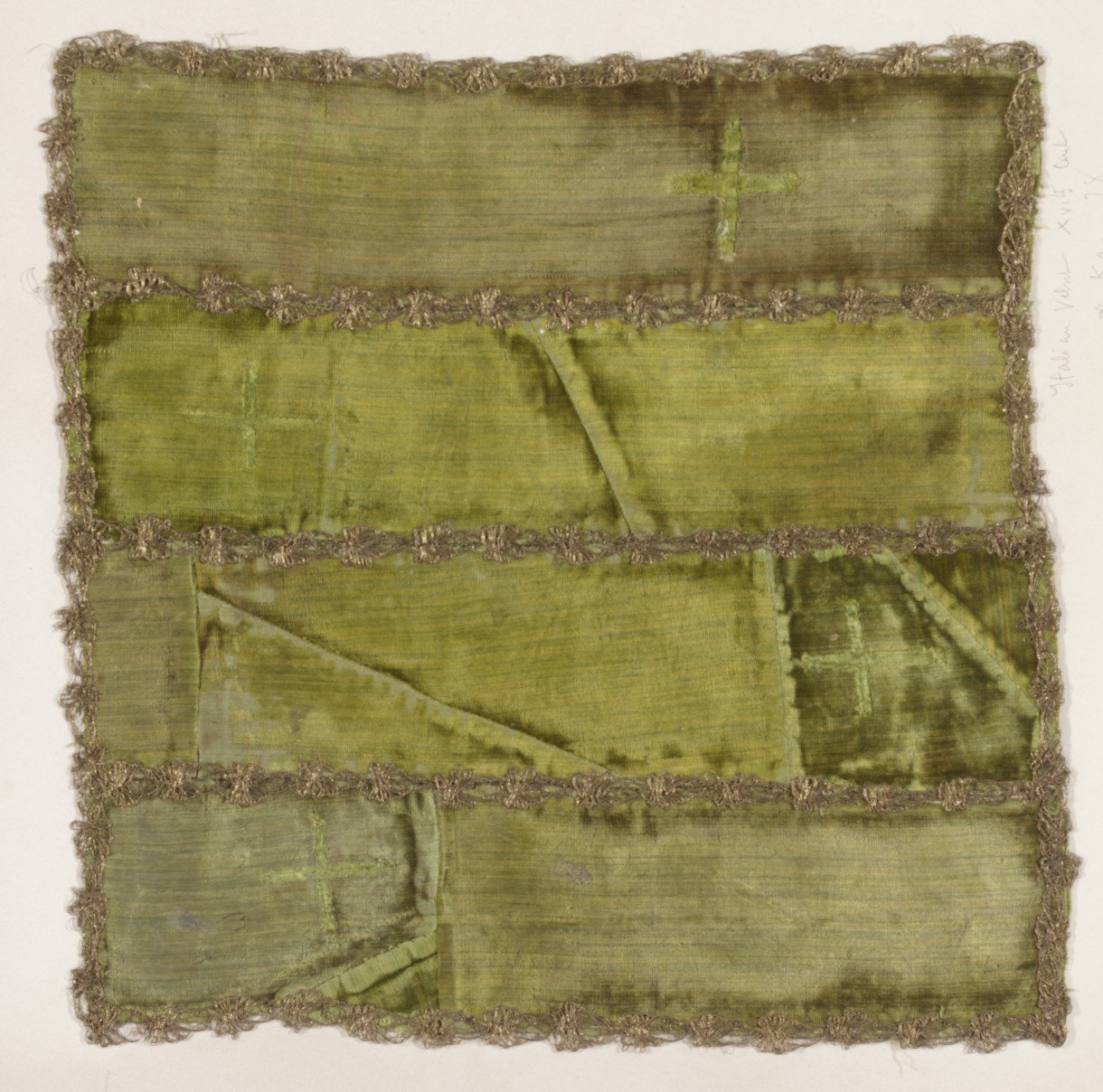
Deconstructing the Fragment: A Couture Analysis of Katherine Fashion Lab’s Global Heritage Study
In the rarefied world of haute couture, the notion of the “fragment” often carries a dual connotation: it can signify loss, decay, or the remnants of a forgotten era, yet it also embodies the potential for reconstruction, narrative, and exquisite artistry. Katherine Fashion Lab’s latest standalone study, simply titled “Fragment,” masterfully navigates this paradox. By drawing from a rich tapestry of Global Heritage—specifically the textile traditions of East Asia, the Middle East, and Western Europe—the Lab presents a garment that is not merely a dress but a philosophical artifact. This analysis dissects the technical, cultural, and conceptual layers of this piece, focusing on its materiality: silk and metal thread, and its singular context as a standalone study.
Materiality as Narrative: Silk and Metal Thread
The choice of materials is the first and most potent declaration of intent. Silk, with its millennia-long history as a global trade commodity, is the literal and metaphorical thread connecting disparate cultures. In “Fragment,” the silk is not a pristine, continuous expanse but is instead deconstructed into panels, each bearing a distinct weave and finish. Some sections are raw, matte habutai, evoking the unbleached silk of ancient Chinese looms; others are lustrous charmeuse, reminiscent of the opulent robes of the Ottoman court. This deliberate juxtaposition creates a visual and tactile dialogue between the humble and the luxurious, the peasant and the queen.
Interwoven with this silk foundation is the metal thread—a material that transcends mere ornamentation. Here, it serves as a structural and symbolic element. The metal thread, likely a blend of fine copper and silver gilt, is not embroidered in a continuous pattern but is instead fractured. It appears as isolated, irregularly spaced motifs: a single, elongated stitch that mimics a crack in porcelain; a cluster of tiny, sharp points that recall the calligraphic strokes of an ancient manuscript. This fragmentation is deliberate. It refuses the comfort of symmetry, forcing the eye to pause and piece together the narrative. In a couture context, metal thread is traditionally used to signify wealth and permanence; here, it signifies rupture and resilience, the scars of history that have been transformed into a form of beauty.
Structural Deconstruction: The Garment as Archaeological Site
The silhouette of “Fragment” is a study in controlled chaos. At first glance, it appears to be a structured, almost architectural bodice, reminiscent of a 19th-century European corset. Yet, upon closer inspection, the construction is deliberately asymmetric and incomplete. The left shoulder is heavily draped, with layers of silk cascading like a broken waterfall, while the right side is sharply tailored, revealing a precise, almost skeletal boning structure. This dichotomy is a direct reference to the concept of the “fragment” as an archaeological find—a garment that has been partially preserved, partially eroded by time.
The metal thread plays a critical role in this structural narrative. It is used to “stitch” together disparate sections of silk, but the stitching is visible, raw, and unapologetic. These metallic seams act as sutures, mending the garment’s “wounds” while simultaneously highlighting them. In certain areas, the metal thread is left unsecured, forming small loops and loose ends that catch the light, creating a shimmering, almost digital effect. This technique, known in couture as broderie à fils tirés (drawn thread work), is pushed to its extreme here, suggesting a garment that is in a constant state of becoming—neither fully assembled nor fully disintegrated.
Global Heritage: A Tripartite Dialogue
East Asian Influence: The Imperfect Beauty of Wabi-Sabi
The most immediate cultural reference in “Fragment” is the Japanese aesthetic of wabi-sabi, the art of finding beauty in imperfection and transience. The raw edges of the silk panels, the intentional asymmetry, and the visible, unpolished metal stitches all echo this philosophy. Yet, Katherine Fashion Lab does not merely copy a motif; it translates the concept. The garment’s “flaws” are not accidents but are meticulously engineered. For instance, a section of the skirt is deliberately shibori-dyed (a Japanese resist-dye technique) in a pattern of irregular, cloud-like forms. This is then overlaid with a single, long metal thread that traces a jagged line, mimicking a lightning strike or a crack in a ceramic bowl. The result is a garment that celebrates the fragment as a moment of sublime interruption, a break from the tyranny of perfection.
Middle Eastern Heritage: The Geometry of Decay
Moving westward, the garment incorporates elements of Islamic geometric art, but again, with a deconstructivist twist. Traditional girih patterns—complex, interlacing star and polygon motifs—are referenced through the placement of the metal thread. However, these patterns are not completed. Instead, only a few lines of a star are visible, or a single, broken arc of a circle. This is not a failure of execution but a deliberate fragmentation of sacred geometry. The metal thread here acts as a ghost of a pattern, suggesting that the original design has been shattered by time or conflict. This approach is deeply respectful yet intellectually provocative: it invites the viewer to contemplate what is lost, what is preserved, and what is reconstructed in the act of cultural transmission.
Western European Couture: The Tailoring of Memory
Finally, the garment’s construction techniques are firmly rooted in the European couture tradition. The internal structure—the boning, the interfacing, the precise darts—are all executed with the savoir-faire of a Parisian atelier. Yet, even this is subverted. The boning is not hidden but is partially exposed, encased in a translucent organza that reveals its metallic skeleton. This is a direct nod to the 19th-century corset, a symbol of both constraint and empowerment, but here it is shown as a fragment of its former self—a relic of a bygone era of rigid social structures. The metal thread, in this context, becomes a metaphor for the armature of memory, holding together a form that is otherwise in danger of collapsing into abstraction.
Context: The Standalone Study as a Manifesto
The decision to present “Fragment” as a standalone study is a bold curatorial and commercial move. In an industry driven by seasonal collections and commercial viability, a single garment demands intense scrutiny. It forces the viewer to abandon the context of a runway show or a lookbook and instead engage with the piece as a singular object of contemplation. This aligns perfectly with the theme of fragmentation: the garment is a complete whole, yet it is also a fragment of a larger, unseen narrative. It suggests that this piece is not a product but a proposition—a thesis on how couture can engage with heritage without succumbing to nostalgia or pastiche.
Furthermore, the standalone context allows for a deeper exploration of material truth. Without the distraction of other garments, the viewer can focus on the tactile and visual qualities of the silk and metal thread. The interplay of light on the metal, the drape of the silk, the tension between the structured and the fluid—all of these become the primary language of the piece. It is a study in how a fragment can become a world unto itself, a microcosm of global history, technical mastery, and conceptual rigor.
Conclusion: The Fragment as a New Whole
Katherine Fashion Lab’s “Fragment” is not a lament for what is broken. It is a celebration of the beauty of the incomplete. By weaving together silk and metal thread, and by drawing on the heritage of three distinct cultures, the Lab has created a garment that is both a historical document and a futuristic vision. It challenges the notion that couture must be pristine or flawless, proposing instead that true luxury lies in the authenticity of the fragment—the crack, the scar, the interrupted pattern. In doing so, it elevates the standalone study from a mere exercise in technique to a profound meditation on memory, loss, and the enduring power of textile art. For the discerning collector or curator, “Fragment” is not just a garment; it is a conversation, a question, and a masterpiece of reconstructed heritage.