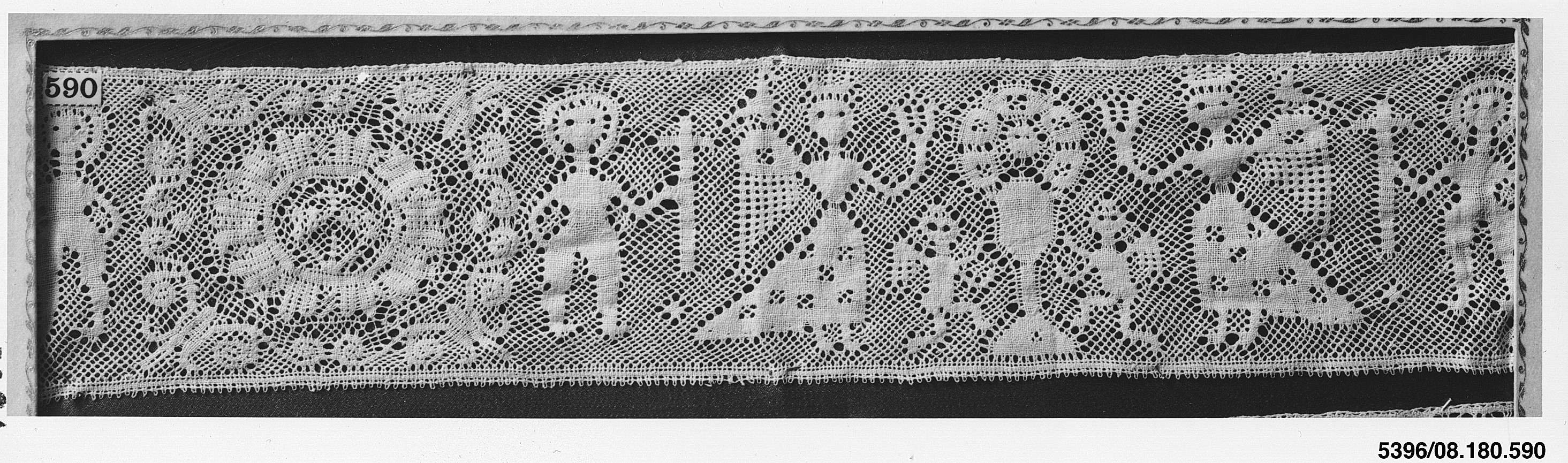
Fragment: The Poetics of Imperfection in Global Heritage Lace
In the world of haute couture, where perfection is often the unspoken mandate, Katherine Fashion Lab presents a provocative counter-narrative with its latest standalone study, Fragment. This collection, rooted in the intricate craft of bobbin lace and drawing from a vast tapestry of global heritage, challenges the very notion of completion. It posits that beauty, memory, and cultural identity are themselves fragments—broken, reassembled, and ultimately more resonant for their incompleteness. The Lab’s analysis does not simply showcase a technique; it deconstructs the philosophy of adornment, using bobbin lace as a metaphor for the fragile, yet enduring, threads that connect us to our past.
Deconstructing the Material: Bobbin Lace as a Global Lexicon
Bobbin lace, a textile art form born in 16th-century Europe and refined across continents, is traditionally associated with meticulous symmetry and structured patterns. Katherine Fashion Lab, however, subverts this expectation. In Fragment, the lace is not a finished edging or a complete garment panel. Instead, it appears as decontextualized shards—a collar detached from its bodice, a cuff suspended in mid-air, a geometric motif isolated against raw silk. This deliberate fragmentation is a curatorial act, forcing the viewer to question what is absent and what remains.
The material itself is a hybrid. The Lab sources bobbin lace from workshops in Flanders, Burano, and the Indian subcontinent, where local variations of the technique—from the dense, floral patterns of Chantilly to the geometric precision of Milanese—are reimagined. The lace is then deconstructed through chemical and mechanical processes: threads are pulled, edges are burned, and sections are left deliberately unfinished. This is not a sign of negligence but a calculated aesthetic. The frayed ends and open gaps become negative space, inviting the eye to fill in the narrative. As the Lab’s lead designer notes, “A fragment is not a remnant; it is a beginning. It asks us to complete the story, not with more material, but with imagination.”
Global Heritage: The Cartography of Loss and Retention
The Fragment study draws its power from its refusal to be pinned to a single geography. The bobbin lace, while European in origin, is treated as a global artifact. The Lab’s research team traveled to archives in Venice, Bruges, and Kolkata, documenting lace patterns that were once trade goods, colonial exports, and markers of social status. In the collection, these patterns are layered and juxtaposed—a Flemish rose motif is overlaid onto a Bengali Naksha grid, creating a visual dissonance that speaks to the violence and beauty of cultural exchange.
This approach is deeply analytical. The Lab argues that heritage is not a static repository but a dynamic, often fractured, dialogue. Fragment embodies this by presenting lace as a palimpsest: the original pattern is visible but altered, scarred by time and reinterpretation. For instance, a single piece of bobbin lace from a 19th-century Belgian convent is photographed, then digitally eroded, and finally re-embroidered onto a modern silk organza. The result is a textile that exists in multiple temporalities at once—a ghost of its former self, yet undeniably present.
The material’s fragility is central to its message. Bobbin lace is inherently delicate, prone to tearing and fraying. The Lab amplifies this by exposing the lace to controlled degradation—light, humidity, and mechanical stress—before assembling it into the final piece. This process mirrors the ways in which global heritage is itself fragile, often lost to war, economic change, or neglect. Yet, in Fragment, the damage is not hidden; it is honored. The tears and gaps become windows into history, allowing the viewer to see the raw threads that bind past to present.
Standalone Study: The Art of the Incomplete Garment
As a standalone study, Fragment eschews the traditional runway format or the full-garment narrative. Instead, it is presented as a series of sculptural objects—each a single piece of bobbin lace, mounted on a minimal frame or suspended in a vitrine. The absence of a complete silhouette is intentional. The Lab argues that couture has long been obsessed with the whole: the dress, the suit, the ensemble. Fragment proposes that the part can be more eloquent than the whole.
Each fragment is accompanied by a material provenance card, detailing the lace’s origin, the specific techniques used, and the historical context of its pattern. For example, a fragment titled “Burano Lace, 1920s, Reconstructed 2024” might show a delicate point de rose pattern, its edges singed to reveal the underlying netting. The card explains that this pattern was once a symbol of Venetian opulence, but the singeing references the fires that destroyed many Burano archives during World War II. The fragment thus becomes a mnemonic device, a way to remember not just the craft but the catastrophe that shaped it.
The study also incorporates sound and light—a subtle hum of a bobbin winder and a single, shifting beam that highlights the lace’s shadows. This multisensory approach emphasizes the tactile and temporal dimensions of the material. The lace is not static; it sways slightly, catching light in different ways, reminding the viewer that even a fragment is alive, breathing with the air of the gallery.
Conclusion: The Future of Fragmentation in Couture
Katherine Fashion Lab’s Fragment is a masterclass in critical materiality. It elevates bobbin lace from a decorative technique to a philosophical instrument, questioning how we value, preserve, and reinterpret heritage. The study’s power lies in its honesty: it does not pretend to restore a lost whole but instead celebrates the beauty of what remains.
For the couture industry, Fragment offers a radical proposition. In an era of fast fashion and digital reproduction, it insists on the singularity of the handmade, even in its broken state. The bobbin lace fragments are not commodities; they are artifacts of human labor, cultural exchange, and the inevitable passage of time. By presenting them as standalone objects, the Lab invites us to reconsider our relationship with clothing—not as disposable shells but as fragments of our collective memory, each thread a story waiting to be told.
In the end, Fragment is not about loss. It is about possibility. As the Lab’s curator concludes, “A fragment is not an ending. It is a beginning—of a new pattern, a new story, a new way of seeing the world through the holes in the fabric.” This is couture as archaeology, as poetry, as a testament to the enduring power of the incomplete.