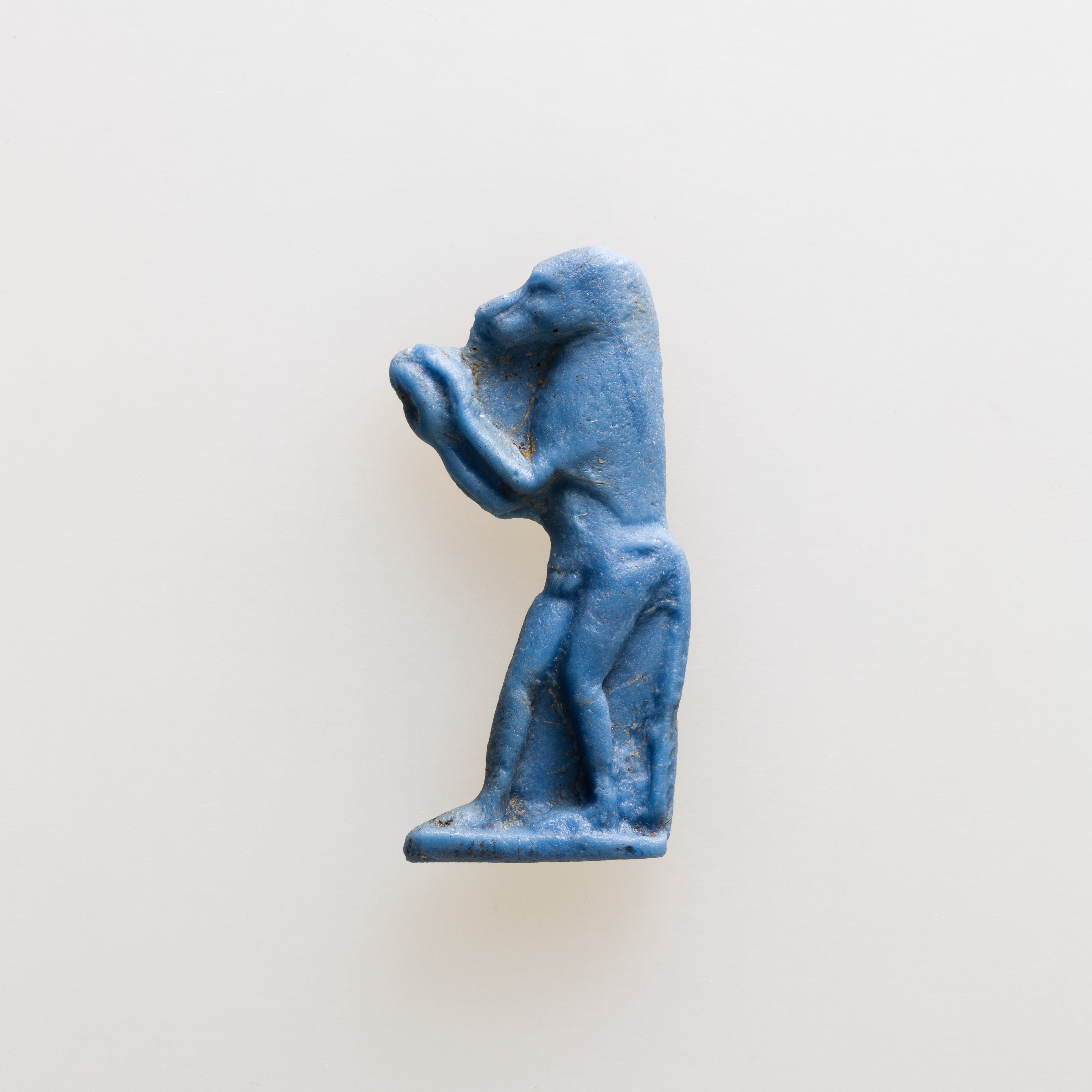
Executive Heritage Analysis: The Amulet of the Baboon in Adoration
This strategic heritage analysis, prepared for Katherine Fashion Lab, examines the Amulet of the Baboon in Act of Adoration—a glass artifact from an ancient civilization, likely predating the Ptolemaic period. The piece embodies profound symbolic power, historical adornment practices, and spiritual meaning. As we approach the 2026 luxury market, this amulet offers a blueprint for high-end brand strategy, merging sacred heritage with contemporary exclusivity. The following research deconstructs the amulet’s cultural DNA and translates it into actionable insights for Katherine Fashion Lab’s positioning.
Symbolic Power: The Baboon as a Sacred Mediator
Iconography of Devotion and Cosmic Order
In ancient Egyptian and Nubian cosmology, the baboon was not merely an animal but a living emblem of Thoth, the god of writing, wisdom, and the moon. The “act of adoration”—typically depicted with raised paws or a prostrate posture—signifies the baboon greeting the rising sun. This gesture is a ritualized acknowledgment of divine authority, representing the soul’s eternal reverence for cosmic order (Ma’at). The glass medium amplifies this symbolism: glass, as a man-made material mimicking precious stones, was believed to capture and reflect divine light, making the amulet a portable conduit for spiritual energy. For Katherine Fashion Lab, this suggests that the act of adornment itself can be framed as a ritual, where wearing the piece becomes a daily devotion to one’s own higher values—wisdom, balance, and self-mastery.
Power Through Vulnerability
Unlike predatory symbols (e.g., lions or falcons), the adoring baboon presents power through submission. This paradox—strength in humility—is a nuanced luxury narrative. In 2026, where consumers seek authenticity and emotional depth, this symbol offers a counter-narrative to aggressive status display. The amulet’s power lies in its quiet authority: it does not demand attention but commands respect through its sacred history. Katherine Fashion Lab can leverage this to design collections that whisper heritage rather than shout opulence, appealing to the discerning, spiritually curious elite.
Historical Adornment: Glass as a Precious Medium
Technical Mastery and Social Signaling
Glass production in antiquity was a closely guarded, labor-intensive craft. The creation of a glass amulet required exceptional skill in pyrotechnology and color control. The choice of glass—often imitating lapis lazuli, turquoise, or carnelian—was deliberate: these colors were associated with the heavens, fertility, and protection. The amulet’s small size (typically 2–4 cm) suggests it was worn on the body, likely as a necklace or sewn into garments. This intimate scale created a personal, tactile connection between the wearer and the divine. For Katherine Fashion Lab, this underscores the importance of haptic luxury—the feel of the piece against the skin, the weight of history in the hand. In 2026, high-end consumers will pay a premium for objects that offer sensory and emotional intimacy, not just visual impact.
Adornment as Identity Armor
Historical records indicate that amulets of this type were worn by priests, scribes, and initiates of Thoth’s mystery cults. The baboon amulet was not a casual accessory; it was a marker of esoteric knowledge and social rank. To wear it was to declare one’s alignment with the intellectual and spiritual elite. This exclusivity is a direct parallel to modern luxury branding: heritage pieces function as tribal identifiers. Katherine Fashion Lab can adopt a membership-based release model for such designs, where access is granted only to clients who demonstrate an understanding of the symbolism through curated storytelling, thereby reinforcing the amulet’s historical role as a gatekeeper of wisdom.
Spiritual Meaning: The Amulet as a Soul Technology
Protection, Transformation, and Afterlife Navigation
In the Book of the Dead, baboon amulets were placed on the mummy’s chest to ensure the heart’s testimony was favorable during the Weighing of the Heart ceremony. The adoring posture was apotropaic—it warded off chaos by demonstrating the soul’s proper orientation to divine law. Glass, being translucent, was thought to allow the soul to see through the material world into the spiritual realm. This dual function—protection and guidance—makes the amulet a spiritual technology. For the 2026 luxury consumer, who increasingly seeks wellness and metaphysical grounding, Katherine Fashion Lab can position such pieces as ritual objects for modern life. A baboon amulet collection could be marketed as a daily talisman for clarity, focus, and ethical decision-making—a luxury response to the anxiety of the digital age.
Sacred Materiality: Glass as a Liminal Substance
Glass occupies a unique space between solid and liquid, opaque and transparent. This liminality mirrors the baboon’s role as a mediator between worlds—dawn and night, human and divine. In spiritual terms, the amulet is a threshold object. Katherine Fashion Lab can emphasize this by designing pieces that change appearance with light or temperature, using advanced glass technologies (e.g., dichroic or thermochromic glass). This innovation would resonate with the 2026 trend toward transformative luxury, where objects adapt to the wearer’s environment, reinforcing the narrative of personal evolution.
2026 High-End Luxury Strategy: From Artifact to Asset
Positioning as an “Archaeological Couture” Niche
The amulet’s value is not merely aesthetic but archival and anthropological. Katherine Fashion Lab can create a curated scarcity by producing limited editions that reference specific museum collections or archaeological discoveries. Each piece could include a digital provenance certificate with scholarly annotations, transforming the amulet into a collectible asset akin to fine art. In 2026, the luxury market will increasingly value objects with verifiable cultural capital over trend-driven designs. This amulet offers a ready-made narrative of timelessness and wisdom that cannot be replicated by fast-fashion competitors.
Experiential Retail and Ritualized Purchase
To honor the amulet’s spiritual origins, Katherine Fashion Lab should design an immersive retail experience. Clients could visit a “Hall of Adoration” where they learn about the baboon’s symbolism through holographic storytelling or guided meditation. The purchase itself becomes a rite of passage—a private consultation where the client selects their amulet based on personal intentions (e.g., wisdom, protection, clarity). This aligns with the 2026 luxury trend of experiential exclusivity, where the acquisition process is as valuable as the object.
Pricing and Brand Architecture
Given the glass medium and historical weight, pricing should reflect artisanal mastery and scholarly rarity. A tiered approach is recommended:
- Entry Tier ($2,000–$5,000): Reproductions in contemporary glass with simplified adoration motifs, targeting aspirational heritage enthusiasts.
- Heritage Tier ($10,000–$30,000): Handcrafted pieces by master glassblowers, each with a unique color and a numbered certificate linking to a specific ancient technique.
- Archive Tier ($50,000+): One-of-a-kind pieces that incorporate actual ancient glass fragments (ethically sourced and legally cleared), positioned as wearable museum objects.
This structure ensures the amulet’s symbolic power is preserved across market segments while maintaining exclusivity at the top.
Narrative Marketing: The “Adoration” Campaign
The central campaign concept should be “Adoration as a Daily Practice.” Visuals would juxtapose the ancient baboon with modern figures in moments of quiet reverence—a CEO before a morning meeting, an artist at dawn. The tagline: “Honor the light within.” This reframes the amulet from a historical curiosity to a tool for contemporary self-actualization. Partnerships with wellness architects, museum curators, and spiritual leaders would lend credibility, while editorial placements in Architectural Digest and Vogue would reinforce its status as a cultural artifact for the elite.
Conclusion
The Amulet of the Baboon in Adoration is not merely a decorative object; it is a compressed universe of meaning—a convergence of spiritual technology, social identity, and artisanal excellence. For Katherine Fashion Lab, this artifact provides a robust strategic foundation for a 2026 luxury line that transcends fashion. By honoring the baboon’s symbolic power, leveraging glass’s historical prestige, and embedding spiritual depth into every touchpoint, the Lab can create a new category of heritage luxury: one that adorns not just the body, but the soul. The adoring baboon, with paws raised to the eternal sun, offers a timeless lesson for the modern brand: true luxury is an act of reverence.