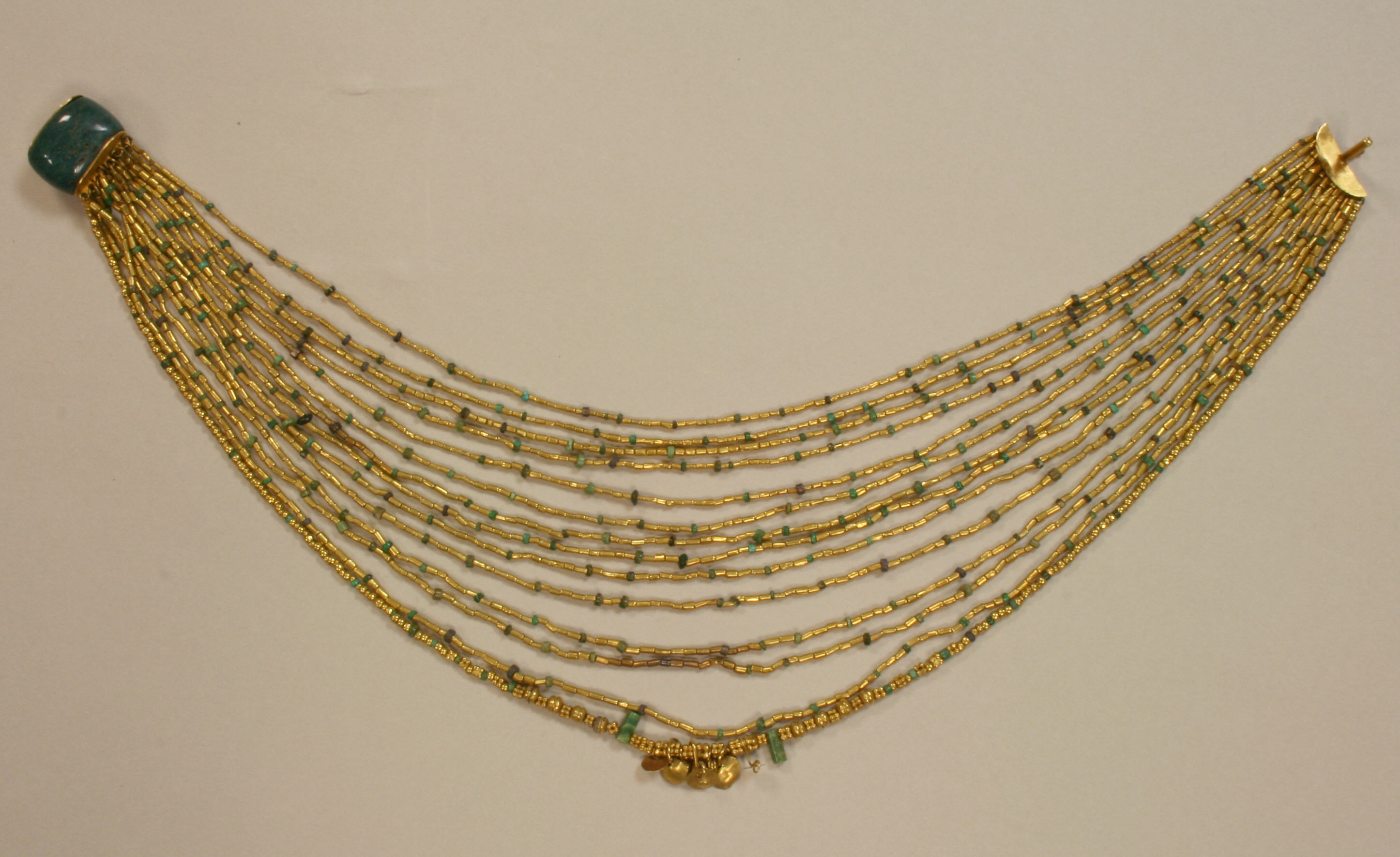
Heritage Analysis: The Calima (Yotoco) Multi-Strand Necklace
This strategic heritage analysis examines the Calima (Yotoco) multi-strand necklace, a masterwork of pre-Columbian adornment dating from approximately 200 BCE to 800 CE, originating from the Cauca River Valley in present-day Colombia. Composed of gold and greenstone, this artifact embodies profound symbolic power, historical significance, and spiritual meaning. For Katherine Fashion Lab, this analysis serves as a foundational research document to inform a 2026 high-end luxury strategy, leveraging heritage authenticity to elevate brand narrative and market positioning.
Symbolic Power: Manifestations of Status and Cosmic Authority
The multi-strand necklace from the Yotoco period of the Calima culture is not merely decorative; it is a potent emblem of hierarchical authority and cosmic connection. Gold, sourced from the region’s alluvial deposits, was reserved for the elite class—chieftains, shamans, and warriors—who used it to visually assert their dominion over both terrestrial and spiritual realms. The gold components of the necklace, often hammered into thin sheets and intricately shaped into anthropomorphic or zoomorphic figures, signify the wearer’s proximity to the sun deity, a central figure in Calima cosmology. Gold’s incorruptibility and luminous quality metaphorically represented eternal life and divine favor, reinforcing the wearer’s role as an intermediary between the living and the ancestral spirits.
Greenstone, typically jadeite or serpentine, was equally significant. Its deep green hue evoked fertility, water, and the regenerative cycles of nature. In Calima society, greenstone was associated with the earth’s life-giving forces and was often used in rituals to ensure agricultural abundance and communal prosperity. The combination of gold and greenstone in a single necklace creates a dialectic of celestial and terrestrial power. The gold strands, often arranged in multiple layers, mimic the rays of the sun, while the greenstone beads or pendants anchor the wearer to the earth. This duality positions the necklace as a tool for negotiating power across both realms, making it a symbol of total authority—spiritual, political, and ecological.
Historical Adornment: Craftsmanship and Social Identity
The Yotoco period is distinguished by its advanced metallurgical techniques, including lost-wax casting, repoussé, and filigree. The multi-strand necklace exemplifies these methods, with each strand meticulously crafted to form a cohesive yet dynamic composition. Historical evidence suggests that such necklaces were worn during ceremonial gatherings, funerary rites, and elite processions, where they served as markers of lineage and tribal affiliation. The number of strands—often four to six—corresponded to the wearer’s rank; higher-status individuals possessed more strands, each representing a layer of ancestral connection or territorial dominion.
Greenstone beads were typically carved from raw stone sourced from the Andean foothills, a labor-intensive process that underscored the wearer’s wealth and access to rare materials. The beads were often tubular or disc-shaped, interspersed with gold spacers or pendants depicting stylized birds, felines, or human faces. These motifs were not arbitrary; they encoded clan symbols and mythological narratives. For example, a feline pendant might represent the jaguar, a creature associated with shamanic transformation and nocturnal power, while a bird motif could signify the messenger between earth and sky. Thus, the necklace functioned as a wearable history, communicating the wearer’s identity and social obligations without the need for written language.
Spiritual Meaning: Ritual Functions and Ancestral Veneration
In Calima cosmology, adornment was inseparable from spiritual practice. The multi-strand necklace was often interred with the deceased, placed in tombs alongside other gold and greenstone objects. Archaeological excavations in the Yotoco region have revealed that these necklaces were positioned over the chest or wrapped around the neck of the mummified body, suggesting a belief in the necklace’s protective and guiding properties in the afterlife. The gold strands were thought to light the path for the soul, while the greenstone beads provided sustenance and grounding in the spirit world. This dual function—protection in life and guidance in death—elevates the necklace from mere ornament to a sacred object.
Shamans, in particular, utilized such necklaces during trance-inducing rituals. The weight and movement of the multiple strands against the chest were believed to amplify spiritual energy, facilitating communication with ancestors and nature spirits. The greenstone’s cool touch was thought to calm the mind, while the gold’s reflective surface captured sunlight, which was channeled into healing ceremonies. This integration of material properties with spiritual practice underscores the Calima belief that adornment was a conduit for divine power, not a passive accessory.
2026 High-End Luxury Strategy: Heritage as Competitive Advantage
For Katherine Fashion Lab, the Calima multi-strand necklace offers a blueprint for a 2026 luxury strategy rooted in cultural depth and artisanal integrity. The contemporary luxury consumer increasingly seeks narratives of authenticity, rarity, and spiritual resonance—attributes that align perfectly with this artifact’s heritage. To capitalize on this, the Lab should consider the following strategic pillars:
1. Narrative-Driven Design
The multi-strand necklace’s symbolic duality—celestial gold and terrestrial greenstone—can inspire a capsule collection that echoes this balance. Use high-karat gold and ethically sourced green gemstones (e.g., tsavorite garnet or Malachite) to replicate the original color palette. Each piece should be accompanied by a digital heritage card detailing its Calima inspiration, including the specific symbolism of its motifs. This transparency builds trust and elevates the product from commodity to collectible.
2. Limited-Edition Artisanal Series
Partner with Colombian master goldsmiths and lapidaries to produce a limited run of 100 necklaces, each numbered and certified. This scarcity aligns with luxury’s exclusivity imperative while honoring the original handcrafted techniques. The production process—lost-wax casting, hand-hammering, and bead carving—should be documented in a short film or monograph, reinforcing the value of slow luxury in an era of mass production.
3. Experiential Retail and Ritual
Launch the collection in a curated pop-up space that mimics a Calima ceremonial site, using ambient lighting, natural materials, and soundscapes of the Cauca River Valley. Offer private appointments where clients can learn about the necklace’s spiritual meaning and even participate in a guided meditation or blessing ritual, echoing the shamanic use of adornment. This transforms the purchase into a transformative experience, justifying a premium price point of $15,000–$25,000 per piece.
4. Strategic Pricing and Positioning
Position the collection within the “Cultural Heritage” tier of Katherine Fashion Lab’s portfolio, alongside other historically inspired pieces. Price anchoring should reference the original artifact’s museum valuation (often exceeding $50,000 for comparable Calima gold pieces) while remaining accessible to high-net-worth collectors. The greenstone elements can be sourced from Colombian mines with fair-trade certifications, adding an ethical luxury dimension that resonates with ESG-conscious buyers.
5. Digital Storytelling and Legacy Marketing
Develop a microsite or augmented reality (AR) experience where users can “virtually wear” the necklace while learning about its Calima origins. Partner with cultural institutions like the Museo del Oro in Bogotá to co-curate content, lending scholarly credibility. Use influencer collaborations with anthropologists or fashion historians to amplify reach, focusing on the intersection of ancient wisdom and modern luxury.
Conclusion
The Calima (Yotoco) multi-strand necklace is more than a historical artifact; it is a testament to the enduring power of adornment as a carrier of symbolic, historical, and spiritual meaning. For Katherine Fashion Lab, this analysis provides a strategic framework to translate ancient heritage into 2026 luxury propositions that resonate with discerning consumers. By honoring the material, spiritual, and social dimensions of this necklace, the Lab can create a collection that not only sells but also educates and inspires, securing a distinct position in the competitive high-end market.