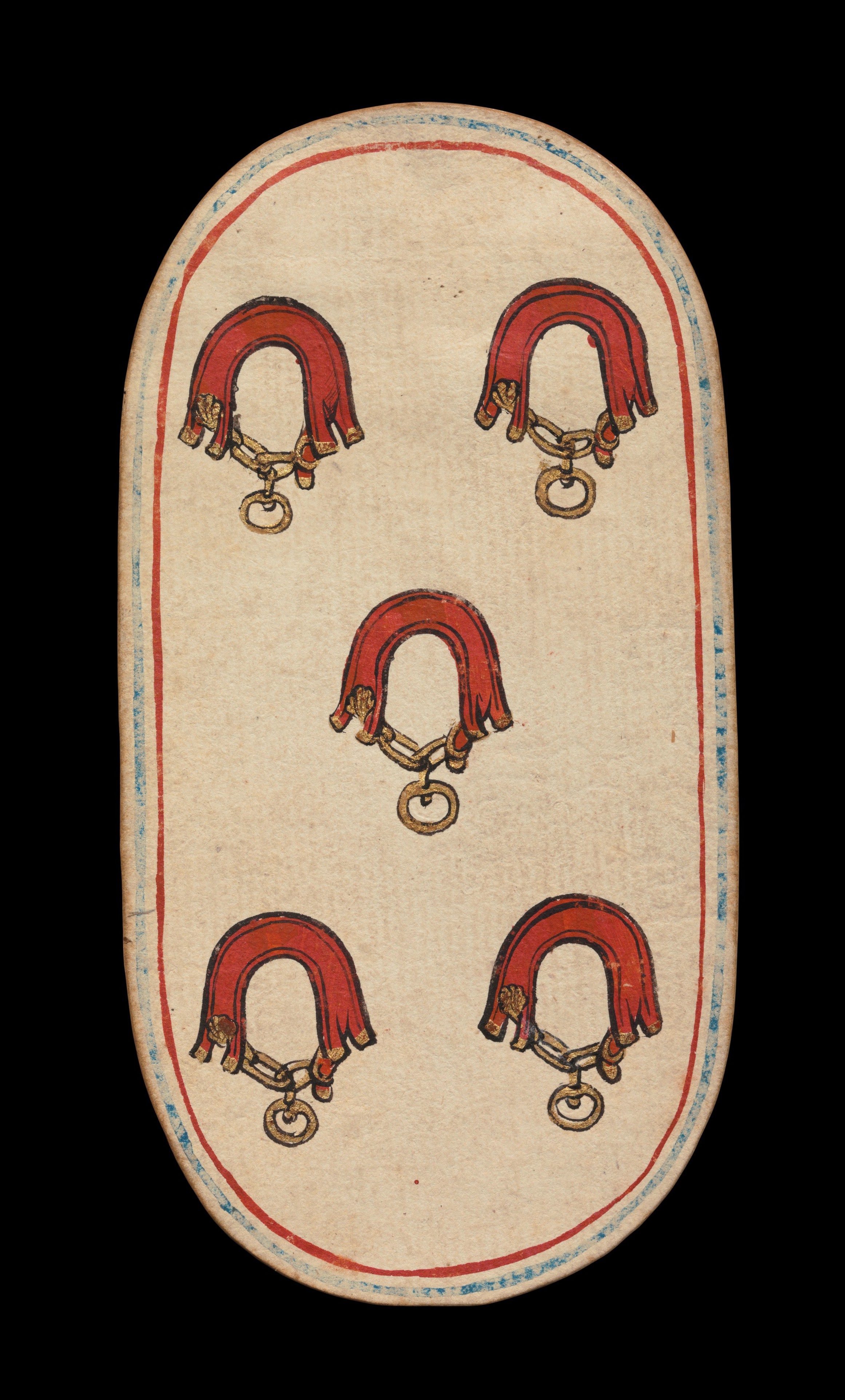
Heritage Analysis: The Five of Collars from The Cloisters Playing Cards
Introduction: A Confluence of Craft, Symbolism, and Strategic Value
The Five of Collars from The Cloisters Playing Cards, a South Netherlandish masterpiece dating to the late 15th century, offers a profound lens through which to examine the intersection of symbolic power, historical adornment, and spiritual meaning. Created on four layers of pasteboard with pen and ink, opaque paint, glazes, and applied silver and gold, this artifact is not merely a game piece but a refined emblem of status, morality, and transcendence. For Katherine Fashion Lab, a heritage analysis of this card provides a strategic blueprint for positioning luxury in 2026—where authenticity, narrative depth, and spiritual resonance define high-end desirability.
Symbolic Power: The Collar as a Marker of Authority and Constraint
The collar, in the context of the Five of Collars, transcends its functional role as a garment accessory to become a potent symbol of both earthly authority and spiritual limitation. In late medieval South Netherlandish society, collars were integral to courtly dress, often crafted from precious metals and gemstones to signify rank, allegiance, and wealth. The card’s depiction of five collars—likely representing the suit of “collars,” akin to modern clubs or wands—imbues the number five with layered meaning. Numerologically, five often symbolizes the human condition: the five senses, the five wounds of Christ, and the tension between material desire and divine grace. Each collar, rendered with meticulous detail in silver and gold, reflects the dual nature of power—it can elevate, but also bind.
For the modern luxury strategist, this duality is critical. The Five of Collars teaches that symbolic power in luxury must be both aspirational and introspective. In 2026, high-end consumers seek not just status symbols but artifacts that provoke reflection on their own agency and constraints. Katherine Fashion Lab can leverage this by designing collections that use the collar motif as a narrative device—pieces that celebrate empowerment while acknowledging the responsibilities of influence. The use of precious materials, as seen in the original card, should be intentional, not ostentatious, aligning with the contemporary shift toward conscious luxury.
Historical Adornment: Craftsmanship as Cultural Currency
The technical mastery of The Cloisters Playing Cards—its layered pasteboard, intricate pen work, and applied metal leaf—reflects the pinnacle of 15th-century Netherlandish craftsmanship. This era was marked by a flourishing of trade, artistic innovation, and the rise of a merchant class that valued portable luxury goods. The card’s medium is itself a statement: paper, though humble, is transformed into a durable, precious object through labor-intensive processes. Each collar is adorned with geometric and floral patterns, echoing the Gothic and early Renaissance aesthetics that dominated Burgundian courts. The silver and gold applications, now tarnished with age, evoke a sense of timelessness—a reminder that true luxury endures beyond trends.
For Katherine Fashion Lab’s 2026 strategy, historical adornment offers a lesson in craft differentiation. In an era of mass production, the handmade, the slow, and the materially rigorous define exclusivity. The Lab should invest in artisanal techniques—such as hand-embroidery, metal thread weaving, or gilding—that echo the card’s precision. Moreover, the Five of Collars suggests a modular approach to design: five distinct collars, each with unique ornamentation, can be interpreted as a collection of interchangeable, customizable luxury items. This aligns with the growing demand for personalization and investment pieces that tell a story of heritage and skill.
Spiritual Meaning: The Collar as a Bridge Between Earth and Heaven
Beyond its secular symbolism, the collar in medieval Christian iconography often represented a yoke—a reference to Matthew 11:29-30: “Take my yoke upon you… for my yoke is easy and my burden is light.” The Five of Collars, with its quintet of yokes, may allude to the spiritual journey of bearing divine will with humility. The number five also connects to the Pentateuch, the five books of Moses, underscoring the card’s moral undertones. In the context of a playing card—a tool for leisure and chance—this spiritual layer warns against the vanity of material pursuits. The applied gold and silver, while beautiful, are transient; the true collar is one of faith.
For a luxury brand in 2026, this spiritual dimension is a powerful differentiator. Modern consumers, particularly in the high-end segment, are increasingly drawn to brands that offer meaning beyond materialism. The Five of Collars inspires a strategy of sacred storytelling: collections that reference spiritual traditions, not as appropriation but as respectful homage. Katherine Fashion Lab could develop a “Collar Series” that explores themes of devotion, restraint, and transcendence, using materials like oxidized silver or raw silk to evoke humility. The spiritual meaning also invites collaborations with artisans, theologians, or historians to create immersive experiences—such as exhibition-like launches that contextualize each piece within a broader narrative of faith and craftsmanship.
2026 High-End Luxury Strategy: Translating Heritage into Modern Desire
The Five of Collars is a strategic asset for Katherine Fashion Lab as it navigates the 2026 luxury landscape. Three key pillars emerge from this analysis:
1. Narrative-Driven Product Architecture
The card’s five collars can be reimagined as a capsule collection of five statement pieces—each representing a facet of power (authority, humility, creativity, constraint, transcendence). This structure allows for limited-edition releases, each with a documented provenance story linking back to The Cloisters. The use of applied silver and gold should be executed with modern techniques like micromosaics or laser-cut gilding, balancing heritage with innovation.
2. Experiential Retail and Digital Engagement
The card’s layered pasteboard construction—a metaphor for depth—can inspire an interactive retail experience. Customers might “unlock” the spiritual meaning of each collar through augmented reality or curated content. Digital passports, tied to blockchain, could verify the authenticity and heritage of each piece, appealing to the 2026 luxury buyer’s demand for transparency and exclusivity.
3. Collaborative Curation
Katherine Fashion Lab should partner with institutions like The Met Cloisters to co-create educational content, exhibitions, or limited-edition reproductions. This elevates the brand from mere fashion house to cultural steward, reinforcing its authority in heritage luxury. The Five of Collars becomes a symbol of this alliance—a bridge between the 15th century and the 2026 zeitgeist.
Conclusion: The Collar as a Strategic Compass
The Five of Collars from The Cloisters Playing Cards is far more than a historical curiosity; it is a repository of symbolic, historical, and spiritual wisdom that speaks directly to the future of luxury. For Katherine Fashion Lab, this heritage analysis reveals that true high-end strategy in 2026 must be rooted in authentic narrative, artisanal integrity, and transcendent meaning. By embracing the collar’s dual nature—as both a mark of status and a yoke of humility—the Lab can craft a brand identity that resonates with discerning consumers seeking depth in an age of superficiality. The card’s silver and gold, now aged, remind us that the most enduring luxury is that which connects past, present, and soul.