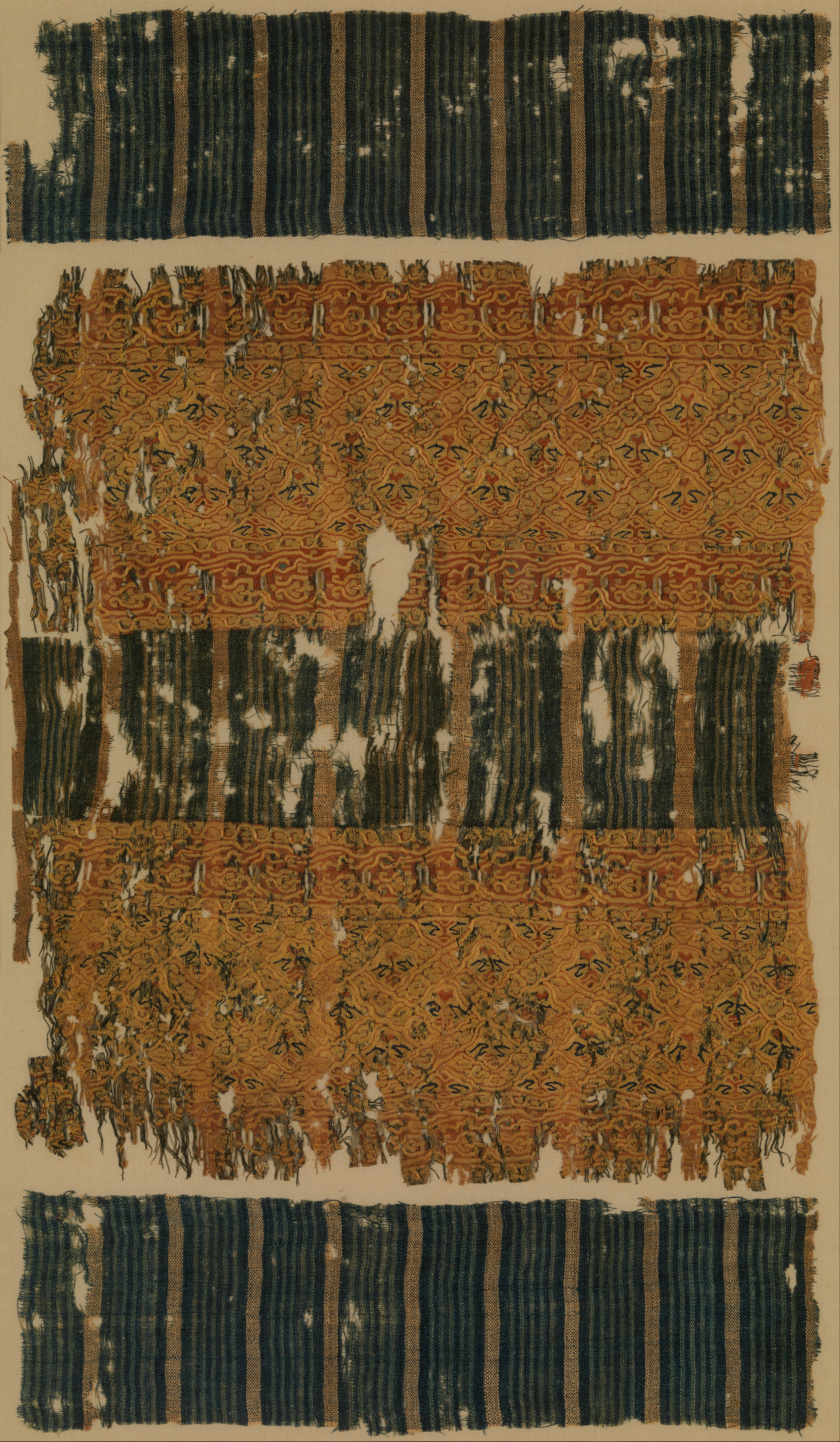
The Lineage of Line: A Couture Analysis of Striped Textiles at Katherine Fashion Lab
In the rarefied atmosphere of haute couture, where fabric is not merely material but narrative, the striped textile occupies a paradoxical position. It is at once the most ancient and the most modern of patterns—a visual shorthand for order, rebellion, hierarchy, and liberation. At Katherine Fashion Lab, our latest standalone study delves into the profound architectural and emotional resonance of the stripe, rendered through the dual souls of linen and silk, woven in both plain and tapestry techniques. This is not a study of trend, but of textile anthropology, where the global heritage of the stripe is recontextualized for the discerning connoisseur.
Deconstructing the Visual Rhythm: Stripes as Structural Syntax
The stripe, in its purest form, is a declaration of structure. Unlike the organic fluidity of florals or the chaotic freedom of abstract prints, the stripe imposes a deliberate, rhythmic order upon the body. In this collection, we observe a masterful manipulation of scale and orientation. Narrow, hairline stripes—barely a millimeter wide—are woven into the silk plain weave, creating a surface that shimmers with optical movement. These are not aggressive declarations but whispered geometries, suggesting discipline without severity. Conversely, bolder, inch-wide bands in the linen tapestry weave assert a robust, almost architectural presence. The interplay between these two scales generates a dynamic tension: the fine silk stripes invite intimate inspection, while the broad linen stripes command attention from across the room.
This dichotomy is crucial to the couture appeal. The stripe serves as a visual corset, elongating the silhouette when vertical, or expanding the frame when horizontal. Katherine Fashion Lab has strategically employed this principle. A gown in silk plain weave features vertical stripes that narrow at the waist and gently widen at the hips, creating an illusion of a cinched torso without a single bone or lace. In contrast, a structured jacket in linen tapestry uses horizontal stripes across the shoulders, evoking the epaulettes of a bygone military regalia—a nod to the stripe’s historical association with rank and power. The result is a garment that sculpts the body through geometry, not constraint.
Material Dialectics: The Marriage of Linen and Silk
The choice of linen and silk is not arbitrary; it is a deliberate dialogue between two polarities of textile heritage. Linen, born of the flax plant, carries the memory of ancient Egyptian looms and the sun-baked fields of Northern Europe. It is a fiber of honest austerity, with a natural slub and a crisp hand that resists drape. In the tapestry weave, linen’s inherent stiffness is transformed into a canvas of durability. The stripes in the linen pieces are woven with a matte finish, their colors—ochre, indigo, and chalk—muted by the fiber’s natural absorbency. This creates a texture that feels both rustic and regal, like a medieval banner repurposed for a modern silhouette.
Silk, in contrast, is the fiber of emperors and empresses. Its liquid luminosity catches light in ways that linen cannot. In the plain weave, silk allows the stripes to appear almost as reflections, shifting from silver to pearl depending on the angle. The silk pieces in this study employ a subtle warp-faced stripe, where the colored threads are visible only in the fabric’s structure, not printed upon the surface. This technique, known as “shadow striping,” requires exceptional precision. The result is a textile that whispers its pattern rather than shouting it—perfect for the client who values understated luxury. When these two materials are juxtaposed within a single garment—a silk bodice meeting a linen skirt, for instance—the contrast becomes a study in texture and temperature: the cool, smooth silk against the warm, textured linen, united by the common language of the stripe.
Tapestry Weave: The Narrative Thread of Global Heritage
The tapestry weave, in particular, elevates this study from mere fashion to cultural cartography. Historically, tapestry was the medium of storytelling—from the Bayeux Tapestry to the Andean q’ipis. Katherine Fashion Lab has drawn upon this global heritage, incorporating stripe motifs that reference the ikat traditions of Central Asia, the narrow bands of West African kente cloth, and the pinstripes of European banking. The tapestry technique allows for a density of color and pattern that plain weave cannot achieve. Each stripe in the tapestry pieces is a distinct weft-faced band, where the colored threads are packed so tightly that the warp is completely hidden. This creates a fabric of exceptional weight and richness, ideal for structured coats and sculptural sleeves.
One standout piece is a floor-length cape in linen tapestry, featuring alternating bands of deep crimson and raw umber. The stripes are not uniform; they vary in width and intensity, mimicking the irregularity of hand-dyed yarns. This deliberate imperfection is a hallmark of couture—a rejection of industrial uniformity. The stripe here becomes a record of human touch, a reminder that each thread was selected and placed by a master weaver. The global heritage is not merely referenced but embodied: the crimson evokes the cochineal dyes of Mesoamerica, while the umber recalls the earth pigments of the Australian outback. The garment is a wearable atlas.
Plain Weave: The Discipline of Restraint
In the plain weave pieces, the stripe is stripped of narrative and reduced to its purest mathematical essence. Plain weave—the simplest interlacing of warp and weft—provides a neutral ground for the stripe to assert itself without distraction. Here, the focus is on the precision of the line. A column dress in silk plain weave features stripes that are exactly 2 millimeters wide, spaced 4 millimeters apart. The effect is hypnotic, almost kinetic. As the wearer moves, the stripes seem to pulse, creating a moiré-like illusion. This is not a pattern that demands interpretation; it is a pattern that demands attention to the act of seeing itself.
The plain weave also allows for a radical transparency. In one blouse, the stripes are woven with alternating threads of silk and linen, creating a subtle grid that is visible only upon close inspection. This dual-fiber striping is a technical tour de force, as the different shrinkage rates of linen and silk must be calculated to prevent distortion. The result is a fabric that breathes and moves with the body, the stripes appearing and disappearing with each gesture. It is a garment that rewards the discerning eye—a quiet statement of mastery in an age of noise.
Conclusion: The Stripe as a Signature of Modern Couture
At Katherine Fashion Lab, we do not view the stripe as a mere pattern. It is a philosophical instrument—a tool for ordering space, for referencing history, and for celebrating the tactile dignity of natural fibers. This standalone study demonstrates that the stripe, when executed with the rigor of couture craftsmanship, transcends its humble origins. It becomes a bridge between the global and the intimate, the ancient and the avant-garde. Whether in the shadowy shimmer of silk plain weave or the earthy density of linen tapestry, the stripe remains an enduring testament to the power of line—a line that, in the hands of our atelier, becomes a legacy.