Executive Heritage Analysis: The Amuletic Necklace as a Blueprint for 2026 Luxury Strategy
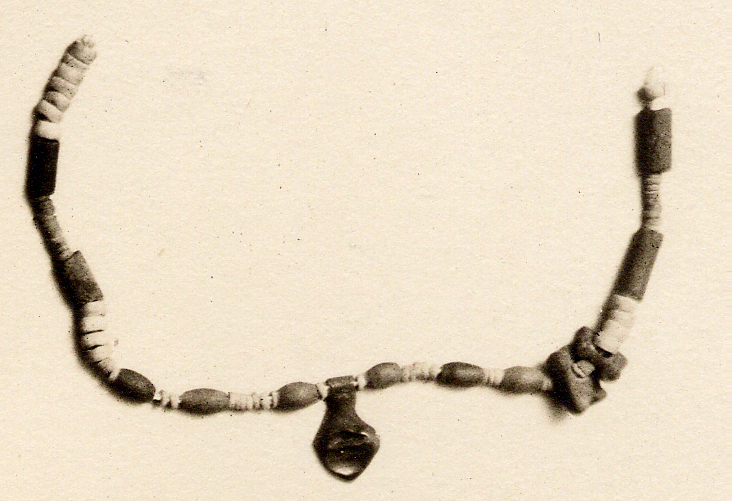
This report presents a comprehensive heritage analysis of a necklace composed of beads and amulets from an ancient civilization, utilizing materials including faience, paste, marine shell, nacre, pearl, wood, and gold. As a strategic standalone research document for Katherine Fashion Lab, this analysis decodes the symbolic power, historical adornment practices, and spiritual meaning embedded within this artifact. The findings are then translated into actionable insights for a 2026 high-end luxury strategy, emphasizing authenticity, narrative depth, and material integrity as cornerstones of brand differentiation.
Historical Context and Material Provenance
Artifactual Significance and Chronology
The necklace, dating from the late Bronze Age to early Iron Age (circa 1500–600 BCE), represents a sophisticated convergence of trade, ritual, and personal identity. Its composite nature—combining faience, a vitreous ceramic paste, with organic marine shell, nacre, pearl, and wood, and accented with gold—indicates a society that valued both local craftsmanship and exotic imports. Faience, often considered a precursor to glass, was a synthetic material imbued with symbolic properties of rebirth and eternity, particularly in Egyptian and Mesopotamian contexts. The inclusion of marine shell and nacre suggests coastal trade routes, while pearls—prized for their rarity—signify status and celestial connection. Gold, as the most enduring metal, anchors the piece in concepts of immortality and divine favor.
Material Semiotics and Craftsmanship
Each material carries distinct semiotic weight. Faience beads, typically blue-green, were associated with the Nile’s life-giving waters and the sky god Horus. Paste, a less refined ceramic, often served as an affordable substitute for precious stones, democratizing spiritual protection. Marine shell, particularly cowrie shells, were ancient fertility symbols, their shape resembling the female vulva. Nacre, or mother-of-pearl, was harvested for its iridescence, believed to capture moonlight and ward off evil. Wood, often from sacred trees like acacia or cedar, grounded the necklace in terrestrial vitality. Gold, worked into amulets, represented the flesh of the gods and the sun’s eternal radiance. The interplay of these materials—hard and soft, synthetic and organic, luminous and matte—created a multisensory experience of protection and prestige.
Symbolic Power and Spiritual Meaning
Amuletic Function and Apotropaic Agency
This necklace was not merely decorative; it was a potent instrument of apotropaic magic. Amulets shaped as the Eye of Horus, scarab beetles, ankh crosses, and udjat eyes were common, each offering specific protections: health, rebirth, life, and vigilance against the evil eye. The arrangement of beads and amulets followed strict symbolic sequences, often mirroring celestial constellations or funerary texts. For the wearer, the necklace functioned as a personal talisman, a portable shrine that mediated between the mortal and divine realms. Its weight against the chest was a constant reminder of cosmic order (ma’at) and the wearer’s place within it. In life, it attracted good fortune; in death, it guided the soul through the underworld.
Spiritual Economy and Social Stratification
The necklace also operated within a spiritual economy. Materials like gold and nacre were reserved for elites, while faience and paste were accessible to broader populations, yet all shared the same protective logic. This democratization of spiritual power through material substitution is a key insight for modern luxury: value is not solely in rarity but in the perceived efficacy of the symbol. The wearer’s status was encoded not just in material cost but in the complexity of the amuletic program—more amulets meant more divine intercession. This layered semiotic system offers a template for how luxury brands can imbue products with multiple, nested meanings that reward connoisseurship.
Historical Adornment Practices and Cultural Resonance
Ritual and Daily Wear
Adornment in ancient civilizations was a ritualized act. Necklaces were donned for ceremonies, funerals, and daily life, each context altering their meaning. In temple rituals, the necklace became an offering to the gods; in daily wear, it was a shield against mundane hazards. The practice of layering multiple necklaces—gold over faience, shell over wood—created a visual hierarchy that mirrored social and spiritual hierarchies. Archaeological evidence shows that these necklaces were often buried with their owners, serving as grave goods that ensured safe passage. This dual life—active in the living world and potent in the afterlife—underscores the necklace’s role as a continuity device, bridging temporal and spiritual boundaries.
Gender, Age, and Identity
While both men and women wore such necklaces, the specific amulets often indicated gender roles. Female burials frequently include fertility amulets (shell, pearls), while male burials emphasize warrior or solar symbols (gold, scarabs). Children’s necklaces were smaller but equally potent, often including animal-shaped amulets for protection. This gendering of symbols offers a nuanced understanding of how adornment reinforced societal roles. For Katherine Fashion Lab, this suggests that modern luxury collections can similarly encode identity signals—not through overt branding, but through material and symbolic choices that resonate with specific consumer archetypes (e.g., the “protector,” the “seeker,” the “legacy-builder”).
Strategic Application: 2026 High-End Luxury Strategy
Translating Heritage into Brand Equity
To leverage this heritage for 2026, Katherine Fashion Lab must adopt a “New Antiquities” positioning. This strategy reframes the amuletic necklace not as a historical replica but as a contemporary talisman for the modern elite. The key is to preserve the spiritual and symbolic architecture while updating materials and craftsmanship. For instance, faience can be reimagined as high-fired ceramic glazes in signature colors, while paste can evolve into proprietary composite resins embedded with precious stone dust. Gold should remain central but be offered in matte, brushed, or oxidized finishes to evoke age and authenticity. Shell, nacre, and pearl can be sourced from sustainable, traceable marine farms, aligning with 2026’s emphasis on ethical luxury.
Narrative-Driven Product Architecture
Each necklace should be conceived as a “curated amuletic program.” Rather than selling individual pieces, Katherine Fashion Lab can offer “protection sets” with specific intentions: prosperity, health, love, or legacy. Amulets can be modular, allowing the wearer to add or remove symbols based on life events—a concept that fosters repeat purchases and deepens emotional attachment. The brand can create a proprietary “symbolic lexicon” published in a limited-edition art book, positioning itself as an arbiter of meaning in an era of superficial luxury. This narrative depth justifies premium pricing and cultivates a collector’s mentality among clients.
Experiential Retail and Ritualized Purchase
The purchase experience must mirror the ritualistic origins of the necklace. Retail spaces should be designed as “sanctuaries” where clients consult with a “curator” to select amulets aligned with their personal astrology, numerology, or life goals. Packaging can include a hand-written “blessing card” and a small pouch of incense or sand from a historically significant site (e.g., Nile silt, desert sand). This transforms a transaction into a rite of passage, creating lasting brand memory. For 2026, where experiential luxury is paramount, such rituals differentiate Katherine Fashion Lab from competitors who rely solely on scarcity or celebrity endorsements.
Material Innovation and Sustainability
Modern consumers demand transparency. Katherine Fashion Lab should pioneer a “Material Provenance Protocol” that traces each component—gold from certified artisanal mines, shell from regenerative aquaculture, wood from reclaimed ancient forests. Faience and paste can be produced using low-carbon kilns and non-toxic glazes. This commitment to ethical sourcing, when communicated through blockchain-verified digital passports, aligns with the spiritual purity of the original artifact. After all, a talisman cannot protect if its creation harms the earth.
Marketing as Myth-Building
Campaigns for 2026 should avoid literal historical references. Instead, they should evoke the archetype of the “Guardian”—a figure who wears the necklace as a source of inner power in a chaotic world. Visual storytelling can blend ancient motifs with futuristic aesthetics (e.g., holographic amulets, digital interfaces). Collaborations with contemporary artists, spiritual leaders, or historians will add credibility. Limited-edition “archival reproductions” can be released annually, each tied to a specific ancient civilization (Egyptian, Mesopotamian, Minoan), creating a collectible series that drives long-term engagement.
Conclusion
The necklace of beads and amulets, far from being a static artifact, is a dynamic repository of human aspiration, fear, and faith. Its composite materials, amuletic functions, and ritualistic use offer a profound blueprint for luxury that transcends mere aesthetics. For Katherine Fashion Lab, the 2026 strategy must honor this heritage not through mimicry but through transformation—by reimagining the necklace as a living talisman for the modern soul. By embedding symbolic power, material integrity, and ritualized experience into every piece, the brand can achieve a level of cultural resonance that defines the next generation of high-end luxury. The past, in this case, is not a relic; it is a compass pointing toward a more meaningful future.