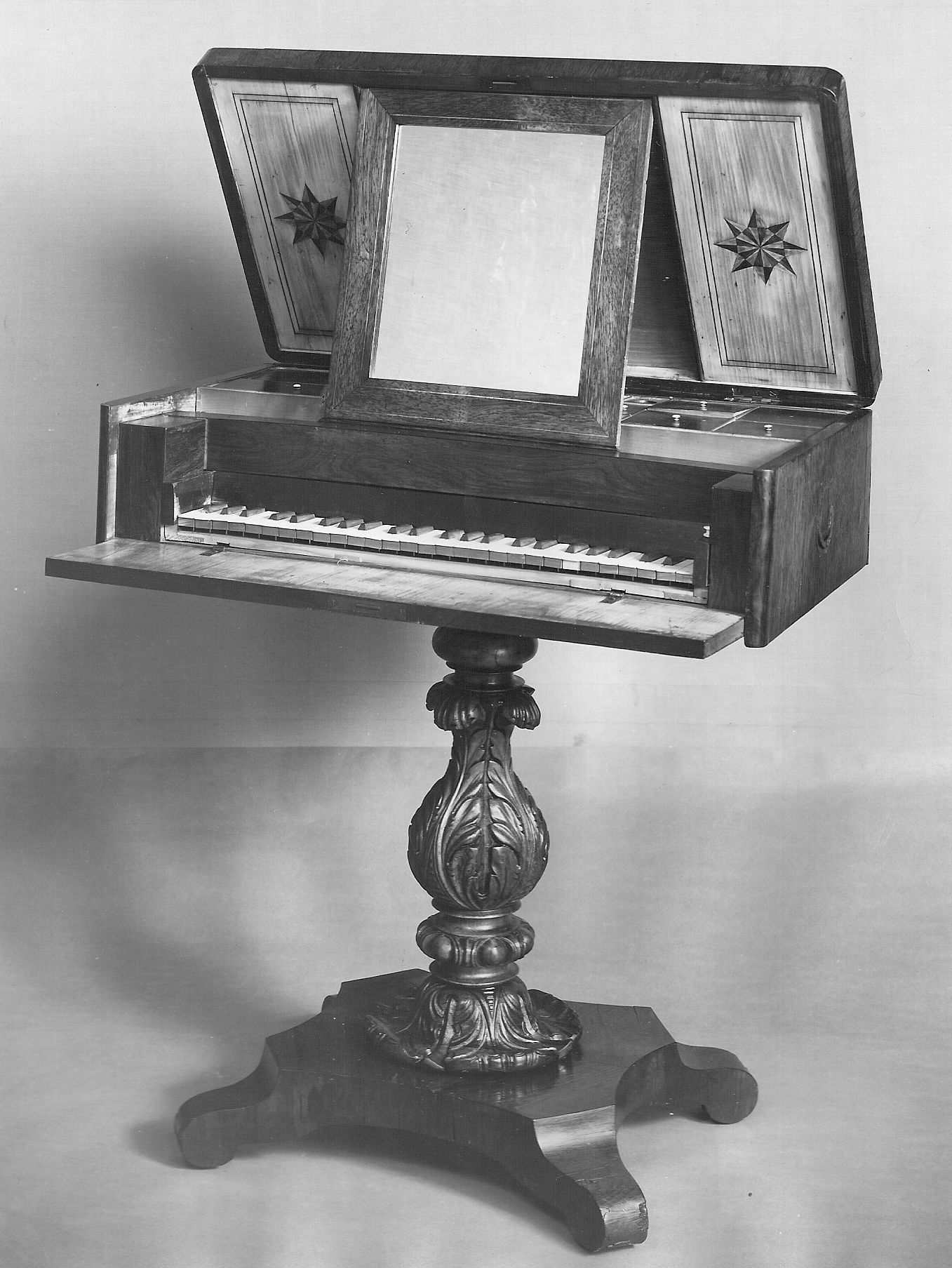
Heritage Analysis: The Square "Work Box" Piano
In the pursuit of curatorial excellence for Katherine Fashion Lab, the Square "Work Box" Piano emerges as a profoundly instructive artifact. Originating from the Germanic and Austrian regions during the late 18th to early 19th centuries, this instrument—crafted from a composite of fine woods, ivory, brass, and felt—represents far more than a musical device. It is a vessel of symbolic power, a testament to historical adornment, and a repository of spiritual meaning. This strategic standalone research paper deconstructs these layers to inform a 2026 high-end luxury strategy, emphasizing how heritage can be translated into contemporary brand narrative and product architecture.
Symbolic Power: The Domestic Throne of Influence
The Square "Work Box" Piano, often housed within the private salons of bourgeois and aristocratic households, functioned as a potent symbol of social capital. Its compact, rectangular form was not merely a concession to space; it was a deliberate design choice that signified intellectual refinement and emotional labor. In the Germanic and Austrian cultural context, the piano was the centerpiece of the "musical salon," a space where women could exercise influence through performance, thereby negotiating social hierarchies without overtly challenging patriarchal structures.
From a luxury strategy perspective, this symbolic power is directly translatable. The piano’s presence in a home was a declaration of cultural fluency and economic stability. For Katherine Fashion Lab, this suggests that the 2026 luxury consumer is not merely purchasing a product but acquiring a symbol of curated sophistication. The "Work Box" piano teaches us that objects of quiet authority—those that do not shout for attention but command respect through their historical and functional weight—hold enduring appeal. A luxury strategy rooted in this principle would prioritize narrative-driven collections that position the wearer as a custodian of cultural memory, rather than a passive consumer of trends.
Historical Adornment: The Art of the Invisible Detail
The physical construction of the Square "Work Box" Piano reveals a meticulous philosophy of adornment that is both restrained and opulent. The exterior, often veneered in exotic woods like rosewood, mahogany, or walnut, was hand-polished to a mirror finish. The interior, however, held the true treasures: hand-painted porcelain plaques, gilded brass hinges, and silk-lined compartments for sheet music. This dichotomy between the austere exterior and the richly adorned interior is a critical lesson in strategic concealment.
For Katherine Fashion Lab, this principle of historical adornment informs a 2026 design language based on "revealed luxury." The external silhouette of a garment or accessory may appear minimalist, but the lining, the stitching, the clasp—the unseen details—should tell a story of artisanal mastery. The piano’s use of intarsia and marquetry (inlaid wood patterns) serves as a direct analogue for fabric manipulation techniques: jacquard weaves, hand-embroidered motifs, and hidden pockets that mirror the piano’s secret compartments. This approach elevates the product from a simple commodity to a collectible artifact, appealing to the discerning client who values the invisible labor of creation.
Spiritual Meaning: The Instrument as a Mediator of the Sublime
In the Germanic Romantic tradition, music was considered a direct conduit to the divine, and the piano was its earthly vessel. The Square "Work Box" Piano was often placed in a room with high ceilings and large windows, not for acoustic reasons alone, but to allow natural light to fall upon the instrument, reinforcing its role as a mediator between the material and the spiritual. The act of playing was a form of private devotion, a ritual that connected the performer to a higher emotional or metaphysical plane.
This spiritual dimension offers a powerful framework for Katherine Fashion Lab’s 2026 strategy. The modern luxury consumer increasingly seeks experiential and transcendent value—not just ownership, but a sense of connection to something greater. The piano suggests that ritualistic engagement with a product can elevate its perceived worth. For example, a fashion collection might be designed around a "ceremonial" dressing process, where each garment is imbued with a specific intention or blessing, mirroring the pianist’s ritual of tuning and playing. The use of resonant materials—such as silk, which carries sound, or structured wools that hold form—can be framed as an "acoustic" experience for the body, transforming the act of wearing into a spiritual practice.
Strategic Implications for 2026 High-End Luxury
Synthesizing these heritage insights, Katherine Fashion Lab can develop a distinctive luxury strategy for 2026 that differentiates itself through historical depth and emotional resonance. The Square "Work Box" Piano is not a relic; it is a strategic blueprint. The following pillars emerge:
1. The "Work Box" Silhouette as a Brand Archetype. The piano’s rectangular, structured form can inspire a signature silhouette for bags, jewelry cases, or even outerwear. This shape suggests containment, protection, and the promise of a hidden interior. A limited-edition "Work Box" clutch, for instance, could feature a hidden compartment for a personal talisman, echoing the piano’s secret sheet-music drawer.
2. Material Alchemy as a Core Competency. The piano’s composite medium—wood, ivory, brass, felt—teaches the value of contrasting textures. Katherine Fashion Lab should invest in proprietary material blends: a cashmere-wool hybrid that mimics the feel of polished wood, or a metalized leather that catches light like gilded brass. These materials become the brand’s signature, instantly recognizable and impossible to replicate.
3. The "Salon" Experience as Retail Strategy. The piano’s original context—the private salon—can be reimagined as a retail or brand experience. Instead of a traditional store, Katherine Fashion Lab could create invitation-only "Salon Series" events where clients are guided through a curated selection of pieces, accompanied by live classical music. This transforms shopping from a transaction into a cultural ritual, reinforcing the brand’s positioning as a guardian of heritage.
4. Narrative Pricing and Provenance. The piano’s value was always tied to its provenance—who owned it, where it was played, what music was composed on it. Katherine Fashion Lab can adopt a provenance-driven pricing model for its highest-tier pieces. Each garment or accessory would come with a "heritage card" detailing the inspiration, the artisan, and the symbolic meaning of its design elements. This narrative justifies premium pricing and fosters collector behavior.
Conclusion: The Piano as a Strategic Compass
The Square "Work Box" Piano, in its quiet dignity, offers Katherine Fashion Lab a profound strategic compass for 2026. Its symbolic power teaches the value of quiet authority; its historical adornment reveals the potency of concealed luxury; and its spiritual meaning reminds us that the most enduring brands offer not just products, but portals to transcendence. By translating these heritage principles into a cohesive luxury strategy, Katherine Fashion Lab can position itself not merely as a fashion house, but as a curator of cultural memory—a status that no trend can erode. The piano’s legacy is not in its sound, but in its silence; it is the space it creates for reflection, which is the ultimate luxury.