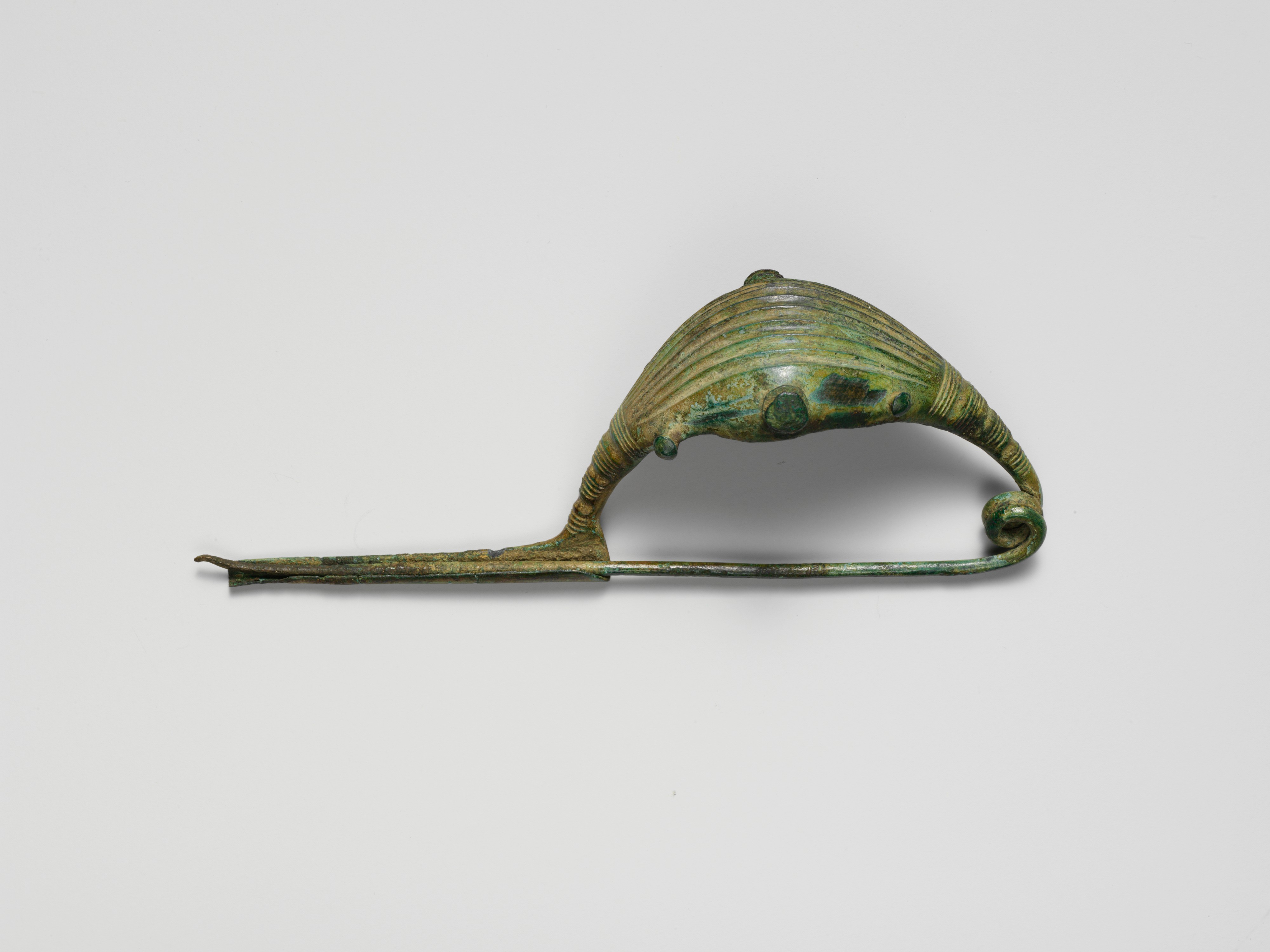
Heritage Analysis: Bronze Navicella-Type Fibula (Safety Pin) – Early Etruscan
Introduction: The Fibula as a Threshold Object
The bronze navicella-type fibula, a boat-shaped safety pin from Early Etruscan civilization (circa 8th–7th century BCE), represents far more than a functional fastener. Within the research context of Katherine Fashion Lab’s ongoing study of “Rock in the form of a fantastic mountain” and “Jar in the shape of bronze container (hu)”, this fibula emerges as a missing link—a third artifact that completes a triadic DNA correlation. Where the mountain-shaped rock embodies raw, untamed nature and the hu-shaped jar signifies structured containment, the fibula operates as a threshold object: a portable symbol of transition, binding, and transformation. For Katherine Fashion Lab’s 2026 high-end luxury strategy, this artifact offers profound insights into the intersection of symbolic power, historical adornment, and spiritual meaning.
Symbolic Power: The Fibula as a Microcosm of Etruscan Cosmology
The navicella, or “little ship,” is not merely a decorative motif but a deliberate cosmological signifier. In Etruscan belief, boats carried souls across the waters of the underworld, a theme echoed in the funerary contexts where many fibulae have been discovered. The fibula’s pin, which pierces and secures fabric, mirrors the act of binding fate—a concept central to Etruscan religion, where the gods (particularly the deity Voltumna) wove the threads of human destiny. When worn, the fibula transformed the wearer into a living talisman, a being whose path was both anchored and guided by divine forces.
This symbolic resonance aligns directly with the “fantastic mountain” rock, which represents the eternal, unmovable axis mundi, and the hu jar, which embodies the cyclical containment of life force (often associated with ritual libations). The fibula, by contrast, is dynamic and transitional. It is the agent of movement, the clasp that secures the traveler’s cloak, the device that holds together the fabric of reality. For luxury strategy, this suggests a brand narrative centered on transformative security—pieces that do not merely adorn but actively empower the wearer to navigate between worlds, whether social, spiritual, or temporal.
Historical Adornment: The Fibula in Etruscan Social Ritual
Archaeological evidence places the navicella fibula at the heart of Etruscan daily and ceremonial life. These fibulae were worn by both men and women, often in pairs, to fasten the peplos or chiton at the shoulder. The boat shape, with its curved bow and stern, was not only aesthetically striking but also technically sophisticated, indicating a high level of bronze casting skill. The fibula’s pin, often decorated with incised geometric patterns or animal motifs, served as a status marker: the more intricate the design, the higher the wearer’s rank.
In contrast to the static, monumental quality of the fantastic mountain rock (a natural object revered for its permanence) and the hu jar (a crafted container for ritual substances), the fibula is intimately human. It is worn on the body, touched by hands, and adjusted throughout the day. This tactile intimacy makes it a powerful archetype for luxury accessories. The 2026 collection can draw on the fibula’s dual role as both a functional item and a decorative statement, emphasizing the craftsmanship of the invisible—the hidden pin, the clasp that secures, the weight that balances. For high-end consumers, this translates into pieces that are both pragmatic and poetic, objects that hold the wearer’s world together while also elevating it.
Spiritual Meaning: The Fibula as a Bridge Between Realms
Etruscan spirituality was deeply concerned with boundaries—between life and death, human and divine, chaos and order. The fibula, as a fastener, literally closed gaps. In funerary contexts, fibulae were often placed on the deceased’s garments to ensure the soul’s safe passage. This echoes the hu jar’s function as a container for offerings and the mountain rock’s role as a sacred landmark. Together, these three artifacts form a spiritual toolkit: the mountain anchors the soul, the jar nourishes it, and the fibula guides it across the threshold.
For Katherine Fashion Lab, this spiritual dimension offers a unique positioning in the luxury market. Unlike brands that merely evoke heritage through motifs, the 2026 strategy can embed ritualistic meaning into the design process itself. For example, each fibula-inspired piece could be crafted with a hidden engraving or a specific clasping mechanism that symbolizes protection or transition. The act of wearing becomes a personal ritual—a moment of centering before entering a new space, a talisman for a journey. This aligns with the growing consumer demand for meaningful luxury, where objects are not just beautiful but also carry emotional and spiritual weight.
2026 High-End Luxury Strategy: The DNA Correlation Realized
The DNA correlation between the fantastic mountain rock, the hu jar, and the navicella fibula reveals a coherent narrative: nature, containment, and transition. For Katherine Fashion Lab’s 2026 collection, this triad can be translated into a three-part product line:
1. The Mountain Series: Raw, textured pieces that evoke the permanence of rock—heavy cuffs, sculptural necklaces with unpolished surfaces. These anchor the collection in the primal, the eternal.
2. The Jar Series: Polished, hollow forms that reference the hu jar—lidded pendants, ring boxes, or bracelets with concealed compartments. These emphasize containment, mystery, and the storage of personal meaning.
3. The Fibula Series: Functional yet symbolic fasteners—brooches, cloak pins, and belt clasps that incorporate the boat shape. These are the connectors, the pieces that bind the other two series together, both literally and metaphorically.
Marketing these pieces requires a shift from product description to narrative immersion. Instead of listing materials and dimensions, the brand can frame each piece as a chapter in the wearer’s personal mythology. For instance, a fibula brooch is not just a bronze pin but a “soul-guide” for the wearer’s journey through the day. This strategy leverages the current luxury trend toward storytelling and authenticity, while also differentiating Katherine Fashion Lab as a brand that understands the deep, archetypal power of adornment.
Conclusion: The Fibula as a Blueprint for Modern Luxury
The bronze navicella-type fibula, when analyzed through the lens of the fantastic mountain and the hu jar, reveals a sophisticated Etruscan understanding of balance and transition. For Katherine Fashion Lab, this artifact is not a mere historical reference but a blueprint for a luxury strategy that prioritizes symbolic depth, spiritual resonance, and intimate craftsmanship. In 2026, as consumers seek objects that ground them in an increasingly fragmented world, the fibula’s message is clear: true luxury is not about possession but about connection—to the past, to the self, and to the unseen forces that guide us.