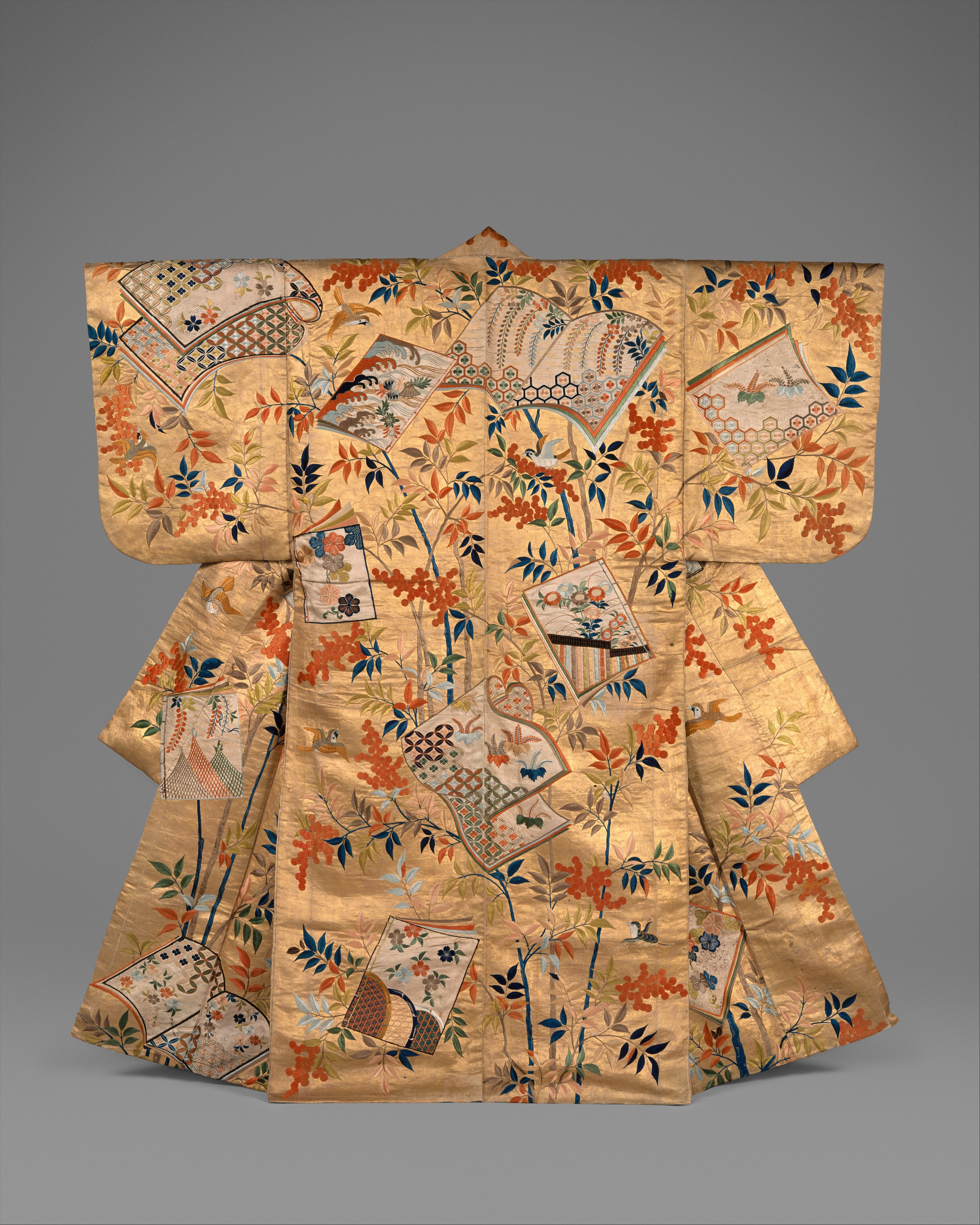
Deconstructing the Nuihaku: A Couture Analysis of Textile, Symbol, and Silent Narrative
Within the rarefied atelier of Katherine Fashion Lab, the analysis of historical costume transcends mere aesthetic appreciation; it is a forensic exercise in decoding the language of luxury, craftsmanship, and cultural semiotics. The subject of this standalone study—a Noh theater Nuihaku costume adorned with books and nandina branches—presents a formidable object of contemplation. More than a garment, it is a compacted universe of silk, symbol, and spiritual allusion. Its examination requires us to navigate the intersection of performative ritual, artisan virtuosity, and a philosophical system where every motif is an ideogram in a visual poem.
The Architectural Foundation: Nuihaku as a Canvas
To understand the embellishment, one must first comprehend the ground. The Nuihaku occupies a specific stratum in the hierarchical lexicon of Noh costuming. Unlike the heavily brocaded karaori worn by lead actors, the Nuihaku, often used for female spirits or youthful male roles, is characterized by its full-body patterning on a lightweight silk satin. This foundational choice is critical. The silk satin provides a luminous, subtly reflective plane that captures and softens light, mimicking the ethereal, otherworldly presence of the characters it adorns. Its lack of heavy structural weave makes it fluid, allowing movement that is less a walk and more a glide—a key component of Noh's hypnotic, slow-paced drama. This base material is not passive; it is the first actor in the performance, establishing a tone of refined, spectral elegance upon which the narrative embroidery is built.
The Embroidered Lexicon: Semiotics of Books and Nandina
The true discourse of the garment lies in its paired motifs: bound books and nandina branches. In Western couture, embroidery often serves decorative or status-affirming purposes. In Noh, a theater where literal representation is minimal, costume motifs are a primary vehicle for textual and psychological exposition. They are direct, symbolic lines into the soul of the character and the themes of the play.
The inclusion of bound books or scrolls is profoundly significant. In the context of Noh—deeply infused with Buddhist philosophy and classical Japanese literature (like The Tale of Genji)—books represent scholarship, refinement, and the cultivated mind. They may allude to a character's noble background, their connection to poetic tradition, or the very act of remembering and reciting the past. For a spirit character, books can symbolize the lingering legacy of a life lived with intellectual passion, or a specific poem that tethers them to the world of the living. The embroidery renders them not as generic objects but as deliberate, structured forms, their stitches suggesting the weight of knowledge and the fragility of parchment.
Juxtaposed with this symbol of human culture is the nandina, or heavenly bamboo. This evergreen shrub is rich in Japanese symbolism. It is considered auspicious, a protector against evil, and is often associated with longevity and resilience. Its seasonal change—green leaves turning to vibrant red berries—echoes core Noh themes of transience, the cycle of seasons, and the beauty of change within constancy. The berries, often meticulously rendered in silk thread, can symbolize drops of blood, passion, or the enduring spark of life beyond death. Together, books and nandina create a potent dialectic: the cultivated intellect (books) harmonizes with enduring nature and spiritual protection (nandina). This suggests a character who is both deeply learned and spiritually anchored, perhaps a noble scholar whose story is intertwined with the natural world and the unseen realms.
Couture-Level Craftsmanship: The Tactile Language of Luxury
From a technical couture perspective, the execution of these motifs is where artisan ambition meets metaphysical intent. The description notes silk embroidery and metallic leaf on silk satin. This indicates a multi-stage, labor-intensive process of staggering precision. The silk embroidery—likely using techniques like nuihaku (the namesake method of applying small squares of metallic leaf under sheer silk) or shishu (flat satin stitch)—builds texture and color. The metallic leaf, applied with adhesive and often protected by a sheer silk overlay, introduces a variable, kinetic element.
Herein lies a masterstroke of the costume's design: the interplay of light. As the Noh actor moves under the specific, often low-angle lighting of the traditional stage, the matte silk of the embroidered books and branches stands in deliberate contrast to the fleeting glints of the metallic leaf. This creates a dynamic, living surface that pulses gently with the actor's breath and subtle motions. The luxury is not ostentatious; it is intelligent and atmospheric. Each stitch and each leaf fragment is placed to serve the dual purpose of symbolic clarity and ambient, luminous effect. The craftsmanship is so elevated that it becomes invisible, leaving only the impression of a walking, breathing painting.
Conclusion: The Garment as a Standalone Philosophical Object
In the context of a standalone study at Katherine Fashion Lab, this Nuihaku costume challenges contemporary definitions of fashion. It is not a garment designed for personal expression or seasonal change. It is a prescribed, symbolic shell that completes the actor's transformation into an archetype. Its value lies in its unwavering fidelity to a non-verbal language of symbols, its orchestration of material and light to create presence, and its embodiment of wabi-sabi—the beauty of impermanence and subtlety.
Analyzing it through a couture lens reveals universal principles: the power of material intelligence, the narrative depth of surface decoration, and the ultimate goal of creating an aura rather than merely an outfit. The Nuihaku with books and nandina teaches us that the highest form of luxury fashion is that which successfully encodes a complex story into its very fibers, inviting endless contemplation long after the performance has ended. It stands as a testament to the fact that true artistry in dress is, and has always been, a profound act of communication.