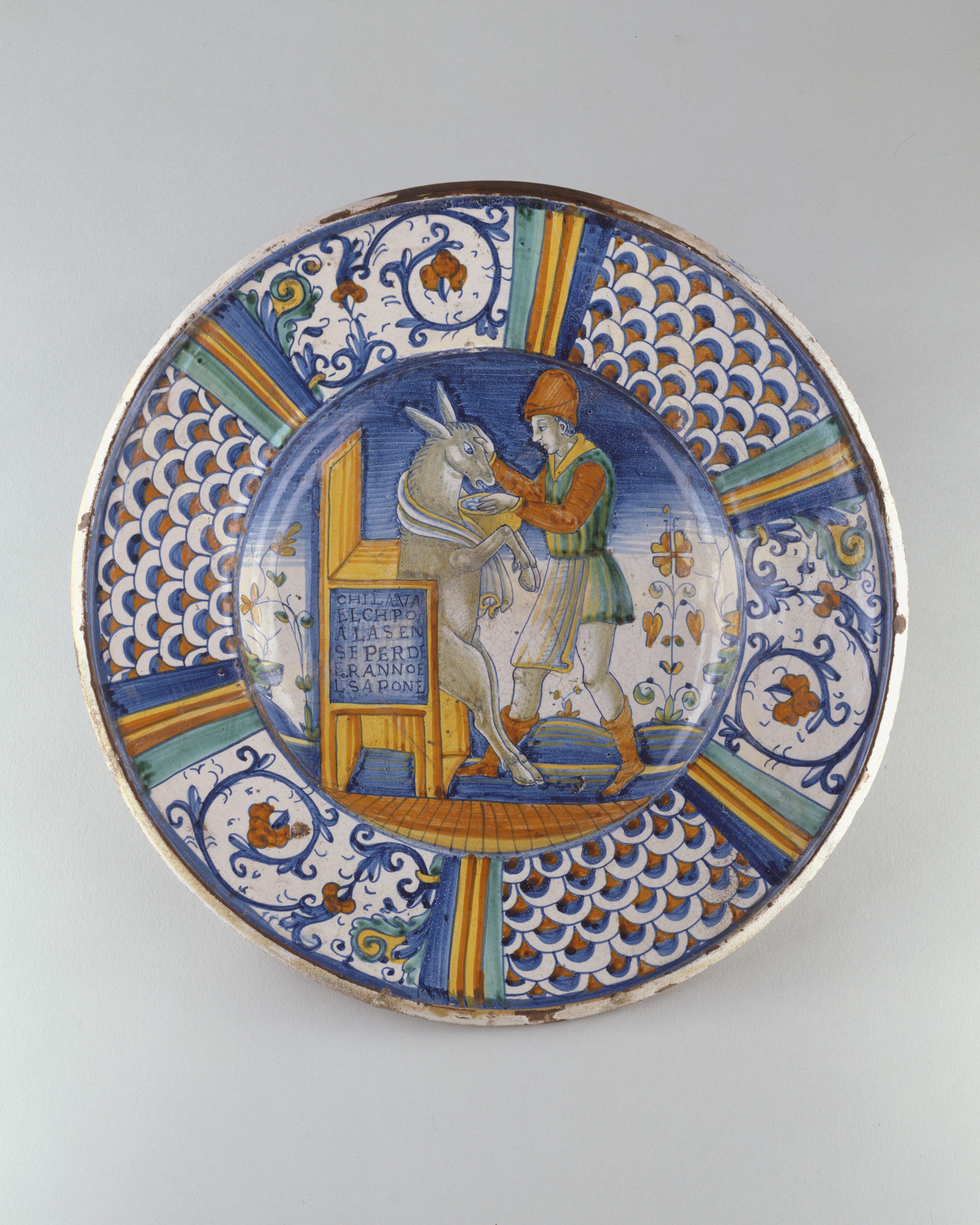
Heritage Analysis: Dish (Piatto) – Man Washing the Mouth of an Ass
Cultural and Historical Context: Deruta Maiolica
This Dish (piatto), originating from Deruta, Italy, and executed in maiolica (tin-glazed earthenware), represents a pinnacle of Renaissance-era decorative arts. Deruta, a small Umbrian town, became a renowned center for maiolica production from the 15th through 17th centuries, celebrated for its lustrous glazes and narrative imagery. The piece depicts a man washing the mouth of an ass—a scene that, at first glance, appears mundane but is rich with allegorical and moralistic undertones. In the context of Katherine Fashion Lab, this artifact serves as a strategic artifact for understanding how historical adornment—functional yet symbolic—can inform a 2026 high-end luxury strategy rooted in authenticity, narrative depth, and spiritual resonance.
Symbolic Power: The Ass as a Mirror of Human Folly
The central motif—a man washing the mouth of an ass—is a visual parable drawn from classical and folkloric traditions. The ass, historically a symbol of stubbornness, ignorance, and base labor, contrasts with the act of washing, which implies purification, care, or absurdity. In Renaissance Italy, such imagery often served as a moral allegory for the futility of trying to refine that which is inherently coarse. For Katherine Fashion Lab, this symbolism offers a powerful lens for luxury branding: the tension between effort and outcome, refinement and authenticity. A high-end strategy can leverage this paradox to position the brand as one that celebrates imperfection and narrative complexity—a counterpoint to sterile modernity. The symbolic power lies in the unexpected dignity of the act; the man’s labor, though seemingly foolish, elevates the mundane into a ritual. This mirrors the luxury consumer’s desire for meaning over mere utility, a key driver for 2026.
Historical Adornment: Maiolica as a Medium of Status and Storytelling
Maiolica’s tin-glazed surface was not merely decorative but a marker of technological sophistication and economic status. In Renaissance Deruta, these dishes adorned the homes of wealthy merchants and clergy, serving as both functional tableware and conversation pieces. The lustrous finish, achieved through metallic oxides, signified light, wealth, and spiritual illumination. For Katherine Fashion Lab, historical adornment is not about replication but about translating material language. The dish’s intricate brushwork and cobalt blues suggest a craft-intensive process that is rare in an era of mass production. A 2026 luxury strategy can draw on this by emphasizing artisanal scarcity, limited editions, and the tactile pleasure of handcrafted materials. The dish’s role as a narrative vessel—each stroke telling a story—aligns with modern luxury’s shift toward experiential and intellectual value. The brand can adopt similar “adornment-as-story” principles in textiles, hardware, or packaging, transforming everyday objects into heirlooms.
Spiritual Meaning: Purification, Patience, and the Sacred Profane
Beyond its literal depiction, the act of washing an ass’s mouth carries spiritual connotations. In Christian iconography, washing symbolizes baptism, cleansing, and humility. The ass, often associated with the Nativity (the donkey that carried Mary), also represents service and endurance. The man’s gesture—attending to a lowly creature—echoes the virtue of caritas (charity) and the dignity of labor. For Katherine Fashion Lab, this spiritual dimension offers a profound brand ethos: luxury as a form of care. In 2026, high-end consumers increasingly seek brands that embody mindfulness, sustainability, and ethical stewardship. The dish’s spiritual meaning can be translated into a ritualistic product experience—for example, a limited-edition garment or accessory that requires a deliberate, slow process to appreciate (e.g., a hand-embroidered piece that takes months to complete). This elevates consumption from transactional to sacramental, aligning with the growing luxury trend of “slow fashion” and emotional durability.
2026 High-End Luxury Strategy: From Artifact to Archetype
To integrate this heritage analysis into a 2026 high-end luxury strategy, Katherine Fashion Lab must position the dish not as a mere decorative object but as an archetype of refined contradiction. The following strategic pillars emerge:
1. Narrative-Driven Collections: The dish’s story of unlikely care can inspire a capsule collection titled “The Washing” or “Mouth of the Ass.” Garments could feature asymmetrical draping (suggesting effort), lustrous metallic accents (echoing maiolica glaze), and unexpected juxtapositions (e.g., coarse linen paired with silk). Each piece would include a QR code or booklet detailing the Deruta provenance, creating a collector’s narrative.
2. Material Philosophy: The tin-glaze effect can inspire a signature finish—perhaps a ceramic-like resin on buttons, clasps, or even footwear. This material choice signals artisanal integrity and historical rootedness, appealing to the 2026 luxury consumer’s desire for tangible authenticity over digital ephemera.
3. Ritualistic Marketing: The act of washing can be reframed as a brand ritual. For example, a limited-edition garment care ceremony—where customers are invited to “purify” their purchase with a special sachet or spray—mirrors the man’s patient labor. This creates emotional bonding and repeat engagement, key metrics for luxury loyalty.
4. Spiritual Positioning: The brand can adopt a “sacred profane” aesthetic, celebrating the beauty in the mundane. Campaign imagery should feature everyday acts of care (washing, mending, polishing) rendered with Renaissance grandeur—a direct visual reference to the dish. This aligns with 2026’s post-materialist luxury trend, where status is derived from meaning and mindfulness.
5. Scarcity and Provenance: Each collection piece should be individually numbered and accompanied by a certificate of inspiration referencing the Deruta dish. The brand can partner with Italian ceramists to create co-branded objects—for instance, a limited-run dish that mirrors the garment design. This cross-medium collaboration reinforces heritage authority and collectibility.
Conclusion: The Dish as a Strategic Compass
The Dish (piatto): Man Washing the Mouth of an Ass is far more than a historical curiosity. It is a strategic compass for Katherine Fashion Lab to navigate the 2026 luxury landscape. By decoding its symbolic power (the dignity of the absurd), historical adornment (craft as status), and spiritual meaning (care as sacred), the brand can construct a narrative of refinement through humility. In an era where luxury must be meaningful, rare, and ethical, this Deruta artifact offers a timeless template: true luxury lies not in perfection, but in the story of the effort—the washing, the glazing, the slow transformation of the ordinary into the extraordinary. For Katherine Fashion Lab, this is not just a research finding; it is a blueprint for distinction.