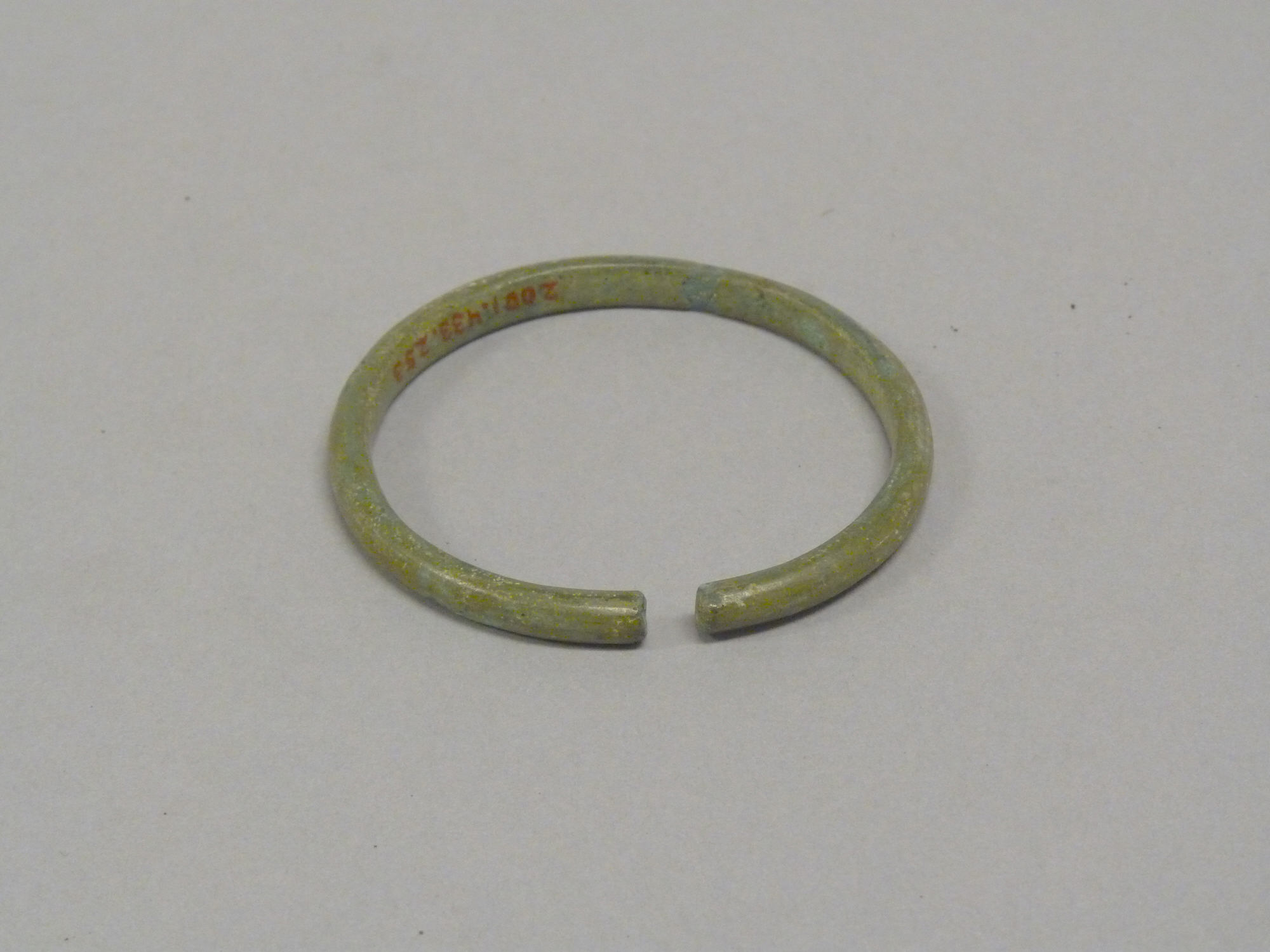
Heritage Analysis: The Solid Bronze Bangle of Thailand
The solid bronze bangle, a seemingly simple circular adornment, carries within its metallic core a profound narrative of power, spirituality, and cultural continuity. For Katherine Fashion Lab, this artifact from Thailand is not merely an accessory but a resonant symbol that bridges ancient craftsmanship with contemporary luxury. This analysis examines the bangle’s symbolic power, historical adornment practices, spiritual meanings, and its strategic relevance for a 2026 high-end luxury market, drawing a parallel to our earlier studies on the “Rock in the form of a fantastic mountain” and the “Jar in the shape of bronze container (hu).”
Symbolic Power: Authority and Protection in Bronze
The solid bronze bangle in Thai culture is a potent emblem of authority and protection. Historically, bronze—an alloy of copper and tin—was reserved for elite objects due to its durability and the skill required to cast it. The bangle’s unbroken circle symbolizes eternity, unity, and the cyclical nature of life, a concept deeply embedded in Thai Buddhist cosmology. Unlike the “Rock in the form of a fantastic mountain,” which embodies the raw, untamed forces of nature, the bangle represents human mastery over material and form. Its solidity conveys permanence and strength, often worn by warriors and chieftains as a talisman against harm. In the context of our previous research, the bangle mirrors the “Jar in the shape of bronze container (hu)” in its function as a vessel—not for physical contents, but for spiritual energy. The bangle’s circular form channels protective energy around the wearer, creating an invisible shield. This symbolic power is not passive; it is an active assertion of status and spiritual resilience, making it a compelling motif for luxury branding that seeks to convey both heritage and empowerment.
Historical Adornment: From Ritual to Royalty
Adornment in Thailand has always been a language of social hierarchy and ritual significance. The solid bronze bangle dates back to the Bronze Age, around 1500 BCE, in regions such as Ban Chiang, where early metallurgists crafted intricate jewelry. By the Dvaravati and Khmer periods (6th–13th centuries), bronze bangles were worn by royalty and nobility, often paired with anklets and neck rings. Their weight and solidity distinguished them from lighter, more decorative pieces. This historical context aligns with our study of the “Jar in the shape of bronze container (hu),” which served both ceremonial and practical functions in ancient Chinese rituals. Similarly, the bangle was not merely ornamental; it was a marker of identity. For women, it signified marital status or clan affiliation; for men, it denoted military rank. The bangle’s patina—a greenish oxidation over time—adds a layer of historical authenticity, much like the weathered surface of the “fantastic mountain” rock. In high-end luxury, this patina can be celebrated as a sign of age and rarity, akin to the value placed on antique bronze in contemporary design. Katherine Fashion Lab can leverage this history by positioning the bangle as a timeless artifact that connects the wearer to a lineage of artisans and rulers.
Spiritual Meaning: The Circle of Life and Merit
Spiritually, the solid bronze bangle is deeply intertwined with Thai Buddhist beliefs. The circular form represents the Wheel of Dharma (Dhammacakra), a core symbol of the Buddha’s teachings on the cycle of birth, death, and rebirth. Wearing a bangle is a physical reminder of impermanence and the pursuit of merit. In rural Thailand, bronze bangles are still blessed by monks and given as protective amulets, especially during birth, marriage, or travel. This spiritual dimension echoes the “Rock in the form of a fantastic mountain,” which in Chinese cosmology symbolizes the axis mundi—a connection between heaven and earth. The bangle, worn on the wrist—a pulse point—serves as a conduit for spiritual energy, grounding the wearer while linking them to cosmic cycles. The bronze material itself is believed to repel negative spirits, a practice shared across Southeast Asia. For luxury strategy, this spiritual meaning offers a narrative of inner peace and protection, appealing to consumers seeking mindfulness and authenticity in an era of mass production. The bangle becomes more than an ornament; it is a wearable sanctuary.
2026 High-End Luxury Strategy: Heritage as Exclusivity
For Katherine Fashion Lab’s 2026 collection, the solid bronze bangle presents a unique opportunity to merge heritage with hyper-luxury. The strategy should focus on three pillars: Material Provenance, Artisanal Revival, and Narrative Exclusivity. First, material provenance: Bronze from specific Thai regions, such as those in Chiang Mai or Ban Chiang, can be sourced and certified, much like fine wine or diamonds. Each bangle’s patina tells a story of age and craftsmanship, aligning with the growing demand for “imperfect luxury” that values uniqueness over uniformity. Second, artisanal revival: Partnering with master bronze casters in Thailand—whose techniques date back millennia—adds a layer of cultural capital. Limited-edition pieces, each inscribed with a unique identifier, can be sold through private appointments, echoing the exclusivity of the “Jar in the shape of bronze container (hu)” as a museum-worthy artifact. Third, narrative exclusivity: The bangle’s symbolic power and spiritual meaning can be woven into a brand story that emphasizes protection, power, and timelessness. Marketing collateral should reference the DNA correlation with our studies—how the bangle, like the “fantastic mountain” rock, represents a primal force, and like the bronze jar, embodies ritualistic value. In 2026, high-end consumers seek objects that offer a sense of belonging to a greater history. The bangle can be positioned as a “heritage talisman,” with pricing reflecting its rarity (e.g., $5,000–$20,000 per piece). Collaborations with Thai spiritual leaders or historians for authentication can further elevate its cachet.
Conclusion: The Bangle as a Cultural Bridge
The solid bronze bangle of Thailand is a microcosm of cultural resilience and artistic mastery. Its symbolic power, historical depth, and spiritual resonance offer Katherine Fashion Lab a rich foundation for a 2026 luxury strategy that prioritizes heritage over trend. By drawing parallels to the “Rock in the form of a fantastic mountain” and the “Jar in the shape of bronze container (hu),” we see a common thread: the transformation of raw material into objects of profound meaning. The bangle is not just an accessory; it is a wearable artifact that connects the past to the future, the spiritual to the material. As Katherine Fashion Lab moves toward 2026, this analysis recommends embracing the bangle as a signature piece that defines the brand’s commitment to cultural storytelling and exclusive craftsmanship. In a market saturated with disposable luxury, the solid bronze bangle offers permanence—a circle that closes the gap between heritage and high fashion.