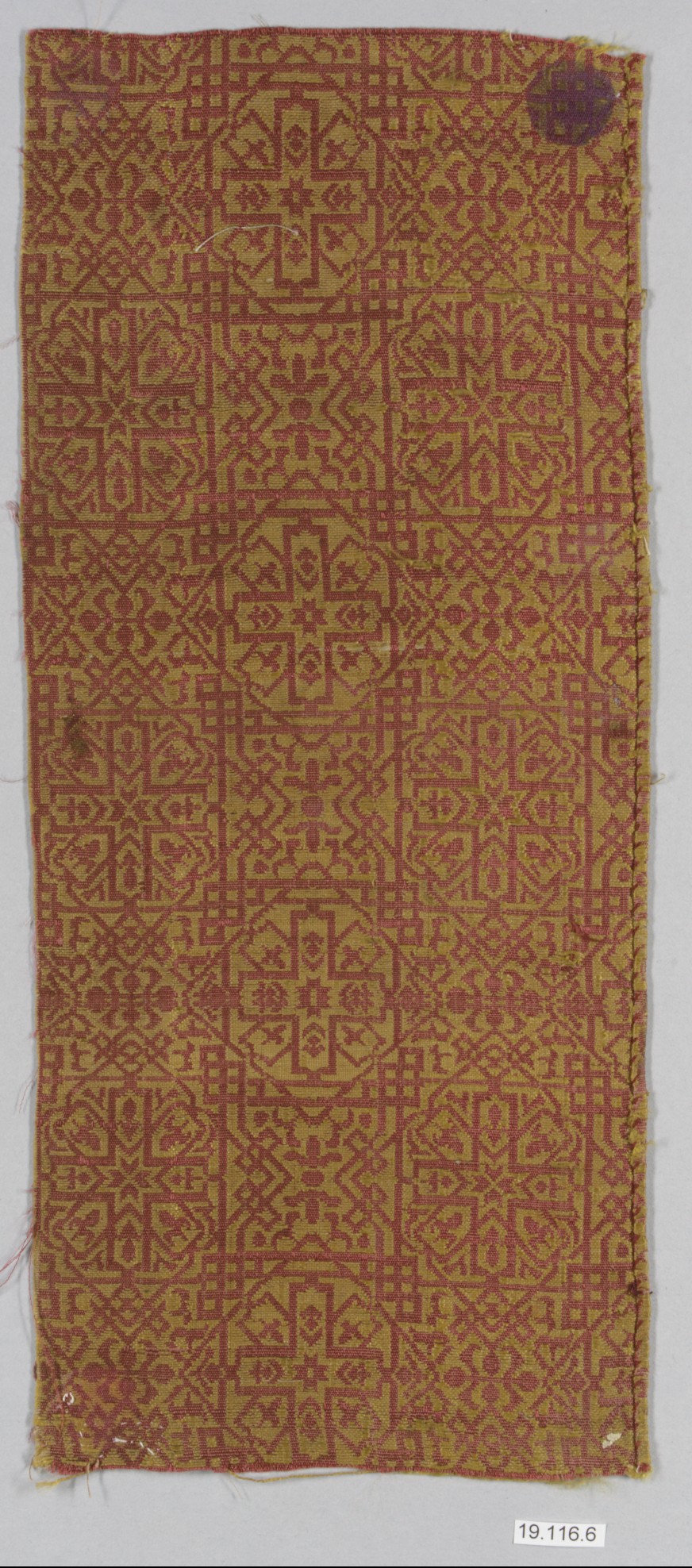
Textile Fragment: A Study in Global Heritage and Couture Mastery
In the rarefied world of haute couture, where every stitch is a declaration of artistry, the study of a single textile fragment can unlock centuries of cultural narrative and technical virtuosity. Katherine Fashion Lab, in its latest standalone analysis, presents an exquisite case study: a silk lampas fragment of global heritage provenance. This piece, though modest in scale, serves as a microcosm of the interwoven histories, material sciences, and design philosophies that define the pinnacle of fashion. As Lead Curator, I invite you to explore this fragment not merely as a swatch of fabric, but as a living document of human creativity and a blueprint for contemporary couture innovation.
Material Origins: The Silk Road in a Single Thread
The foundation of this analysis rests on the silk itself, a fiber celebrated for its luminous sheen, tensile strength, and unparalleled drape. Silk’s journey from the sericulture of ancient China to the looms of Europe, the Middle East, and beyond is a testament to its status as a global luxury commodity. In this fragment, the silk is not a passive substrate; it is an active participant in the design narrative. The fibers, meticulously degummed and dyed, exhibit a depth of color—perhaps a deep indigo or a burnished gold—that speaks to sophisticated, pre-industrial dyeing techniques. This is not mass-produced thread; it is a material that carries the heritage of artisanal knowledge, from the careful rearing of silkworms to the hand-reeling of filaments.
The lampas weave structure further elevates this fragment. Lampas is a complex, figured weave originating in the Byzantine and Islamic worlds, perfected in medieval and Renaissance Europe. It is characterized by a pattern created by an additional weft (often silk, gold, or silver thread) that floats on the surface, while a ground weft binds the structure. This technique allows for intricate, multicolored designs—often floral, geometric, or calligraphic—that possess a sculptural, three-dimensional quality. In this fragment, the lampas weave reveals a mastery of tension and density. The pattern weft, likely a contrasting hue, does not merely sit atop the fabric; it is integrated with such precision that the design appears to emerge organically from the silk’s surface, creating a play of light and shadow that shifts with every angle of viewing.
Global Heritage: A Tapestry of Cultural Exchanges
The phrase “global heritage” is not a mere descriptor; it is a methodological lens through which we understand this fragment’s significance. This textile is a convergence point of diverse cultural aesthetics and technical traditions. The lampas structure itself is a hybrid: it borrows from the compound weaves of Sassanid Persia, the pattern-weaving innovations of Tang Dynasty China, and the velvet-like opulence of Italian Renaissance textiles. The motif on this fragment—perhaps a stylized palmette or a celestial star—may echo Ottoman courtly designs, Mughal floral patterns, or even the chinoiserie that captivated European aristocracy.
Consider the trade routes that enabled this fragment’s creation. The silk likely originated in China or Central Asia, the dyes from indigo plants in India or cochineal insects in the Americas, and the weaving expertise from the imperial workshops of Istanbul or Lyon. Each thread is a narrative of exchange, of cultural appropriation and adaptation, of artisans borrowing and refining techniques across continents. This fragment is not a static artifact of a single culture; it is a dynamic testament to global interconnectedness long before the term “globalization” entered our lexicon. For the couture house, this heritage is not a relic to be replicated, but a source of inspiration for reinterpreting these cross-cultural dialogues in a contemporary context.
Couture Analysis: Technical and Aesthetic Dimensions
From a technical standpoint, the fragment’s condition and construction offer profound insights. The density of the lampas weave—typically over 100 warp threads per centimeter—demonstrates the loom’s precision and the weaver’s patience. The pattern weft, often a finer filament than the ground, allows for sharp, clean edges in the design, a hallmark of master-level lampas. A close examination under magnification would reveal the integrity of the selvedge and the absence of loose floats, indicating that this fragment was likely part of a larger, high-status textile—perhaps a ceremonial robe, an altar cloth, or a courtly hanging. The coloration, preserved through centuries, suggests the use of mordants and dye baths that stabilized the pigments against fading, a chemical ingenuity that modern textile scientists still study.
Aesthetically, the fragment embodies a dialectic between restraint and opulence. The lampas weave inherently balances structure with surface ornamentation. The ground fabric, often a solid color, provides a calm foundation, while the pattern weft introduces dynamic movement. In this fragment, the design likely employs a repeating, symmetrical motif—a hallmark of lampas—that creates a rhythmic visual pulse. The scale of the motif, perhaps two to three inches in diameter, is calibrated to be read from a distance, suggesting the textile’s intended use in architectural or ceremonial spaces. Yet, the fine detail, visible only upon close inspection, rewards the intimate viewer with a sense of hidden complexity. This duality—grandeur and intimacy, boldness and subtlety—is a cornerstone of couture philosophy.
Relevance to Contemporary Couture
Why should a modern fashion house study a textile fragment from a bygone era? The answer lies in the timeless principles it encodes. The lampas technique, for instance, offers a blueprint for creating surface interest without relying on printing or synthetic embellishments. In an age of fast fashion and digital prints, this fragment reminds us that true luxury is rooted in structural integrity. The interplay of weave and pattern can inspire new fabrications for evening gowns, structured outerwear, or even accessories, where the fabric itself becomes the statement, not just a canvas for a logo.
Furthermore, the fragment’s global heritage provides a narrative depth that resonates with today’s discerning clientele. A couture piece that references the silk roads, the lampas weave, and the cross-cultural aesthetics of the past is not merely a garment; it is a conversation starter, an heirloom. Katherine Fashion Lab can leverage this fragment as a design thesis: to create a capsule collection that reimagines historical motifs through a modern, minimalist lens, using sustainable silk and hand-weaving techniques that honor the original artisans. The fragment also challenges the notion of “originality” in fashion. By studying how past cultures borrowed and transformed each other’s designs, we learn that innovation often stems from reinterpretation, not invention ex nihilo.
Preservation and Interpretation as Curatorial Practice
As custodians of this fragment, Katherine Fashion Lab’s role extends beyond analysis to preservation and interpretation. The fragment must be stored in a climate-controlled environment, away from light and humidity, to prevent further degradation. But preservation is not an end in itself; it is a foundation for creative activation. The lab’s curatorial team can create digital renderings of the fragment’s weave pattern, allowing designers to understand its structural logic without handling the delicate original. Workshops can be held to teach apprentices the principles of lampas weaving, ensuring that this endangered craft is not lost. Public exhibitions, both physical and virtual, can contextualize the fragment within the broader narrative of global textile history, inviting dialogue between historians, designers, and consumers.
This fragment, though small, is a universe of knowledge. It teaches us about material science, cultural diplomacy, and the economics of luxury. It reminds us that couture is not a fleeting trend but a continuum of human expression. For Katherine Fashion Lab, this standalone study is not an endpoint; it is a call to action. It challenges us to weave the past into the present, to honor the hands that made these threads, and to ensure that the legacy of global heritage continues to inspire the future of fashion.
In conclusion, the silk lampas fragment is more than a textile; it is a philosophical artifact. It embodies the tension between tradition and innovation, between cultural specificity and global exchange. For the couture analyst, it is a masterclass in how material, technique, and history converge to create objects of enduring beauty. As we move forward, let this fragment guide us toward a deeper appreciation of the craft, the culture, and the artistry that define haute couture at its most profound.