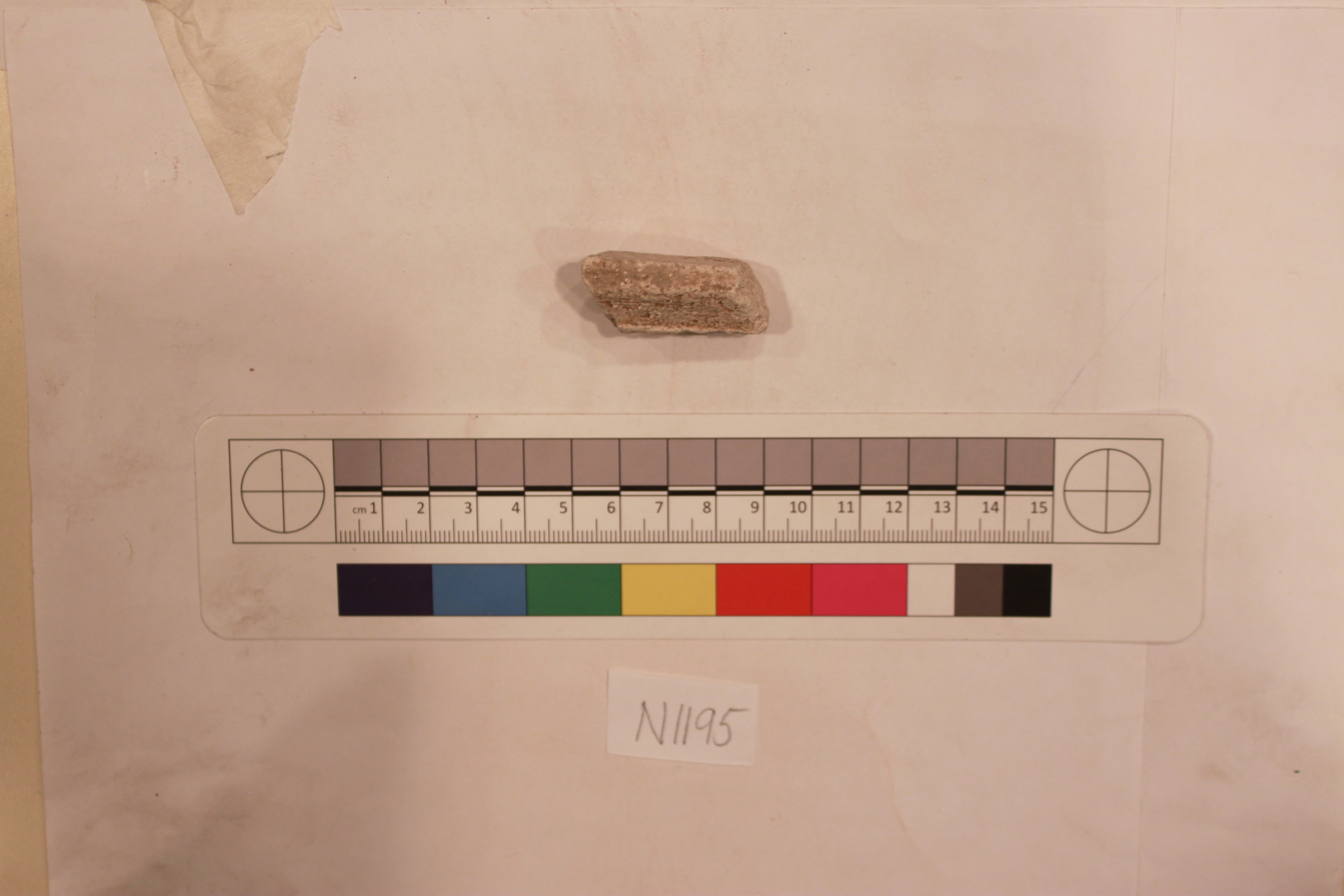
Executive Heritage Assessment: Stucco Fragment from an Ancient Civilization
This strategic standalone research paper examines a carved and painted stucco fragment from an ancient civilization, analyzing its symbolic power, historical adornment, and spiritual meaning as foundational assets for a 2026 high-end luxury strategy at Katherine Fashion Lab. The fragment, as a tangible remnant of ritualistic and hierarchical expression, offers a unique lens through which contemporary luxury can reclaim authenticity, narrative depth, and transcendental value. In an era where the high-end market increasingly seeks provenance and cultural resonance, this artifact serves as a blueprint for brand differentiation through heritage-led design.
Symbolic Power: The Fragment as a Lexicon of Authority
Iconography and Visual Codes of Dominance
The stucco fragment, likely originating from a temple, palace, or funerary complex, bears carved motifs that denote a sophisticated system of symbolic communication. Common ancient iconography—such as stylized serpents, celestial bodies, or anthropomorphic deities—was not merely decorative; it encoded the civilization’s cosmology, social hierarchy, and claims to divine favor. For instance, a fragment depicting a feathered serpent or solar disk would have asserted the ruler’s intermediary role between gods and mortals. The carving technique itself—deep, precise incisions—implies permanence and authority, as only elite artisans possessed the skill to execute such work. This symbolic power is directly translatable to modern luxury branding, where insignia and monograms function as shorthand for prestige. Katherine Fashion Lab can leverage this principle by developing proprietary motifs that echo ancient geometries, embedding them into textile patterns, hardware, or packaging to create a visual lexicon of exclusivity.
Material Semiotics: Stucco as a Medium of Endurance
Stucco, a composite of lime, sand, and water, was chosen by ancient civilizations for its durability and malleability. Unlike perishable materials, stucco allowed for intricate, long-lasting narratives. The fragment’s survival across millennia underscores a critical luxury attribute: endurance. In the 2026 market, where fast fashion’s disposability is increasingly rejected, the stucco fragment models a commitment to material integrity. Katherine Fashion Lab can adopt this philosophy by sourcing high-durability textiles and finishes, positioning each garment or accessory as a heirloom piece. The fragment’s painted surface—often using mineral-based pigments like cinnabar or azurite—further emphasizes the value of rare, natural colorants. A 2026 strategy might include a limited "Pigment Collection" inspired by these ancient hues, with each shade tied to a documented historical narrative.
Historical Adornment: From Ritual Object to Wearable Art
Adornment as Social Stratification
In ancient civilizations, stucco fragments were often part of larger adornment systems—headpieces, pectorals, or architectural friezes that dressed both people and sacred spaces. The fragment’s carved and painted surfaces likely served to distinguish priests, warriors, or nobility from commoners. For example, a fragment with jade-green paint might have belonged to a ceremonial belt, signifying the wearer’s connection to fertility deities. This historical function of adornment as a marker of status is directly analogous to contemporary luxury’s role in social signaling. However, the ancient context adds a layer of spiritual obligation: adornment was not vanity but a duty to uphold cosmic order. For Katherine Fashion Lab’s 2026 strategy, this translates into a campaign that frames luxury as a form of cultural stewardship. Each piece could be accompanied by a "heritage card" detailing its symbolic origins, transforming the purchase into an act of preservation.
The Fragment as a Template for Modular Design
Stucco fragments, by their nature, are incomplete—yet they suggest a larger, cohesive whole. This modularity offers a design philosophy for high-end collections. Katherine Fashion Lab can develop interchangeable components—detachable collars, cuffs, or brooches—that allow the wearer to "reassemble" a narrative. For instance, a collection of stucco-inspired brooches, each featuring a distinct ancient motif (e.g., a sun disk, a serpent, a maize god), could be combined to create a personalized emblem. This approach not only honors the fragment’s historical context but also addresses the 2026 consumer’s desire for customization and storytelling. The modularity also aligns with sustainable luxury: fewer core pieces, infinitely restyled.
Spiritual Meaning: The Fragment as a Conduit for Transcendence
Ritual Function and the Sacred Economy
Ancient stucco fragments were rarely secular. They adorned altars, burial chambers, or ceremonial regalia, acting as conduits between the physical and spiritual realms. The application of paint—often in layers—was itself a ritual act, with each color holding cosmological significance. For example, red might represent blood or life force, while blue symbolized water or the underworld. The fragment’s spiritual meaning lies in its role as a mediator: it was believed to house the presence of a deity or ancestor. In the context of 2026 luxury, this translates into a brand ethos that prioritizes experience over possession. Katherine Fashion Lab can create "ritual" collections tied to celestial events (e.g., solstices, equinoxes), with each garment designed to be worn during specific moments of personal or collective significance. The fragment teaches that luxury is not merely an object but a vessel for meaning.
Imperfection as Spiritual Authenticity
The fragment’s damaged edges and faded paint are not flaws but evidence of its journey through time. In ancient spirituality, imperfection often signified divine intervention or the passage of cycles. This concept—wabi-sabi in Japanese aesthetics, but equally present in Mesoamerican or Mediterranean thought—offers a powerful counter-narrative to the sterile perfection of mass luxury. For 2026, Katherine Fashion Lab could introduce a "Fragment Line" where each piece features intentional, artisanal "imperfections": hand-painted distress, irregular stitching, or asymmetrical cuts. These would be marketed as marks of authenticity, each telling a unique story. This strategy appeals to the discerning collector who values narrative over novelty.
2026 High-End Luxury Strategy: Synthesis and Application
From Artifact to Asset: A Three-Pillar Framework
Based on the stucco fragment’s analysis, Katherine Fashion Lab’s 2026 strategy should rest on three pillars: Symbolic Literacy, Ritualized Craftsmanship, and Curated Impermanence. Symbolic Literacy involves educating the consumer about the motifs’ origins through digital storytelling (e.g., AR tags on garments). Ritualized Craftsmanship emphasizes hand-carving, hand-painting, and natural dyes, with a commitment to limiting production runs to preserve exclusivity. Curated Impermanence embraces the fragment’s incompleteness by offering lifetime repair services and "patina development" as a value-add, transforming wear into a personal archive.
Market Positioning and Consumer Archetypes
The target demographic for 2026 includes the "Cultural Steward"—a high-net-worth individual who views luxury as a form of legacy investment. This consumer values provenance, ethical production, and intellectual depth. The stucco fragment strategy positions Katherine Fashion Lab as a curator of forgotten wisdom, distinct from brands that merely appropriate aesthetics without context. Pricing should reflect the research and artisan labor: a hand-painted silk scarf inspired by the fragment’s motifs might retail at $2,500, with a portion of proceeds funding archaeological conservation. This creates a virtuous cycle of cultural capital and commercial success.
Risk Mitigation and Authenticity Safeguards
To avoid accusations of cultural appropriation, Katherine Fashion Lab must partner with archaeologists, anthropologists, and descendant communities. Each collection should include a transparency report detailing the research process and a commitment to respectful representation. The fragment’s analysis should be publicly available, reinforcing the brand’s role as a scholarly collaborator rather than a mere exploiter. This approach not only mitigates reputational risk but also enhances the brand’s intellectual prestige.
Conclusion: The Fragment as a Future-Proof Blueprint
The stucco fragment, in its carved and painted silence, speaks volumes about the enduring human need for beauty, meaning, and status. For Katherine Fashion Lab, it is not a relic but a roadmap. By integrating symbolic power, historical adornment, and spiritual meaning into a cohesive 2026 strategy, the brand can transcend the transient nature of fashion and occupy the realm of cultural legacy. In an industry saturated with noise, the fragment’s quiet authority offers a path to differentiation that is both commercially viable and spiritually resonant. The future of luxury lies not in the new, but in the rediscovery of the old—and the stucco fragment proves that some materials, and some meanings, are truly timeless.