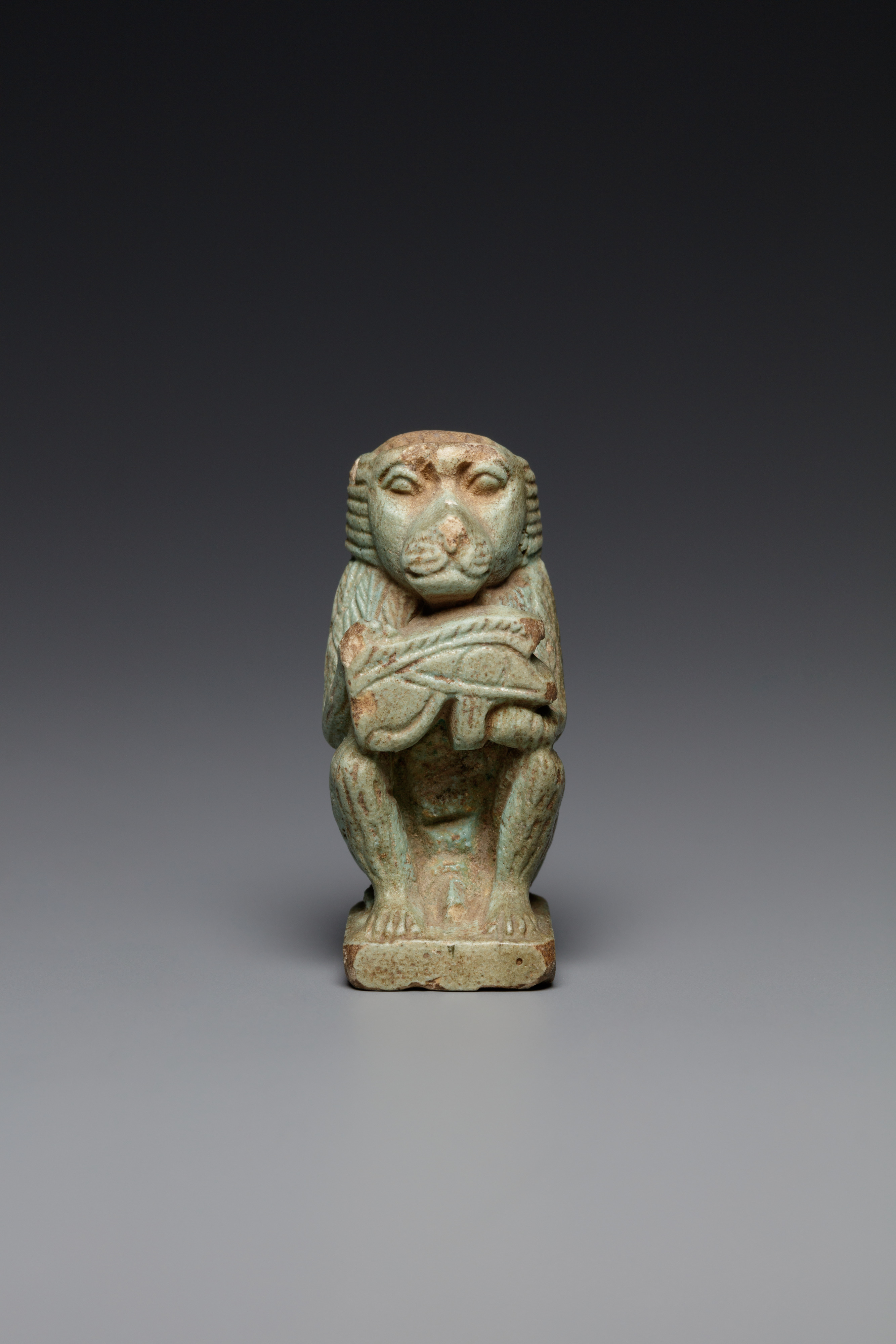
Executive Heritage Analysis: The Baboon with Wedjat Eye in Faience
This report presents a strategic heritage analysis of the ancient Egyptian motif of the baboon bearing the wedjat eye, rendered in faience. As a subject of standalone research for Katherine Fashion Lab, this artifact offers a profound intersection of symbolic power, historical adornment, and spiritual meaning. The analysis is framed within the context of a 2026 high-end luxury strategy, where heritage is not merely decorative but a source of narrative depth and brand authority. The baboon, associated with Thoth, the god of wisdom and writing, and the wedjat eye, a symbol of protection and royal authority, together form a potent emblem for a luxury house seeking to articulate sophistication, intellect, and resilience.
Symbolic Power: The Baboon and the Wedjat Eye as Dual Emblems
The Baboon as a Guardian of Knowledge and Cosmic Order
In ancient Egyptian cosmology, the baboon was not a mere animal but a sacred intermediary. Specifically, the hamadryas baboon was revered as a manifestation of Thoth, the ibis-headed deity of writing, mathematics, and the moon. Baboons were often depicted in temple reliefs and amulets, their postures—often seated with paws raised in adoration—symbolizing the dawn, as they were believed to greet the rising sun with vocalizations. This connection to the sun’s rebirth imbued the baboon with regenerative power and cosmic vigilance. In the context of luxury, the baboon represents the brand’s role as a guardian of timeless wisdom, a sentinel of aesthetic and cultural integrity. For Katherine Fashion Lab, this translates into a strategic positioning of the brand as an arbiter of knowledge, not just fashion, offering clients a deeper narrative of intellectual heritage.
The Wedjat Eye: Protection, Healing, and Royal Authority
The wedjat eye, also known as the Eye of Horus, is one of the most potent symbols in Egyptian iconography. It represents the healed eye of the falcon god Horus, restored after a conflict with Set, and thus embodies wholeness, protection, and resilience. It was used extensively in funerary amulets, jewelry, and temple architecture to ward off evil and ensure safe passage. The wedjat eye’s mathematical proportions—often rendered with specific ratios—also reflect the Egyptian understanding of cosmic order, or *ma’at*. For a luxury brand, the wedjat eye signifies unassailable quality, flawless craftsmanship, and the promise of enduring value. Its pairing with the baboon amplifies this: the baboon’s wisdom and the eye’s protective gaze create a dual narrative of intellectual and spiritual safeguarding.
Historical Adornment: Faience as a Medium of Prestige
The Material Significance of Faience
Faience, a non-clay ceramic material made from crushed quartz or sand, was a hallmark of ancient Egyptian craftsmanship. Its brilliant blue-green glaze, achieved through copper compounds, was intended to mimic turquoise and lapis lazuli—stones associated with the sky, water, and rebirth. Faience was not merely decorative; it was a technological marvel of its time, requiring precise control of firing temperatures and glaze chemistry. In the context of historical adornment, faience amulets and figurines were worn by elites and royalty as status markers, often buried with the deceased to ensure protection in the afterlife. The material’s durability and luminous finish made it a symbol of eternal beauty.
Adornment as a Statement of Power and Identity
The baboon with wedjat eye, when rendered in faience, would have been a pendant, a ring, or an element of a broader pectoral. Its placement on the body—often near the heart or throat—was deliberate, aligning with the wearer’s spiritual and physical centers. For Katherine Fashion Lab, this historical practice offers a blueprint for modern adornment strategy. The motif can be translated into high-end accessories—such as brooches, cufflinks, or earrings—that are not merely decorative but imbued with narrative weight. The faience medium, in particular, suggests a texture and color palette that is both ancient and strikingly contemporary: the cool blue-green hue evokes serenity and rarity, while the glazed finish offers a tactile experience of luxury. In 2026, as the luxury market increasingly values artisanal authenticity, the use of faience-inspired finishes or actual faience in limited-edition pieces would position the brand as a custodian of lost crafts.
Spiritual Meaning: The Intersection of Wisdom and Protection
Thoth and Horus: A Syncretic Power Dynamic
The baboon’s association with Thoth and the wedjat eye’s connection to Horus create a syncretic symbol of dual divine authority. Thoth, as the scribe of the gods, represents logic, writing, and measurement; Horus, as the avenger and protector, embodies kingship and victory. Together, they form a holistic spiritual framework: wisdom tempered by protection, intellect guarded by power. For the wearer of such an amulet, the spiritual meaning was twofold—an appeal for mental clarity and physical safety. In a luxury context, this duality resonates with the modern consumer’s desire for products that offer both inner confidence and outer security. The baboon with wedjat eye becomes a talisman for the discerning elite, a silent declaration of one’s alignment with cosmic order and personal resilience.
Ritual and Daily Life: The Amulet’s Role
Ancient Egyptians did not separate the sacred from the secular. Amulets like the baboon with wedjat eye were worn daily, not just in funerary contexts. They were activated through rituals, often by priests, to imbue them with protective energy. This concept of activated adornment is highly relevant for 2026 luxury strategy. Katherine Fashion Lab can pioneer a line of “ritual accessories”—pieces that come with a narrative of blessing, perhaps through a collaboration with historians or through a carefully designed presentation ceremony. This elevates the product from commodity to artifact, justifying a premium price point while fostering deep emotional connection with clients.
2026 High-End Luxury Strategy: Heritage as a Competitive Advantage
Positioning the Baboon with Wedjat Eye as a Signature Motif
In a saturated luxury market, differentiation is paramount. The baboon with wedjat eye offers a unique visual language that is neither overused nor easily replicable. For Katherine Fashion Lab, this motif can serve as a brand signature—appearing across jewelry, leather goods, and even packaging. Its ancient Egyptian origin provides a rich storytelling platform, allowing the brand to position itself as a cultural curator rather than a mere fashion house. The 2026 consumer, particularly Gen Z and Millennial high-net-worth individuals, values brands that offer education and heritage. By contextualizing the motif through museum-quality research papers, exclusive exhibitions, or digital content, the lab can build a community of informed patrons.
Material and Craftsmanship Strategy: Faience Revival
The use of faience—or a modern reinterpretation—aligns with the luxury trend toward sustainable artisanal production. Faience’s raw materials (sand, quartz, copper) are abundant and non-toxic, and its production process, while skilled, has a low environmental footprint compared to metal mining. Katherine Fashion Lab could partner with master ceramicists in Egypt or Europe to produce limited-edition faience pieces, each hand-glazed and fired. This not only supports heritage crafts but also creates a scarcity narrative—each piece is unique due to the variability of the firing process. The color palette (blue-green, turquoise, and deep indigo) is both timeless and on-trend for 2026, as seen in the resurgence of “oceanic” and “celestial” tones in high-end design.
Pricing and Exclusivity Architecture
The baboon with wedjat eye motif should be reserved for a capsule collection or a permanent icon line, with prices reflecting its heritage weight. A faience pendant, for example, could be priced at $2,500-$5,000, while a limited-edition necklace featuring gold and faience could exceed $20,000. The exclusivity is reinforced by a certificate of authenticity that details the motif’s history and the artisan’s process. Additionally, a portion of proceeds could fund archaeological preservation, aligning with the values of the conscious luxury consumer. This strategy transforms the purchase into an act of patronage, not just consumption.
Storytelling and Client Experience
Finally, the 2026 luxury strategy must prioritize immersive storytelling. Katherine Fashion Lab could host private salons where clients learn about the baboon’s role in Egyptian mythology, view historical faience artifacts on loan from museums, and then commission a custom piece. The wedjat eye’s protective function can be translated into a brand promise: “Wear this piece, and you carry the wisdom of Thoth and the protection of Horus.” This emotional resonance is the ultimate luxury—a product that offers meaning beyond materiality.
Conclusion: A Strategic Asset for the Modern Luxury House
The baboon with wedjat eye in faience is far more than an ancient curiosity; it is a strategic asset for Katherine Fashion Lab’s 2026 high-end luxury strategy. Its symbolic power—combining wisdom, protection, and cosmic order—aligns with the contemporary desire for meaningful luxury. Its historical medium, faience, offers a unique material narrative that is both sustainable and artisanal. By positioning this motif as a signature, the lab can differentiate itself in a crowded market, offering clients not just adornment but a connection to millennia of spiritual and cultural heritage. This is luxury reborn through the lens of antiquity—a vision that is both timeless and avant-garde.