Deconstructing Heritage: The Fragment as Couture Statement
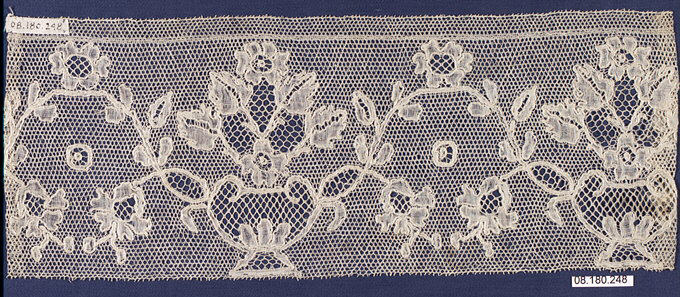
In the rarefied world of haute couture, where the ephemeral and the eternal converge, Katherine Fashion Lab presents a singular study: Fragment. This piece is not a garment in the conventional sense, nor is it a mere accessory. It is a standalone artifact—a distilled meditation on memory, materiality, and the global lineage of craft. Drawing from the intangible wealth of Global Heritage, the Lab has selected two specific textile techniques—Bobbin lace and Point de Paris—to construct a narrative that is at once intimate and universal. This analysis unpacks the conceptual architecture, material choices, and cultural resonance of Fragment, positioning it as a pivotal statement in contemporary couture.
The Conceptual Framework: Embracing the Incomplete
The title Fragment is deliberate and provocative. In an industry often obsessed with completeness, symmetry, and polished finality, Katherine Fashion Lab chooses to celebrate the partial, the broken, and the residual. This approach aligns with a deeper philosophical inquiry: What does a fragment represent? It is a trace of a larger whole, a relic of a process, a whisper of a narrative that can never be fully reconstructed. In couture, the fragment challenges the viewer to engage actively, to fill the gaps with their own cultural and emotional references. It is a direct counterpoint to the fast-fashion paradigm of disposability, instead proposing that beauty resides in the imperfect, the inherited, and the incomplete.
Global Heritage as a Source of Authority
The Global Heritage origin of Fragment is not merely a decorative nod; it is a foundational principle. Katherine Fashion Lab has sourced techniques and visual languages from disparate geographies—European lace-making traditions, Asian textile philosophies, and African pattern sensibilities—yet the piece itself is not a collage. Instead, it is a synthesis. The fragment becomes a universal signifier, a common denominator across cultures: the broken shard of pottery, the torn edge of a manuscript, the unraveled thread of a garment. By grounding the work in global heritage, the Lab asserts that couture can be a vessel for cross-cultural dialogue, transcending nationalism and commercialism to speak to shared human experiences of loss, preservation, and reinvention.
Material Mastery: Bobbin Lace and Point de Paris
The materiality of Fragment is its most compelling dimension. Two specific lace techniques are employed: Bobbin lace and Point de Paris. Each carries a distinct history and technical rigor, and their juxtaposition within a single fragment creates a rich textural and symbolic dialogue.
Bobbin Lace: The Architecture of Air
Bobbin lace, a technique that flourished in 16th-century Europe, is a form of textile engineering that defies its delicate appearance. It is constructed by twisting and braiding threads wound on bobbins, pinned to a pillow, and manipulated into intricate patterns. The process is slow, meticulous, and almost architectural—each intersection is a decision, each open space a calculated void. In Fragment, the bobbin lace is not used to form a full garment but is isolated as a structural element, a skeletal framework that suggests both fragility and resilience. The threads, often linen or silk, are left unbleached, retaining their natural luster and organic irregularities. This choice underscores the authenticity of manual labor, a stark contrast to machine-made uniformity. The bobbin lace in Fragment evokes the fragility of cultural memory—how traditions are held together by the thinnest of threads, yet possess an enduring strength.
Point de Paris: The Geometry of Transparency
Point de Paris, also known as Parisian lace, emerged in the 18th century as a more accessible, grid-based variant of needle lace. Its defining characteristic is the geometric regularity of its openwork, often featuring diamond-shaped meshes and small, repeating motifs. Unlike the organic, curvilinear forms of bobbin lace, Point de Paris is systematic, almost mathematical. In Fragment, this lace is used to create zones of transparency and opacity, layering over the bobbin lace to produce a visual depth that shifts with light and movement. The contrast between the two techniques is deliberate: the bobbin lace represents the organic, hand-wrought heritage, while Point de Paris introduces a structural, almost industrial precision. Together, they form a dialogue between the artisanal and the systematic, the past and the present. The frayed edges of the Point de Paris are left raw, reinforcing the fragmentary aesthetic—this is not a finished product but a captured moment in a continuous process of creation and decay.
Contextual Analysis: Standalone Study
Fragment is presented as a standalone study, not a component of a larger collection. This framing is crucial. It liberates the piece from the commercial imperatives of a seasonal runway show, allowing it to function as a research object, an artistic statement, and a pedagogical tool. In the context of Katherine Fashion Lab, which operates at the intersection of couture and cultural scholarship, Fragment serves as a case study in material storytelling. It asks: Can a fragment of lace carry the weight of a civilization? Can a few inches of thread hold the memory of generations of artisans?
Cultural Resonance and Contemporary Relevance
The choice to use bobbin lace and Point de Paris is not arbitrary. Both techniques are endangered crafts, requiring years of apprenticeship to master. By elevating them to the status of couture, Katherine Fashion Lab is making a political and ethical statement about preservation. In an era of digital reproduction and synthetic materials, Fragment insists on the value of tacit knowledge—the knowledge passed from hand to hand, not through screens but through touch. The piece also resonates with contemporary discourses on sustainability and slow fashion. The fragment is inherently sustainable: it uses minimal material, celebrates repair and reuse, and rejects the wastefulness of mass production. It is a counter-narrative to excess, proposing that luxury can be found in the careful curation of remnants, not in the accumulation of new goods.
Conclusion: The Fragment as a New Couture Paradigm
Katherine Fashion Lab’s Fragment is more than a study; it is a manifesto. By isolating a single subject—a piece of bobbin lace and Point de Paris—and contextualizing it within global heritage, the Lab redefines what couture can be. It is not about volume, spectacle, or novelty. It is about depth, memory, and the poetry of materials. The fragment, in its incompleteness, invites us to complete the story. It challenges the viewer to see the invisible threads that connect a 16th-century lacemaker in Flanders to a 21st-century artist in a fashion lab. In doing so, Fragment becomes a universal artifact, a testament to the enduring power of handcraft in an age of haste. For the discerning observer, it is a quiet revolution—a reminder that the most profound statements often come in the smallest, most broken forms.