Deconstructing the Peasant: A Couture Analysis of the Global Heritage Wool Fragment
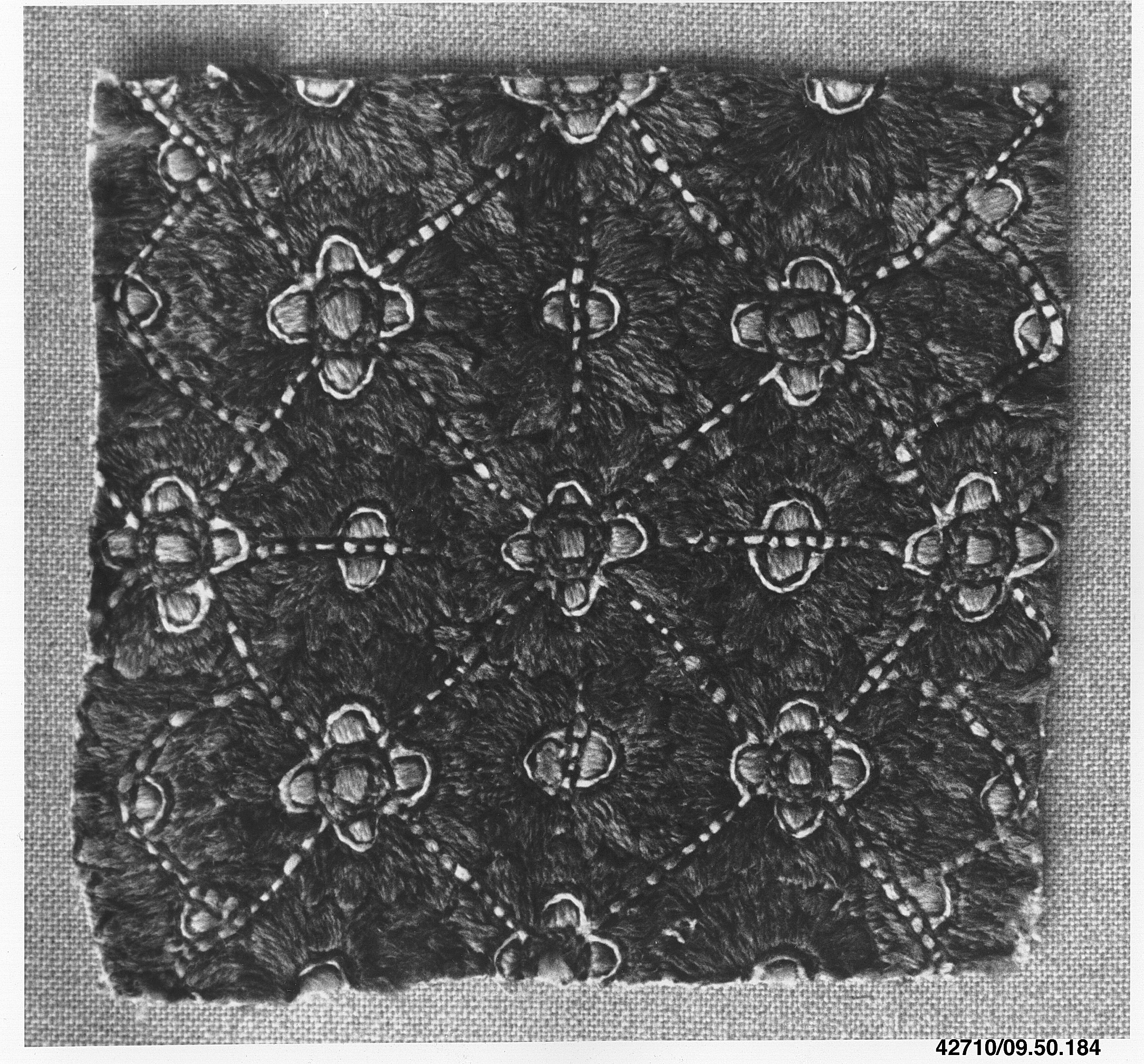
In the rarefied atmosphere of haute couture, where innovation often masquerades as novelty, the true connoisseur understands that the most profound statements are frequently rooted in the most elemental of forms. At Katherine Fashion Lab, our curatorial lens is trained not merely on the finished garment, but on the narrative embedded within its very fibers. Today, we turn our attention to a singular artifact: a peasant costume fragment, sourced from the vast tapestry of Global Heritage, composed of wool upon canvas. This is not a complete ensemble, nor a ceremonial piece. It is a fragment—a standalone study that demands a forensic and philosophical examination. In its rough-hewn edges and unpretentious weave, we discover a blueprint for resilience, a lesson in material integrity, and a provocative challenge to the ephemeral nature of contemporary fashion.
The Material Lexicon: Wool on Canvas as a Structural Ethos
The choice of materials in this fragment is neither accidental nor merely functional; it is a deliberate declaration of a pre-industrial value system. Wool, a protein fiber of remarkable complexity, is the protagonist here. Unlike the silken smoothness of luxury synthetics or the delicate hand of fine silk, this wool retains a palpable coarseness. It whispers of the landscape—of sheep grazing on rocky hillsides, of the lanolin that once protected the animal from the elements, of a fiber that breathes, repels water, and insulates against the chill of a long winter. In a couture context, we recognize this not as a flaw, but as a tactile authenticity that modern manufacturing struggles to replicate. The wool’s slight unevenness in thickness speaks to hand-spinning techniques, a process that imbues the fabric with a unique, irregular rhythm—a heartbeat that machine-perfect threads can never possess.
The substrate—canvas—serves as the structural spine. In the hierarchy of textile construction, canvas is the unsung workhorse. It is a plain-weave fabric of considerable tensile strength, often made from hemp, linen, or in this case, a robust cotton or linen blend. By mounting the wool fibers onto canvas, the artisan created a composite material of extraordinary durability. This is not a fabric designed for delicate draping; it is engineered for work. The canvas provides a rigid, stable foundation that prevents the softer wool from distorting under the stress of daily labor—lifting, bending, and enduring the elements. For the couturier, this construction technique offers a profound lesson in structural honesty. The fragment does not hide its engineering; it celebrates it. The interplay between the resilient canvas base and the protective woolen surface creates a dialogue between strength and softness, a binary that is central to the concept of enduring design.
Global Heritage: The Unifying Language of the Fragment
To label this piece under “Global Heritage” is to acknowledge its transcendence of a single geographic origin. While the specific cultural markers—the cut of a sleeve, the angle of a seam, the pattern of wear—may point to a particular region (perhaps Eastern Europe, the British Isles, or the Andean highlands), the fragment’s essence is universal. It belongs to the collective memory of agrarian societies across continents. The peasant costume, in its myriad forms, is a masterclass in resource optimization. Every thread is precious; every patch is a testament to repair and reuse. This fragment, likely torn from a larger garment—a tunic, a skirt, or a jacket—carries the scars of its history: faint discolorations from soil, the ghostly impression of a mended tear, the subtle abrasion from a leather belt or a wooden tool handle.
In the context of a standalone study, this fragment becomes a microcosm of global textile culture. It rejects the tyranny of the “new” and embraces the beauty of the “used.” For the modern fashion executive, this is a critical pivot point. The fragment asks us: What is the value of a garment that has lived? In an industry obsessed with first impressions and seasonal turnover, the peasant fragment stands as a quiet revolutionary. It suggests that a garment’s true worth is not in its pristine state, but in its capacity to age gracefully, to absorb the narrative of its wearer, and to eventually return to the earth. This is the antithesis of fast fashion’s planned obsolescence; it is a manifesto for circularity written in wool and canvas.
Couture Implications: From Fragment to Future Silhouette
How does a 19th-century peasant fragment inform the work of a 21st-century couture house like Katherine Fashion Lab? The answer lies in a process of translation, not imitation. We do not seek to replicate the garment, but to extract its underlying principles. The fragment teaches us about monastic simplicity in construction. Its seams, likely hand-stitched with a coarse linen thread, are functional and visible. There is no attempt to conceal the joinery. In a couture atelier, this suggests a return to exposed craftsmanship—where the stitch becomes a decorative element, where the seam allowance is a feature, not a flaw.
Furthermore, the fragment’s relationship to the body is one of honest accommodation. It does not constrict or contort; it conforms to the human form through ease and natural drape. The wool’s inherent elasticity allows the fabric to move with the wearer, while the canvas provides the necessary structure to prevent sagging. This balance of flexibility and stability is a holy grail for contemporary designers seeking to create garments that are both sculptural and comfortable. The fragment suggests that true luxury is not about restriction, but about liberation through structure.
From a material innovation standpoint, the wool-on-canvas composite is a precursor to modern bonded fabrics. Yet, it possesses a biodegradable integrity that synthetic laminates lack. This positions the fragment as a prototype for sustainable couture. By studying its construction, we can develop new techniques that marry natural fibers with natural binders, creating textiles that are high-performance yet fully compostable. The fragment is not a relic; it is a research and development document from a pre-industrial “lab” that understood the delicate balance between human need and ecological stewardship.
A Standalone Study: The Power of the Partial Object
Finally, we must consider the fragment as a standalone study. In an age of information overload, where complete collections are streamed and dissected in minutes, there is a radical power in the partial object. The fragment does not explain itself. It does not offer a full narrative or a resolved silhouette. It invites speculation, projection, and intellectual engagement. It forces the viewer—and the designer—to fill in the missing pieces. This is the essence of creative inquiry. By isolating this piece of wool on canvas, we are compelled to ask: What was the whole? Who wore it? What was their daily life? How did this fabric protect them, and what stories did it witness?
In the context of Katherine Fashion Lab’s curatorial mission, this fragment serves as a pedagogical tool. It teaches us that couture is not merely about opulence; it is about intentionality. Every element of this fragment—from the fiber choice to the construction technique to the pattern of wear—was a decision made under constraints of resource, climate, and necessity. These constraints, far from limiting creativity, gave birth to a design language of profound elegance and efficiency. As we move forward into an era defined by climate crisis and resource scarcity, the peasant fragment offers a timeless lesson: that the most beautiful and enduring designs are those that are rooted in the honest, unglamorous work of living. It is not a costume of the past; it is a compass for the future, pointing toward a fashion that is as resilient as it is refined.