Deconstructing the Gaze: A Couture Analysis of the Old Fashion Fine Cut Tobacco Actress Portrait
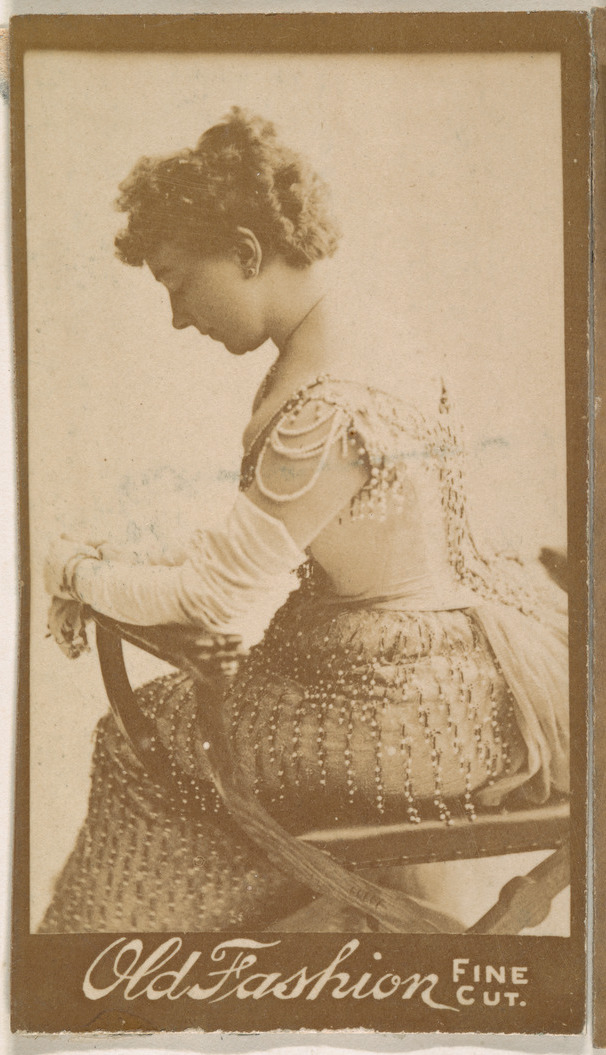
In the annals of commercial photography and early branding, few artifacts capture the intersection of nascent consumer culture and the performative female archetype as poignantly as the Actresses series (N664) produced for Old Fashion Fine Cut Tobacco. This particular specimen—a portrait of an unnamed actress in profile—transcends its humble origins as a promotional card to offer a rich, layered text for couture analysis. As a lead curator at Katherine Fashion Lab, I approach this albumen photograph not merely as a historical document but as a sartorial manifesto encoded with the aesthetic ambitions, social constraints, and industrial innovations of its era. The image demands a rigorous deconstruction of how fabric, silhouette, and gesture coalesce to manufacture a vision of femininity that is both aspirational and commodified.
The Alchemy of the Albumen Print: Materiality as a Couture Language
The choice of albumen photograph as the medium is itself a statement of luxury and precision. This 19th-century process, which binds light-sensitive silver salts to paper with egg white, produces a luminous, almost tactile depth that mimics the sheen of fine silk. In this portrait, the actress’s profile emerges from a dark, velvety background—a technique that isolates her form and elevates her to an iconographic status. The materiality of the print mirrors the couture ethos: both are labor-intensive, fragile, and designed to project an aura of exclusivity. The subtle gradations of light on the actress’s cheek and neck, rendered through the albumen’s glossy surface, create a chiaroscuro effect that recalls the draping of a master tailor. Each shadow is a seam; each highlight, a pleat. This photographic technique, therefore, becomes a meta-fabric, weaving the subject’s identity into the very texture of the image.
Silhouette and Structure: The Architecture of the Profile
The actress’s profile, captured in a three-quarter turn, is a study in controlled asymmetry. Her posture—upright, chin slightly lifted—suggests a corseted discipline that was the sine qua non of respectable femininity in the late 19th century. The bodice of her gown, likely constructed from taffeta or moiré, hugs her torso with geometric precision. The neckline, a modest V-shape, is edged with what appears to be a delicate lace or embroidered trim, introducing a note of softness against the rigid lines of the garment. The sleeves, fitted to the elbow, then release into a subtle puff—a detail that signals the transition from the structured Victorian silhouette to the more fluid lines of the Edwardian era. This interplay of compression and release is a hallmark of early couture, where the body is both constrained and celebrated. The absence of any visible jewelry or elaborate adornment is intentional: the focus is on the purity of the line, the architecture of the gown, and the actress’s own features as the ultimate accessory.
The Texture of Temptation: Fabric, Light, and the Tobacco Brand
Old Fashion Fine Cut Tobacco’s branding relied on a paradoxical blend of wholesome allure and exotic sophistication. The actress’s attire, while demure by modern standards, is imbued with a sensuous quality through the play of light on its surfaces. The fabric of her skirt—likely a heavy satin or velvet—catches the light in sweeping folds, creating a rhythm that draws the eye downward. This textural narrative is crucial: the photograph is a standalone study, devoid of props or background context, forcing the viewer to engage solely with the interplay of cloth and flesh. The tobacco brand, by association, positions itself as a purveyor of refined pleasures—much like the couture house that might have produced this gown. The actress becomes a living advertisement for a lifestyle where indulgence is tempered by elegance. The slight sheen on the fabric, visible in the albumen’s highlights, mirrors the glossy finish of a fine tobacco leaf, creating a synesthetic link between the visual and the tactile.
Global Heritage and the Constructed Feminine
While the photograph’s origin is rooted in Western commercial photography, its global heritage is evident in the cosmopolitan influences woven into the actress’s presentation. The profile pose itself is a nod to classical portraiture—a Renaissance revival that was fashionable among the elite. Yet, the subtle exoticism of the gown’s cut, with its asymmetrical draping and hint of a bustle, suggests an awareness of Orientalist trends that were sweeping European and American fashion at the time. The actress’s hair, swept upward in a chignon, exposes the nape of the neck—a gesture of vulnerability and invitation. This globalized aesthetic is the product of colonial trade routes, where silks from Asia, cottons from India, and lace from Belgium converged in ateliers. The photograph, therefore, is a microcosm of cultural exchange, where the female body becomes the canvas for a hybridized, aspirational identity. The tobacco brand, by associating itself with this globalized femininity, positions its product as a passport to worldly sophistication.
The Gaze and the Garment: A Standalone Study in Power Dynamics
As a standalone study, this portrait invites a critical examination of the gaze. The actress does not meet the camera’s eye; her profile is averted, offering a view that is both intimate and elusive. This strategic withdrawal is a couture device: the garment, not the face, becomes the primary subject of scrutiny. The viewer is compelled to read the folds, the seams, the texture, and the cut as a language of desire and control. The actress’s agency is ambiguous—she is both the object of the male gaze and the orchestrator of her own presentation. The gown, with its structured bodice and flowing skirt, mediates this tension. It is a second skin that simultaneously protects and exposes, conforms and resists. In the context of tobacco advertising, this ambiguity is potent: the product is marketed as a tool of seduction, yet the woman remains an unattainable ideal, her profile forever suspended in a moment of perfect, silent beauty.
Conclusion: The Enduring Silhouette of Desire
This albumen photograph from the Actresses series is far more than a promotional ephemera. It is a couture document that encodes the anxieties, aspirations, and aesthetic hierarchies of its time. The unnamed actress, through her profile, her gown, and the luminous medium of the albumen print, becomes a fashionable ghost—a reminder that couture is always a negotiation between the material and the immaterial, the commercial and the artistic. At Katherine Fashion Lab, we recognize that such images are not mere relics but living archives of how fabric and form have been used to construct desire. The portrait stands as a testament to the power of a single silhouette to capture an era’s imagination, and to the enduring allure of a profile that, like the finest couture, refuses to be fully possessed.