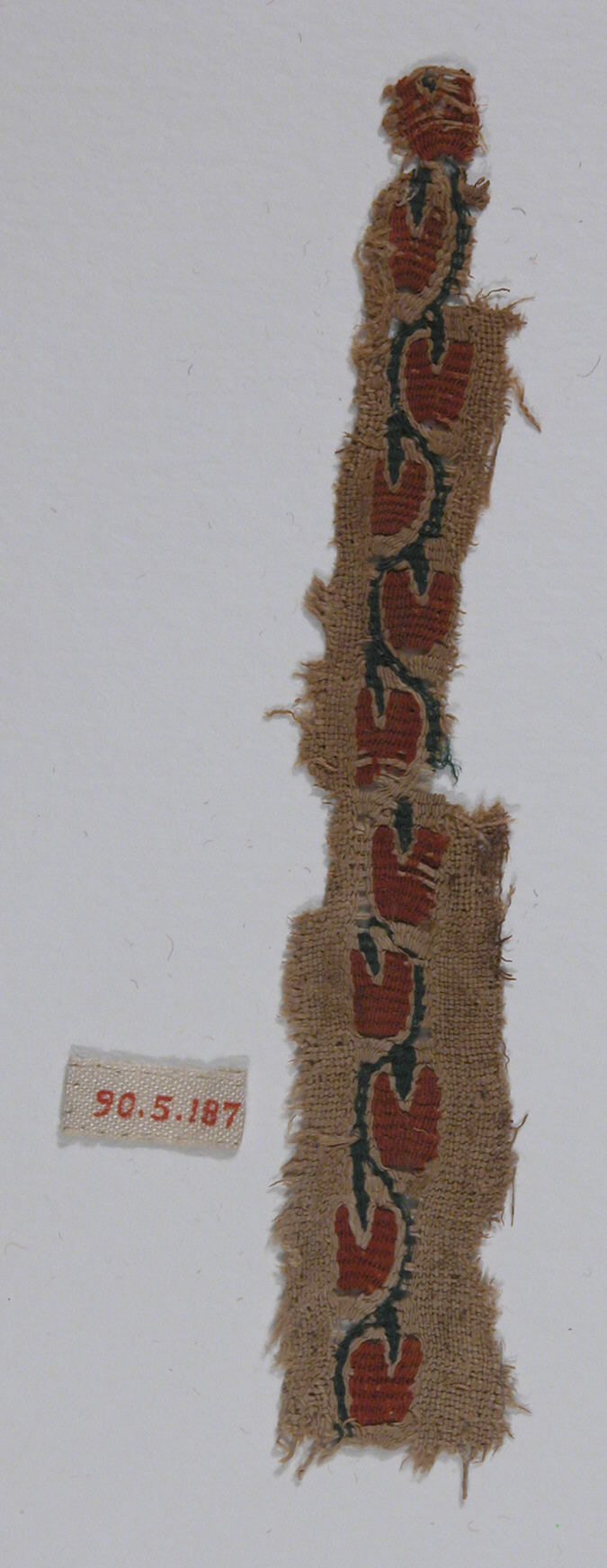
Textile Fragment: A Study in Global Heritage and Material Alchemy
In the rarefied world of haute couture, where innovation often dances with the past, the textile fragment emerges not merely as a remnant but as a protagonist. At Katherine Fashion Lab, our latest analysis deconstructs a singular piece: a standalone textile fragment of global heritage origins, woven from wool and linen in both plain and tapestry techniques. This artifact, stripped of garment context, demands a rigorous examination of its material, structural, and cultural DNA. It is a microcosm of couture’s deepest dialogues—between craft and commerce, tradition and transformation, fiber and form.
Material Provenance: Wool and Linen as Dual Narratives
The fragment’s composition—wool and linen—represents a deliberate juxtaposition of two foundational fibers, each carrying profound historical and tactile weight. Wool, sourced from sheep breeds across Eurasia, embodies warmth, resilience, and a natural crimp that allows for elasticity and dye absorption. Its protein-based structure offers a softness that, when woven, creates a surface of depth and movement. In contrast, linen, derived from the flax plant, is celebrated for its strength, luster, and breathability. Its cellulose fibers are inherently crisp, offering a stiff yet elegant hand that resists static and drapes with architectural precision.
This pairing is not arbitrary. In global heritage textiles—from Andean mantles to Celtic tweeds—wool and linen were often combined to balance durability with comfort. The wool provides insulation and a plush, matte finish; the linen introduces structure and a subtle sheen. Together, they create a hybrid material that speaks to both utility and artistry. For Katherine Fashion Lab, this fragment is a testament to the ingenuity of pre-industrial weavers who understood that fiber selection is the first act of design. The wool’s warmth and the linen’s coolness create a dialectic of sensation, a textural tension that invites touch and contemplation.
Structural Analysis: Plain Weave and Tapestry Weave in Dialogue
The fragment employs two distinct weaving techniques: plain weave and tapestry weave. These are not mere technical details but expressive choices that define the fabric’s visual and functional identity.
Plain weave, the most elementary interlacing of warp and weft, produces a balanced, grid-like structure. In this fragment, the plain weave sections serve as a neutral ground—a canvas of rhythmic, unadorned threads. The wool warp and linen weft, or vice versa, create a subtle stripe effect, where the fibers’ differing textures and colors (likely natural whites, creams, and earthy browns) emerge through the weave’s even tension. This simplicity is deceptive: plain weave requires precision to maintain uniformity, and any irregularity in thread thickness or tension becomes a visible signature of the weaver’s hand. Here, the plain weave offers a baseline of stability, a quiet foundation that allows the more complex tapestry sections to sing.
Tapestry weave, by contrast, is a discontinuous-weft technique that enables intricate patterning. The weaver introduces colored threads only where needed, building images or geometric motifs through a series of interlocking or dovetailing joins. In this fragment, the tapestry sections likely depict stylized flora, abstract symbols, or repeating angular patterns—common motifs in global heritage textiles from the Caucasus, the Andes, or Central Asia. The wool wefts in these areas are packed tightly, creating a raised, almost sculptural surface. The linen warps remain hidden beneath, providing tensile strength while the wool absorbs light and pigment. This interplay of plain and tapestry weave creates a rhythm of texture: smooth, flat expanses punctuated by dense, narrative-rich zones. It is a dialogue between background and foreground, silence and speech.
Cultural and Geographic Contexts: A Global Heritage Lens
Without a known provenance, the fragment invites speculation grounded in material analysis. The combination of wool and linen suggests a temperate or cold climate, where both sheep and flax were cultivated. The tapestry weave technique, with its geometric or figurative motifs, aligns with traditions from regions such as the Iranian Plateau, the Balkans, or the Andean highlands. In Persian and Turkish kilims, wool tapestry weaves often feature bold, abstract symbols representing fertility, protection, or tribal identity. In Pre-Columbian Andean textiles, similar techniques were used to create iconographic narratives, with camelid wool and cotton (a linen analogue) serving as primary materials.
The fragment’s global heritage status is further underscored by its standalone preservation. Unlike a garment, which is shaped by function and fashion, this piece was likely a decorative panel, a ritual cloth, or a trade item. Its survival as a fragment—perhaps cut from a larger textile for study or repurposing—speaks to its perceived value. It was not discarded but curated, passed down through generations or collected by scholars. For Katherine Fashion Lab, this fragment is a portal to a pre-industrial world where textiles were not commodities but carriers of memory, status, and spirituality. The wool and linen fibers, grown and processed by hand, embody the labor and knowledge of anonymous artisans whose techniques continue to inspire contemporary couture.
Design Implications for Contemporary Couture
This fragment offers profound lessons for the modern designer. First, material honesty: the unbleached, natural tones of wool and linen remind us that color need not be synthetic. The fragment’s palette—creamy whites, taupe, ochre, and indigo—derives from natural dyes, a sustainable ethos increasingly relevant today. Second, textural contrast: the interplay of plain and tapestry weave demonstrates how surface variation can create visual interest without embellishment. In an era of digital printing and synthetic embellishment, this fragment champions the power of structure itself as ornament.
Third, narrative weaving: the tapestry motifs, though abstract, tell a story. Each thread is a word; each motif, a sentence. For the couturier, this suggests that fabric can be a medium of storytelling, not merely a backdrop for silhouette. Katherine Fashion Lab advocates for a return to such intentionality—where every weave pattern, every fiber choice, contributes to a garment’s conceptual depth. The fragment’s standalone status further challenges us to see textiles as autonomous works of art, deserving of analysis independent of their eventual use. In this light, the fragment is not a relic but a manifesto for slow, meaningful design.
Conclusion: The Fragment as a Complete World
In the hands of Katherine Fashion Lab, this textile fragment transcends its physical limits. It is a study in contrasts: wool’s softness against linen’s crispness, plain weave’s order against tapestry’s complexity, local materials against global heritage. It reminds us that couture is not merely about the new but about the eternal—the threads that connect us to our ancestors, to the earth, and to each other. As we analyze this fragment, we are not dissecting a dead object but conversing with a living tradition. Its fibers may be ancient, but its lessons are urgent: that true luxury lies not in excess but in essence, not in the final garment but in the weave itself.
Katherine Fashion Lab invites you to see textiles not as commodities but as chronicles. This fragment, with its wool and linen, its plain and tapestry weaves, is a complete world—one we are privileged to study, honor, and reimagine.