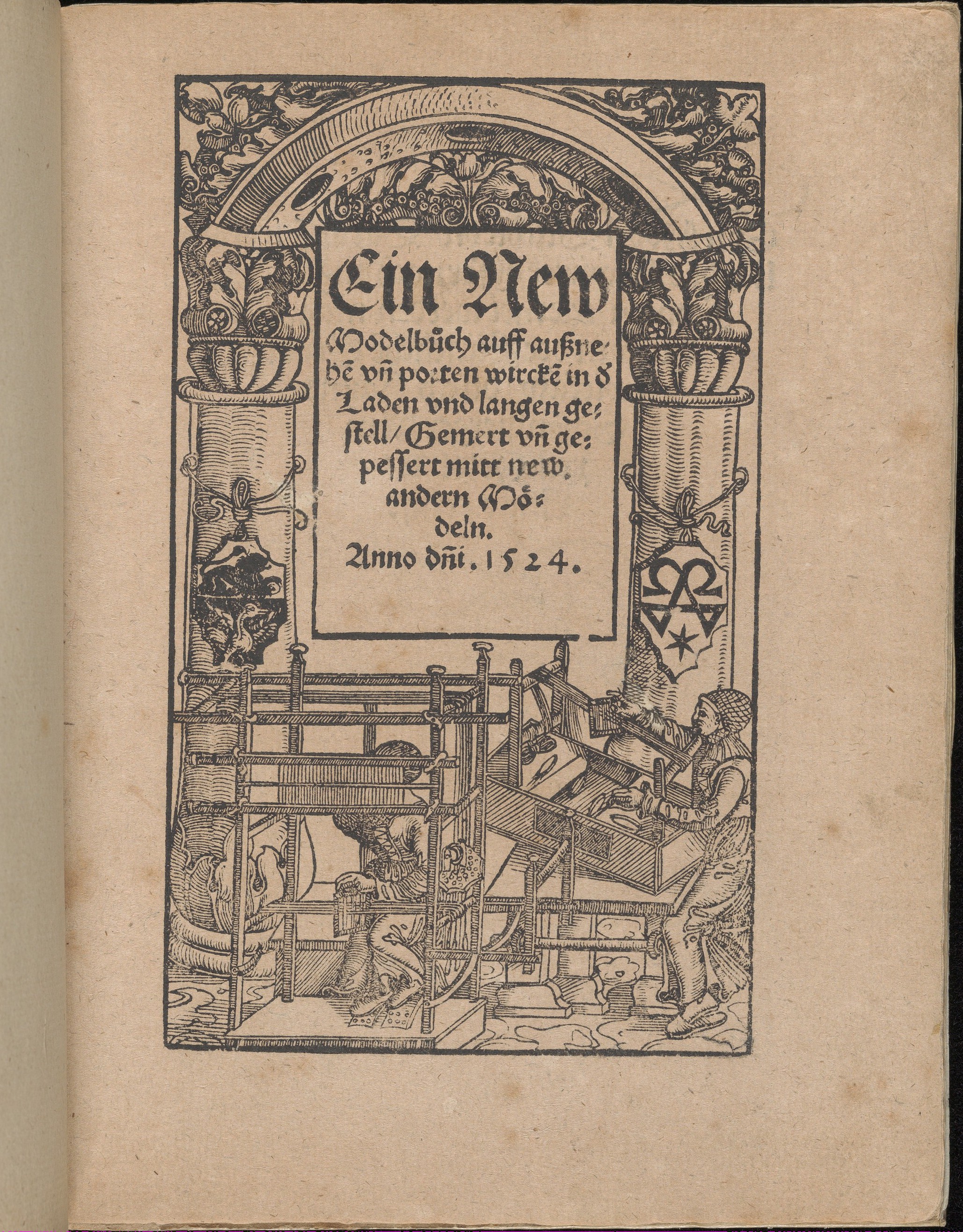
From Woodcut to Wardrobe: The Enduring Influence of *Ein new Modelbuch* on Global Couture
In the annals of fashion history, few artifacts capture the intersection of artistry, commerce, and cultural diffusion as poignantly as *Ein new Modelbuch*—a 16th-century German pattern book. Created at a time when the printed word was revolutionizing knowledge, this woodcut compendium of garment designs served as a bridge between local craft and global aspiration. At Katherine Fashion Lab, we recognize *Ein new Modelbuch* not merely as a historical document, but as a foundational text that continues to inform the principles of silhouette, ornamentation, and cross-cultural synthesis in contemporary couture. This analysis explores how the materiality of woodcut, the book’s global heritage, and its standalone status as a design blueprint offer profound lessons for modern fashion innovation.
The Materiality of Woodcut: Precision and Imperfection in Design Reproduction
The choice of woodcut as the medium for *Ein new Modelbuch* is itself a statement about the nature of fashion reproduction. Unlike the fluidity of hand-drawn sketches or the infinite reproducibility of digital files, woodcut required a deliberate, labor-intensive process: carving each design into a block, inking it, and pressing it onto paper. This technique imparted a distinct aesthetic—bold lines, stark contrasts, and a certain graphic abstraction—that transformed complex garments into universally legible symbols. For Katherine Fashion Lab, this materiality underscores a critical tension in couture: the need for precision versus the beauty of imperfection. Each woodcut line, while rigid, allowed for interpretation by the reader, who might adapt the design to local fabrics, embellishments, or body types. In a globalized fashion ecosystem, this balance between prescription and adaptation remains vital. Today, when digital patterns can be transmitted instantly, the woodcut’s tactile legacy reminds us that fashion design is not merely a set of instructions but a dialogue between creator and maker.
Furthermore, the woodcut’s limitations—its inability to capture fine details like thread count or drape—forced the designer to prioritize structure over texture. This focus on silhouette is a hallmark of *Ein new Modelbuch*’s designs, many of which feature exaggerated sleeves, fitted bodices, and voluminous skirts that rely on geometric clarity rather than surface ornament. For contemporary couturiers, this is a powerful lesson: timeless garments often derive their impact from architectural form rather than fleeting embellishments. Katherine Fashion Lab’s recent collections, which emphasize clean lines and modular construction, directly echo this principle, proving that a 500-year-old design philosophy can still resonate with modern consumers seeking sophistication without excess.
Global Heritage: Cultural Exchange Through Printed Imagery
*Ein new Modelbuch* was not created in a vacuum; it emerged from a Europe deeply engaged with global trade, exploration, and cultural exchange. The designs within its pages reflect a fusion of influences: Spanish courtly attire, Italian Renaissance tailoring, and even motifs from Ottoman textiles, which had entered European markets via Venetian merchants. This global heritage is encoded in the book’s very name—*Modelbuch* (pattern book) being a German term, yet the content drawing from a pan-European and, by extension, Afro-Eurasian aesthetic lexicon. For Katherine Fashion Lab, this cross-pollination is a cornerstone of our design ethos. We view couture as a continuous conversation across geographies, where a sleeve shape from 16th-century Augsburg can inspire a contemporary gown worn on a red carpet in Shanghai or São Paulo.
The woodcut medium facilitated this global heritage in a unique way: it allowed for the democratization of design knowledge. Unlike exclusive pattern books hand-copied for aristocrats, *Ein new Modelbuch* was printed in multiple editions, making it accessible to tailors, merchants, and even amateur dressmakers across Europe and beyond. This diffusion of fashion imagery accelerated the homogenization of elite dress while simultaneously allowing for regional variations. For instance, a woodcut of a Spanish farthingale might be reinterpreted by a German tailor using sturdier wool instead of silk, creating a local version of a global trend. In our own practice at Katherine Fashion Lab, we honor this tradition by collaborating with artisans from diverse cultural backgrounds—be it Japanese kimono weavers or Indian block printers—to reinterpret classic silhouettes through indigenous techniques. The result is a couture that is both globally informed and locally authentic, much like the *Modelbuch* itself.
Standalone Study: The Book as a Design System, Not a Catalog
Perhaps the most radical aspect of *Ein new Modelbuch* is its standalone nature. Unlike later fashion magazines or pattern catalogues that were part of a serialized narrative, this book was conceived as a self-contained resource. Each woodcut was accompanied by minimal text—often just a title or a note on construction—leaving the visual to do the heavy lifting. This forced the reader to engage actively, analyzing proportions, seams, and decorative elements without the crutch of detailed instructions. For Katherine Fashion Lab, this represents a paradigm shift in how we approach design education and inspiration. In an age of hyper-detailed tutorials and algorithmic recommendations, the *Modelbuch* model encourages a return to visual literacy and creative problem-solving. We have incorporated this philosophy into our design workshops, where participants are given only silhouette outlines and asked to interpret them through their own material choices, much like a 16th-century tailor would have done.
Moreover, the standalone format of *Ein new Modelbuch* challenges the notion that fashion design must be ephemeral or trend-driven. The book was not tied to a season or a specific market; it was intended as a permanent reference. This timelessness is reflected in the designs themselves, which avoid extreme fads in favor of enduring shapes—a lesson for contemporary couture houses struggling with the pressure of fast fashion cycles. At Katherine Fashion Lab, we produce limited-edition pieces that are designed to be heirlooms, not disposable commodities. Our clients invest in garments that, like the woodcut patterns, can be adapted, re-styled, and passed down across generations. This approach not only honors the historical significance of *Ein new Modelbuch* but also addresses modern concerns about sustainability and ethical consumption.
Implications for Contemporary Couture: A Synthesis of Past and Future
The analysis of *Ein new Modelbuch* yields three actionable insights for Katherine Fashion Lab and the broader couture industry. First, the materiality of woodcut teaches us that constraints—whether in production technique, budget, or time—can foster creativity. By embracing the graphic simplicity of woodcut, designers can focus on the core elements of garment construction: balance, proportion, and movement. Second, the global heritage of the book reminds us that fashion is inherently hybrid; no design is purely original, but rather a recombination of influences that span cultures and centuries. This perspective is essential for navigating contemporary debates about cultural appropriation versus appreciation, as it encourages a respectful, collaborative approach to borrowing. Finally, the standalone nature of *Ein new Modelbuch* advocates for a slower, more deliberate pace of design—one that prioritizes quality over quantity and legacy over novelty.
In conclusion, *Ein new Modelbuch* is far more than a historical curiosity; it is a masterclass in the principles that underpin enduring couture. Its woodcut origins, global reach, and self-contained format offer a blueprint for how fashion can be both innovative and respectful of its roots. At Katherine Fashion Lab, we are committed to reviving this spirit in our collections, ensuring that the art of the *Modelbuch* continues to inspire not just garments, but a philosophy of design that values craft, connection, and timeless beauty. As we move forward into an increasingly digital and fragmented fashion landscape, the lessons of this 16th-century book remain profoundly relevant: that the most powerful designs are those that speak across time, space, and material, inviting endless reinterpretation while remaining eternally recognizable.