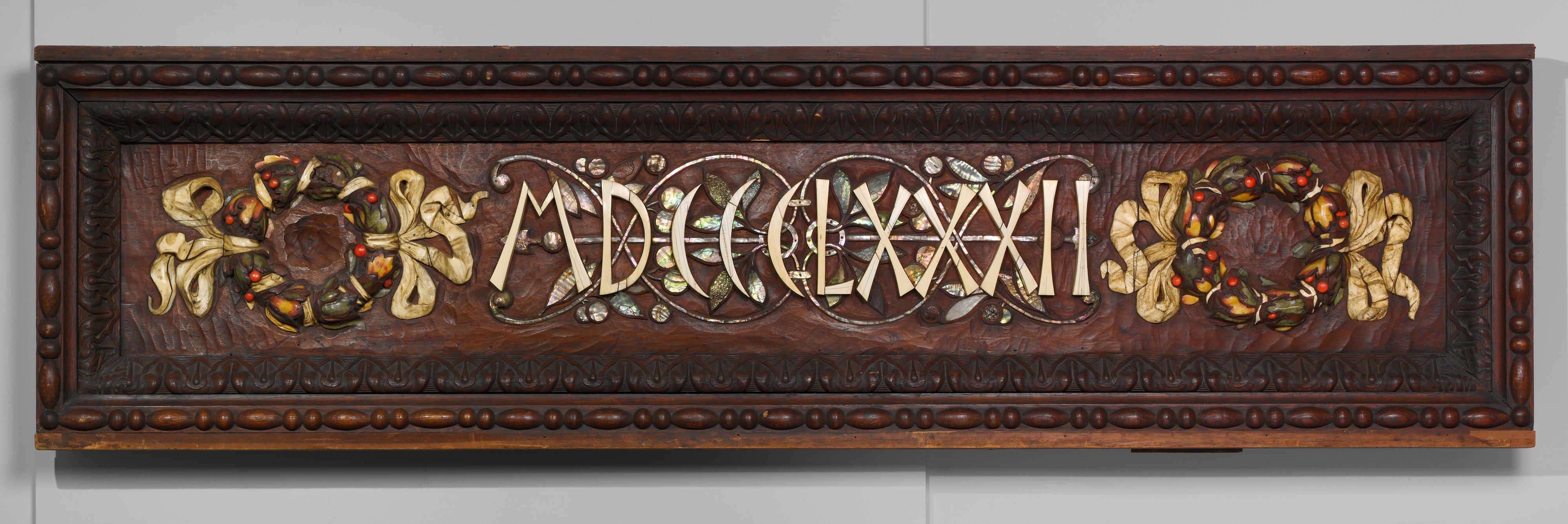
Heritage Analysis: The Vanderbilt Mantelpiece Date Panel
This report presents a strategic heritage analysis of the Vanderbilt Mantelpiece date panel, a singular artifact of American Gilded Age opulence. Commissioned for the Vanderbilt family, a dynasty synonymous with industrial wealth and cultural ascension, this panel transcends its functional role as a chronometric marker. Crafted from mahogany, ivory, mother-of-pearl, and coral, it serves as a concentrated emblem of symbolic power, historical adornment, and spiritual meaning. For Katherine Fashion Lab, this artifact offers a profound lexicon for a 2026 high-end luxury strategy rooted in narrative depth, material integrity, and transcendent status signaling.
Symbolic Power: The Date as Dynastic Declaration
Chronology as Authority
The date panel, likely inscribed with a significant year—such as a construction completion, a marriage, or a financial milestone—functions as a permanent, public declaration of temporal authority. In the Gilded Age, time was not merely measured; it was conquered. The Vanderbilt family, through railroads and steamships, had effectively compressed the American continent. The date panel, therefore, is not a passive record but an active assertion of dynastic permanence. It declares that this family’s era is not fleeting but etched into the very structure of their home, a tangible anchor in a rapidly industrializing world. For luxury strategy, this transforms a simple date into a signature of legacy, a tool for brands to claim their own historical moment as unassailable.
Material Hierarchy and Status
The choice of materials—mahogany, ivory, mother-of-pearl, and coral—is a deliberate exercise in symbolic power. Mahogany, imported from the Caribbean and Central America, was a timber of empire, representing global reach and resource command. Ivory, sourced from African elephants, signified access to exotic, rare, and legally unencumbered luxury. Mother-of-pearl, harvested from tropical seas, reflects light and status, its iridescence a metaphor for the family’s luminous social position. Coral, often associated with protection and vitality in many cultures, adds a layer of talismanic authority. Together, these materials create a hierarchical taxonomy of value, where each element reinforces the others. For a 2026 luxury strategy, this suggests a return to material storytelling: not just using precious resources, but curating them as a vocabulary of power, where each component carries a distinct narrative of origin, rarity, and cultural weight.
Historical Adornment: The Gilded Age Aesthetic as Cultural Currency
Eclecticism as Identity
The Vanderbilt Mantelpiece date panel embodies the Gilded Age’s aesthetic of conspicuous eclecticism. This era rejected minimalist restraint in favor of layered, global influences—Renaissance revival, Rococo, and Orientalism—all synthesized into a distinctly American expression of wealth. The panel’s combination of materials and likely intricate carving reflects this cultural borrowing as a form of identity construction. The Vanderbilts were not merely collecting objects; they were assembling a visual argument for their place in the lineage of European aristocracy, while simultaneously forging a new American nobility. For Katherine Fashion Lab, this historical adornment strategy offers a blueprint for narrative layering in design. A 2026 luxury collection can draw from multiple cultural motifs, not as pastiche but as a deliberate, curated dialogue that signals the wearer’s global sophistication and historical literacy.
Craftsmanship as Distinction
The panel’s medium demands extraordinary craftsmanship. Mahogany requires precise joinery; ivory and mother-of-pearl necessitate meticulous inlay; coral is brittle and challenging to work. This labor intensity was a crucial element of historical adornment. In an age before mass production, the sheer hours of skilled human effort embedded in an object became a metric of its worth. The date panel is a testament to artisanal exclusivity, where the maker’s mastery is as valuable as the materials themselves. For high-end luxury in 2026, this underscores the imperative of visible craftsmanship. Consumers increasingly seek objects that bear the evidence of human hands—imperfections, subtle variations, and the patina of creation. The panel teaches that true luxury is not flawlessness, but the authentic trace of artistry.
Spiritual Meaning: The Sacred in the Secular
The Talismanic Function of Coral
Coral, in particular, carries deep spiritual meaning across Mediterranean, Asian, and Indigenous American cultures. It has been used for millennia as a protective amulet, believed to ward off evil spirits and bring prosperity. In the context of the Vanderbilt mantelpiece, its inclusion transforms the date panel from a decorative element into a domestic talisman. The hearth, traditionally the heart of the home, becomes a sacred space, and the panel a guardian of the family’s fortune and continuity. This spiritual dimension is often overlooked in secular luxury analysis, yet it speaks to a fundamental human need for objects that provide psychological security and metaphysical resonance. For a 2026 strategy, luxury brands can integrate such protective symbolism into design—not overtly, but through material choices and subtle iconography that evoke safety, longevity, and spiritual abundance.
Mother-of-Pearl and the Illusion of the Divine
Mother-of-pearl’s iridescence has historically been associated with the moon, water, and the divine feminine. Its shimmering quality evokes a sense of the otherworldly, suggesting that the panel is not merely a record of earthly time but a portal to a higher, eternal realm. This aligns with the Gilded Age’s fascination with spiritualism and the occult, where wealthy families often sought to bridge the material and immaterial worlds. The panel, therefore, serves as a spiritual anchor, grounding the family’s temporal power in a cosmic narrative. For modern luxury, this invites a strategy of transcendent branding, where products are positioned as conduits to something greater—heritage, legacy, or even a sense of timelessness. The mother-of-pearl’s play of light becomes a metaphor for the brand’s ability to illuminate the wearer’s inner radiance.
2026 High-End Luxury Strategy: From Artifact to Archetype
Narrative Anchoring
The Vanderbilt Mantelpiece date panel offers a powerful model for narrative anchoring in luxury branding. For Katherine Fashion Lab, this means moving beyond seasonal trends to create a permanent, mythic core. Every collection should be grounded in a foundational date or event that carries symbolic weight—a founding year, a breakthrough moment, a cultural alliance. This date becomes a repeated motif, woven into designs, packaging, and marketing, much like the panel’s inscription. It transforms the brand into a living chronicle, where each product is a chapter in an ongoing story of power and refinement.
Material Curation as Status Language
The panel’s deliberate material hierarchy suggests a 2026 strategy of curated materialism. Luxury brands should not simply use rare materials; they must articulate why each material is chosen and what it signifies. For example, mahogany could represent rootedness and strength; coral, protection and vitality; mother-of-pearl, ethereal beauty; ivory, historical legacy (with ethical sourcing now paramount). This creates a semiotic system where the consumer understands the object’s deeper meaning. Katherine Fashion Lab can develop a material glossary, educating clients on the provenance and symbolism of each component, thereby elevating consumption to an act of cultural participation.
Spiritual Resonance in Secular Luxury
Finally, the panel’s spiritual dimensions point to a growing consumer desire for meaningful luxury. In 2026, high-end clients are increasingly seeking objects that offer more than status—they seek emotional and spiritual fulfillment. Brands can integrate subtle talismanic elements, such as protective stones, auspicious numbers, or symbolic motifs, into their designs. This does not require overt religiosity but rather a recognition that luxury can serve as a modern amulet, providing a sense of control and blessing in an uncertain world. The Vanderbilt panel reminds us that the most enduring luxury objects are those that protect, elevate, and sanctify their owners.
In conclusion, the Vanderbilt Mantelpiece date panel is far more than a decorative artifact. It is a concentrated statement of dynastic power, a masterclass in historical adornment, and a vessel of spiritual meaning. For Katherine Fashion Lab, it provides a strategic template for 2026: a luxury strategy that leverages narrative depth, material curation, and transcendent symbolism to create objects of enduring, almost sacred, value. By channeling the panel’s essence, the brand can position itself not merely as a purveyor of fashion, but as a curator of legacy.