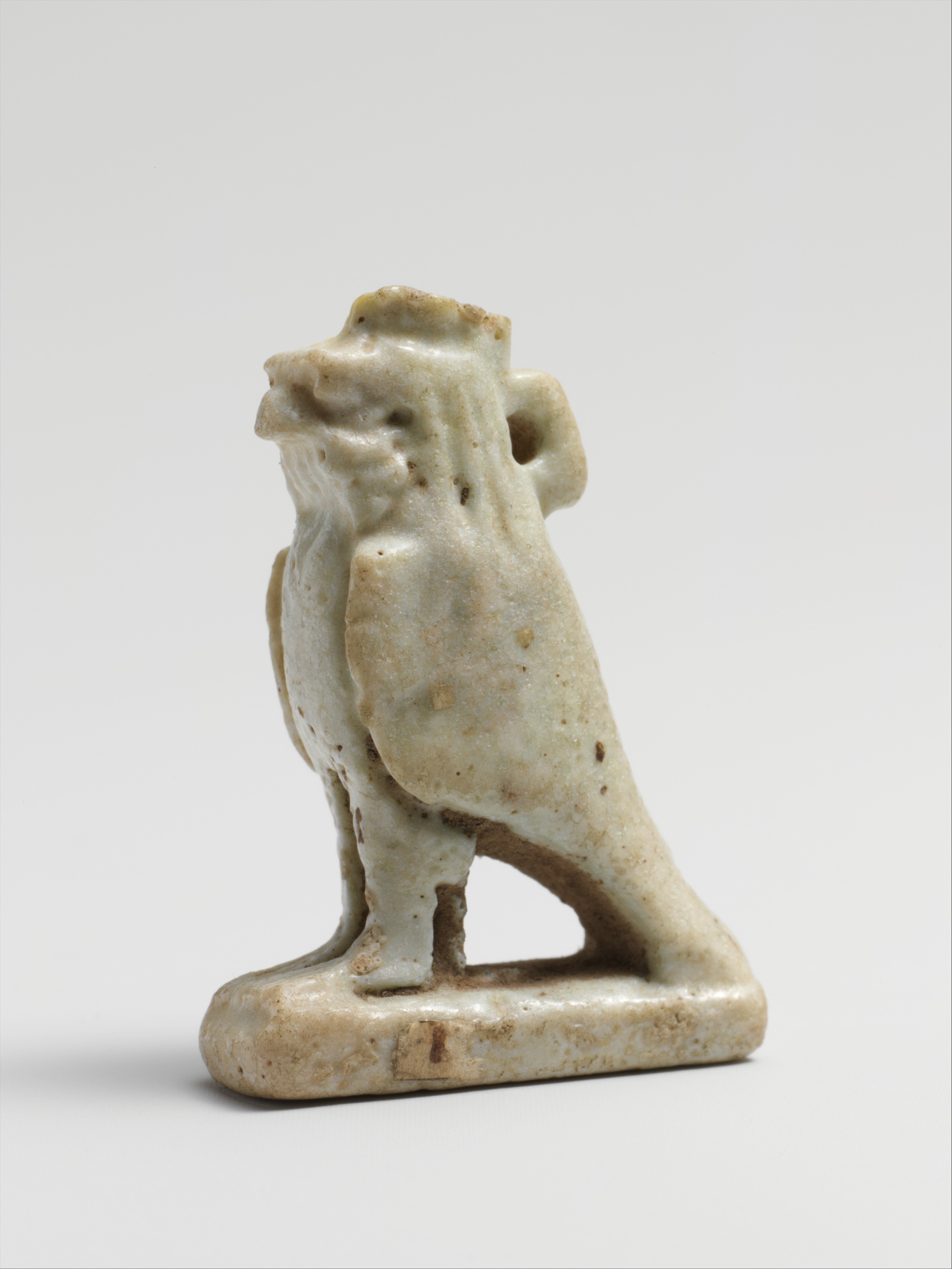
Executive Analysis: The Faience Amulet of Ra Horakhty
This heritage analysis examines the Faience Amulet of Ra Horakhty as a strategic artifact for Katherine Fashion Lab’s 2026 high-end luxury strategy. The amulet, originating from ancient Egypt and crafted in faience, embodies a confluence of symbolic power, historical adornment, and spiritual meaning. By deconstructing these layers, we identify actionable insights for brand differentiation, narrative depth, and consumer engagement in the luxury market.
Symbolic Power and Cultural Resonance
The amulet depicts Ra Horakhty, a syncretic deity combining Ra (the sun god) and Horus (the sky god). In Egyptian cosmology, Ra Horakhty represents the rising sun, rebirth, and the eternal cycle of day and night. This duality—solar radiance and falcon-headed vigilance—imbues the amulet with protective and regenerative symbolism. For ancient wearers, the amulet was not mere ornament; it was a talisman conferring divine favor, safeguarding the soul in life and the afterlife.
From a luxury brand perspective, this symbolic power translates into narratives of resilience, transformation, and exclusivity. The amulet’s association with the sun—a universal symbol of vitality and authority—aligns with high-end consumers’ desire for objects that confer status and spiritual significance. In a 2026 context, where luxury buyers increasingly seek meaning over materialism, the amulet’s symbolism offers a potent anchor for collections centered on personal empowerment and cosmic connection.
Strategic Implications for Brand Storytelling
Katherine Fashion Lab can leverage this symbolism to craft a mythology of renewal. For instance, a jewelry line inspired by Ra Horakhty could emphasize themes of dawn, awakening, and inner strength. The amulet’s protective function also resonates with contemporary anxieties about digital overload and environmental uncertainty, positioning the brand as a purveyor of talismanic luxury—objects that shield and elevate the wearer.
Historical Adornment and Material Authority
Faience, a non-clay ceramic material, was prized in ancient Egypt for its luminous, glass-like finish. It was often colored blue-green to mimic turquoise and lapis lazuli, stones associated with the sky and Nile. The amulet’s medium—faience—was both accessible and sacred, used in elite jewelry, temple offerings, and funerary goods. Its production required advanced kiln technology, making it a marker of technical mastery and royal patronage.
For luxury strategy, faience’s historical prestige offers a material narrative of craftsmanship and rarity. In 2026, as the luxury sector pivots toward artisanal authenticity, faience’s ancient production methods—hand-molding, glazing, and firing—provide a blueprint for limited-edition, handcrafted collections. The material’s fragility and labor-intensive creation also justify premium pricing, aligning with high-net-worth consumers’ appreciation for imperfect, human-made objects.
Material Innovation for Modern Luxury
Katherine Fashion Lab could reinterpret faience through sustainable, high-tech ceramics that mimic its luminosity while reducing environmental impact. Collaborations with contemporary ceramic artists could yield bespoke pieces that honor ancient techniques while embracing modern aesthetics. This approach not only differentiates the brand but also taps into the growing demand for heritage-driven, eco-conscious luxury.
Spiritual Meaning and Consumer Psychology
The amulet’s spiritual function cannot be overstated. In Egyptian belief, amulets were conduits for divine energy, worn to attract specific blessings—health, fertility, protection. The Ra Horakhty amulet, in particular, was a solar talisman believed to infuse the wearer with the sun’s life-giving force. This spiritual dimension transforms the amulet from a decorative object into a ritualistic tool for personal transformation.
For luxury brands, spirituality offers a powerful engagement lever. In 2026, consumers are increasingly drawn to mindful consumption, seeking products that support mental well-being and self-actualization. By framing jewelry as modern talismans—objects that channel intention and energy—Katherine Fashion Lab can tap into the wellness luxury market, which is projected to grow at 10% CAGR. The amulet’s spiritual narrative also supports personalization strategies, such as offering clients custom engravings or ritual guides with purchases.
Ritual-Based Marketing and Client Experience
The brand could develop exclusive events centered on spiritual symbolism, such as sunrise meditation sessions or amulet-wearing ceremonies. These experiences deepen emotional connection and foster community, key drivers of brand loyalty in the luxury sector. Additionally, digital content—such as short films on the amulet’s mythology—can enhance storytelling across social media and e-commerce platforms.
2026 High-End Luxury Strategy: Synthesis and Recommendations
Integrating the amulet’s symbolic, historical, and spiritual dimensions yields a cohesive strategy for Katherine Fashion Lab. The following recommendations are tailored for 2026, a year marked by digital saturation, sustainability imperatives, and experiential luxury demand.
Product Development
Launch a “Solar Horizon” collection featuring faience-inspired ceramic pendants, rings, and cuffs. Each piece should incorporate gold or platinum accents to evoke Ra Horakhty’s solar disk. Limited to 500 units per design, with certificates detailing the amulet’s heritage and symbolic meaning. Price points: $5,000–$50,000, positioning the collection as investment-grade jewelry.
Narrative and Digital Presence
Create a microsite dedicated to the collection, featuring an interactive timeline of Egyptian amulet history, 3D scans of the original artifact, and video interviews with Egyptologists. Use augmented reality (AR) to let clients visualize how the amulet’s protective energy aligns with their personal astrology or life goals. This digital layer adds experiential value without diluting exclusivity.
Retail and Client Experience
Design pop-up installations in key luxury markets (New York, Paris, Dubai) that mimic Egyptian temple interiors, with ambient lighting and scent diffusers using frankincense and myrrh. Offer private consultations where clients select amulet designs based on their desired spiritual benefits—protection, vitality, or wisdom. This bespoke ritual transforms purchasing into a meaningful ceremony, justifying premium pricing and fostering word-of-mouth advocacy.
Sustainability and Ethical Positioning
Source faience from ethical, small-batch ceramic studios that use low-carbon kilns and non-toxic glazes. Partner with UNESCO or Egyptian heritage organizations to donate 5% of proceeds to conservation projects, aligning the brand with cultural preservation. This builds trust with socially conscious luxury consumers and differentiates Katherine Fashion Lab from competitors.
Conclusion: The Amulet as Strategic Asset
The Faience Amulet of Ra Horakhty is not merely an archaeological curiosity; it is a strategic blueprint for luxury brand evolution. Its symbolic power offers narrative depth, its medium validates artisanal craftsmanship, and its spiritual meaning addresses consumer needs for purpose and protection. By translating these elements into a 2026 strategy, Katherine Fashion Lab can achieve competitive differentiation, emotional resonance, and sustainable growth. The amulet’s legacy—as a source of light and protection—becomes the brand’s own guiding star.