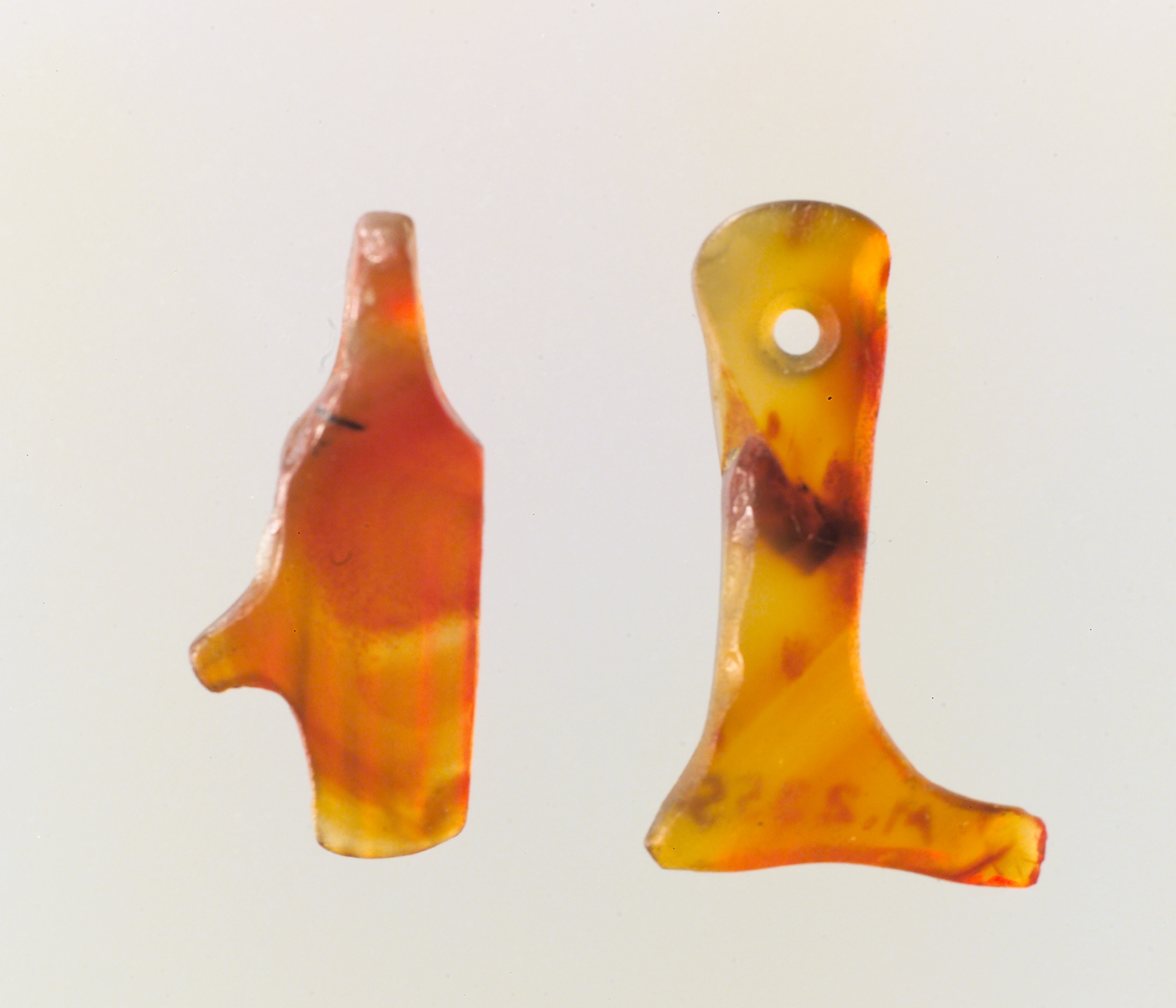
Strategic Heritage Analysis: The Foot Amulet in Carnelian
This report presents a comprehensive heritage analysis of the foot amulet, an ancient artifact rendered in carnelian, commissioned by Katherine Fashion Lab as a strategic standalone research initiative. The analysis examines the object’s symbolic power, historical role in adornment, and spiritual meaning, culminating in a forward-looking luxury strategy for the 2026 market. By decoding the cultural DNA of this talisman, Katherine Fashion Lab can position itself at the intersection of heritage authenticity and contemporary luxury innovation.
Symbolic Power of the Foot Amulet
The foot amulet, prevalent in ancient civilizations such as Egypt, Mesopotamia, and the Indus Valley, embodies a profound symbolic lexicon centered on mobility, protection, and dominion. In ancient Egyptian culture, the foot—particularly the sole—was considered a potent conduit for earthly and spiritual power. Amulets shaped as feet, often worn on anklets or suspended from necklaces, served as protective charms against physical harm during travel and spiritual peril during the soul’s journey in the afterlife. The carnelian medium, a deep orange-red chalcedony, amplified this symbolism. Carnelian was revered for its association with blood, vitality, and the life force ankh. Its fiery hue was believed to ward off evil spirits, stabilize the wearer’s energy, and ensure safe passage across both terrestrial and metaphysical boundaries.
In Mesopotamian contexts, foot amulets were interred with the dead to secure a safe crossing into the underworld, while in the Indus Valley, they signified social status and territorial claim. The foot, as a symbol of grounding and forward movement, represented the wearer’s agency and resilience. For Katherine Fashion Lab, this symbolic power offers a rich narrative framework: the foot amulet can be repositioned as a contemporary emblem of empowerment, resilience, and curated mobility—qualities that resonate deeply with the modern luxury consumer’s desire for meaningful, protective adornment.
Historical Adornment and Cultural Context
Historically, the foot amulet was not merely a decorative object but a functional component of daily and ritualistic life. In ancient Egypt, carnelian foot amulets were often incorporated into broad collars and pectorals, worn by royalty and high-ranking officials. The amulet’s placement on the body—near the feet or suspended from the waist—was deliberate, aligning with the belief that the feet were vulnerable to malevolent forces during travel. The amulet’s materiality further reinforced its protective function; carnelian was sourced from the Eastern Desert and traded extensively, marking the wearer as part of a globalized elite network.
The amulet’s design frequently featured incised details such as toes, arches, and sometimes an accompanying hieroglyphic inscription for the god Bes or the goddess Taweret, both protectors of domestic and liminal spaces. This meticulous craftsmanship elevated the foot amulet from a mere charm to a statement of cultural literacy and aesthetic sophistication. For Katherine Fashion Lab, this historical context provides a template for luxury storytelling: the amulet’s provenance—its ancient origins, material rarity, and ritualistic use—can be leveraged to create a narrative of exclusivity and timelessness. The 2026 luxury consumer, increasingly drawn to objects with provenance and purpose, will find resonance in the amulet’s dual identity as both ornament and guardian.
Spiritual Meaning and Ritualistic Significance
The spiritual meaning of the foot amulet extends beyond mere protection to encompass concepts of balance, direction, and cosmic alignment. In ancient Egyptian cosmology, the foot was linked to the concept of ma’at—truth, balance, and order. Wearing a carnelian foot amulet was an act of aligning one’s physical path with divine will, ensuring that every step was in harmony with the universe’s order. The carnelian’s association with the solar deity Ra imbued the amulet with regenerative properties; it was believed to purify the wearer’s aura and restore vitality after travel or illness.
In funerary contexts, foot amulets were placed on the mummy’s feet to enable the deceased to walk in the afterlife, symbolizing the soul’s continued agency. This spiritual function—enabling movement across realms—translates into a powerful metaphor for modern consumers seeking to navigate transitions, whether personal, professional, or spiritual. For Katherine Fashion Lab, this spiritual dimension offers a unique positioning in the luxury market: the foot amulet can be marketed as a “transitional talisman,” a piece that supports the wearer through life’s journeys and thresholds. The carnelian medium, with its warm, life-affirming energy, reinforces this narrative, appealing to consumers who value holistic well-being and intentional living.
2026 High-End Luxury Strategy: Heritage-Informed Innovation
To translate the foot amulet’s heritage into a 2026 luxury strategy, Katherine Fashion Lab must adopt a multi-pronged approach that balances historical fidelity with contemporary relevance. The following strategic pillars are recommended:
1. Material Authenticity and Sourcing Transparency: Carnelian’s historical significance as a trade commodity positions it as a marker of global luxury. For 2026, Katherine Fashion Lab should source carnelian from ethical, traceable origins—preferably from recognized historical sources such as the Eastern Desert or Rajasthan. This transparency aligns with the luxury consumer’s demand for sustainability and provenance. The carnelian should be presented with its natural inclusions and color variations, emphasizing its organic, unenhanced beauty. Each amulet could be accompanied by a digital certificate detailing its geological and cultural lineage, transforming the purchase into an educational experience.
2. Narrative-Driven Design and Limited Editions: The foot amulet should be reimagined as a modular luxury accessory—available as a pendant, anklet, or brooch—allowing for personalized placement on the body, echoing its ancient use. Limited-edition collections could be tied to specific ancient motifs: for example, a “Journey of the Pharaohs” series featuring incised hieroglyphs for protection, or a “Mesopotamian Path” series with cuneiform inscriptions. Each piece would include a narrative card explaining the amulet’s symbolic function, creating an emotional connection between the wearer and the artifact. This narrative-driven approach taps into the growing trend of “meaningful luxury,” where consumers seek objects that tell a story and confer identity.
3. Ritualistic Retail Experiences: The 2026 luxury consumer values experiential engagement. Katherine Fashion Lab could launch pop-up “Sanctuary Spaces” in key luxury markets—New York, London, Tokyo, Dubai—where clients participate in a curated ritual: selecting their carnelian amulet, receiving a personalized blessing or intention-setting ceremony led by a heritage curator, and learning about the amulet’s protective properties. This experience elevates the purchase from a transaction to a transformative event, building brand loyalty and word-of-mouth prestige. The retail space itself could incorporate ancient design elements, such as sandalwood incense, muted earth tones, and soft lighting, to evoke a meditative atmosphere.
4. Strategic Collaborations and Cultural Partnerships: To reinforce authenticity, Katherine Fashion Lab should collaborate with museums, archaeologists, and cultural institutions. Co-branded collections with institutions like the British Museum or the Egyptian Museum in Cairo would lend scholarly credibility and access to exclusive archival designs. Additionally, partnerships with contemporary artists who work with ancient symbolism—such as Lita Albuquerque or Anicka Yi—could result in avant-garde interpretations of the foot amulet, bridging heritage and modernity. These collaborations would generate editorial coverage and position the brand as a thought leader in heritage luxury.
5. Digital Storytelling and Metaverse Integration: For 2026, a digital layer is essential. Each foot amulet could be paired with a non-fungible token (NFT) that unlocks an augmented reality (AR) experience: a virtual journey through ancient Egypt or Mesopotamia, showing the amulet’s original context. This digital artifact would serve as a collectible and a proof of ownership, appealing to tech-savvy luxury consumers. Social media campaigns could feature “Amulet Diaries,” where influencers and clients share how their carnelian foot amulet supports their personal journeys, reinforcing the talisman’s spiritual meaning in a contemporary idiom.
Conclusion
The foot amulet in carnelian is not merely an ancient artifact but a strategic asset for Katherine Fashion Lab’s 2026 luxury vision. Its symbolic power—rooted in protection, mobility, and cosmic alignment—resonates with modern consumers seeking meaning and intentionality in their adornment. By honoring the amulet’s historical and spiritual legacy while innovating through material transparency, narrative design, experiential retail, and digital integration, Katherine Fashion Lab can create a heritage-inspired luxury line that is both timeless and forward-looking. This analysis confirms that the foot amulet, when strategically positioned, offers a compelling blueprint for differentiation, emotional engagement, and commercial success in the high-end market.