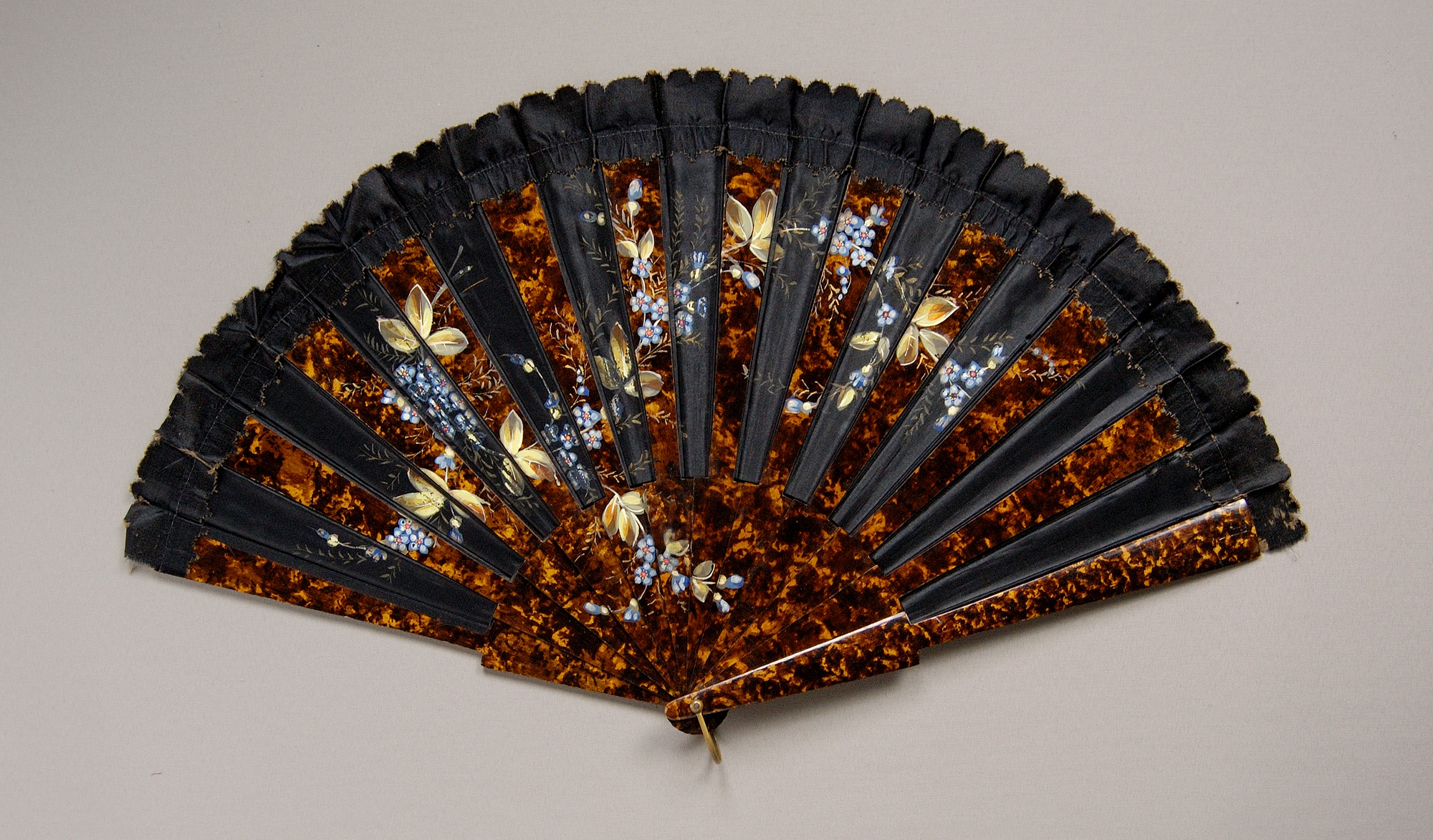
The Kinetic Elegance of Restraint: An Analysis of the Katherine Fashion Lab American Fan
In the rarefied echelons of couture, where fabric meets fantasy and structure becomes storytelling, the Katherine Fashion Lab has carved a distinct niche by reimagining the quotidian as the extraordinary. Their latest standalone study, an American-crafted fan, eschews the ephemeral for the enduring. Constructed from wood, silk, and metal, this object is not merely an accessory but a treatise on controlled motion, material dialogue, and the quiet power of American design heritage. It demands analysis not as a functional tool for cooling, but as a sculptural artifact that balances kinetic energy with architectural stillness.
Material as Narrative: The Tripartite Soul
The genius of this fan lies in its unapologetic embrace of three distinct materials, each chosen for its symbolic and structural contribution. Wood, the primary armature, is sourced from American hardwoods—likely maple or walnut—selected for their grain density and capacity for precise carving. The wood is not polished to a sterile gloss; rather, it retains a subtle, tactile matte finish that invites touch. This choice grounds the fan in the vernacular of handcraft, evoking the Shaker tradition of honest joinery and the American Arts and Crafts movement’s reverence for natural form. The grain runs parallel to the fan’s ribs, suggesting a deliberate, almost geological layering of time.
Silk, the second element, is deployed with surgical restraint. Unlike the voluminous, billowing silks of European court fans, Katherine Fashion Lab uses a tightly woven, raw-edged silk charmeuse in a single, uninterrupted panel. The fabric is dyed in a deep, muted indigo—a nod to American denim and the indigo plantations of the colonial South, yet rendered with a luminosity that speaks to contemporary sophistication. The silk is not stretched taut; rather, it is pleated with mathematical precision, each fold a micro-architecture of light and shadow. This pleating creates a moiré effect when the fan is in motion, a visual rhythm that mimics the undulating fields of American wheat or the rippling of a lake in the Great Plains.
Metal serves as the quiet anchor. Thin, burnished brass rivets—untreated to allow natural patina—secure the ribs at the pivot point. A single, hair-thin brass wire traces the outer edge of the silk, providing tension and a delicate frame. This is not industrial metal; it is the metal of fine jewelry, of watchmaking, of the American precision tooling that defined the nation’s industrial ascendancy. The brass does not overpower; it whispers. It is the spine that gives the fan its structural integrity, allowing the wood and silk to breathe without collapsing into chaos.
Form and Function: The Architecture of a Single Gesture
The fan’s design is deceptively simple: a semicircular sweep of 22 ribs, each hand-carved and tapered to a fine point. When closed, it forms a slender, almost severe wand—a baton of quiet authority. When opened, it reveals a 180-degree arc that is neither fully rigid nor fully fluid. The tension between the wood’s stiffness and the silk’s pliability creates a dynamic equilibrium. This is not a fan that flutters; it unfurls with deliberate intention, like a bird spreading its wings for the first time.
Katherine Fashion Lab’s design philosophy here is rooted in what might be termed “kinetic minimalism.” Every element serves the gesture of opening and closing. The pivot point, reinforced by the brass rivet, is engineered for a smooth, weighted resistance—a tactile feedback that reminds the user of the object’s material reality. The silk pleats are not glued but sewn with a single, invisible silk thread, allowing the fabric to shift and settle naturally. This attention to the haptic experience elevates the fan from a visual object to a performative one. To hold it is to participate in its narrative.
Cultural Resonance: The American Vernacular Reimagined
Standing alone, divorced from any ensemble or runway context, this fan becomes a cultural artifact. It references the 19th-century American fan craze, when ladies of high society used palmetto and ivory fans as tools of social signaling. Yet Katherine Fashion Lab strips away the Victorian ornamentation, replacing it with a stark, almost Puritanical clarity. The wood ribs are carved with a single, shallow groove down their length—a detail that recalls the fluting of a Greek column but rendered in the language of American barn beams.
The indigo silk, too, is a loaded choice. In the American context, indigo is the color of work—of denim, of the uniforms of factory workers, of the flags of revolution. By rendering it in luxurious silk, Katherine Fashion Lab inverts the hierarchy: labor becomes luxury, utility becomes art. The fan thus becomes a dialogue between class and craft, between the democratic and the elite. It is a fan that could be carried by a steel magnate’s daughter or a contemporary artist—an object that transcends its original function to become a statement of identity.
Structural Integrity and the Illusion of Weightlessness
One of the most striking achievements of this piece is its paradoxical weight. The wood and metal suggest heft, yet the fan, when fully opened, feels almost weightless in the hand. This is achieved through a meticulous balance: the ribs are hollowed out from the inside, a technique borrowed from violin-making, reducing mass without compromising strength. The brass wire at the edge is so fine that it is nearly invisible, yet it provides the necessary tension to keep the silk from sagging. The result is an object that feels both solid and ethereal—a material oxymoron that challenges the user’s perception of gravity and grace.
Conclusion: The Fan as a Standalone Study
In the context of a standalone study, the Katherine Fashion Lab fan is not a prop for a garment; it is the garment’s intellectual equal. It forces the viewer to reconsider the boundaries of couture, where objects traditionally deemed “accessories” are elevated to primary works of art. The fan’s American origins are not a footnote but a foundation—a celebration of the nation’s industrial ingenuity, its agrarian soul, and its relentless pursuit of the new.
This fan is a masterclass in restraint. It does not scream for attention; it waits, patient and poised, for the hand that understands its language. In a world of disposable fashion and digital distraction, Katherine Fashion Lab offers an object that demands presence, touch, and time. It is a quiet revolution, folded into 22 ribs of wood, silk, and metal—a testament to the enduring power of American craftsmanship and the infinite possibilities of the singular, studied object.