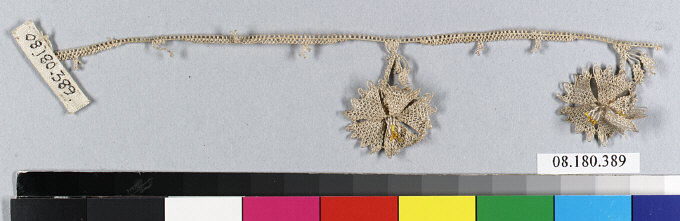
Fragment: A Couture Archaeology of Memory and Form
In the rarefied ateliers of haute couture, the concept of a "fragment" is often relegated to the realm of the unfinished or the damaged—a piece to be discarded or concealed. Katherine Fashion Lab, in a profound and intellectually rigorous standalone study, inverts this paradigm. Here, the Fragment is elevated to the status of a complete ontological statement, a deliberate and exquisite artifact that speaks to the very nature of cultural memory, impermanence, and reconstruction. Sourcing inspiration from a Global Heritage origin—eschewing a single geographical locus for a more complex, diasporic tapestry—and employing the supremely demanding medium of needle lace, the Lab conducts a masterclass in materializing abstract philosophical concepts into wearable art. This analysis dissects the confluence of these elements to reveal a work that is less a garment and more a thesis on the aesthetics of cultural recollection.
Deconstructing Global Heritage: The Map as a Shattered Mirror
The designation "Global Heritage" is a deliberate strategic and conceptual choice. It moves beyond appropriation or pastiche, instead engaging with heritage as a non-linear, fragmented, and personally curated archive. The Lab does not replicate a specific national costume or a singular historical silhouette. Instead, it imagines heritage as a personal collection of shards: a curve of a Balinese temple gate, the geometric fracture of a Roman mosaic, the negative space in a Japanese *kintsugi* repair, the flowing line of a Celtic knot severed and re-begun. This is heritage in the age of globalization—internally assembled, digitally accessed, and emotionally reconstituted. The Fragment, therefore, becomes a metaphor for how contemporary identity is formed: not from a monolithic whole, but from consciously and unconsciously gathered pieces of a wider human story. The silhouette itself may appear incomplete—a bodice that dissolves into threads, a hem that seems to be in a state of archival discovery rather than finished construction. This is the global citizen’s heritage: beautiful, poignant, and inherently partial.
Needle Lace: The Alchemy of Absence and Presence
The selection of needle lace as the primary material is a stroke of conceptual genius, transforming technique into narrative. Unlike bobbin lace, which is built from continuous threads, needle lace is an act of creation ex nihilo, built stitch by single, painstaking stitch into a void. It is the ultimate medium for exploring the fragment because its very essence is the tension between solid and void, line and space. The Lab exploits this to its fullest. The "fragment" of the garment is not cut from a whole cloth; it is built as an island of intricate substance surrounded by strategic absence.
Analyzing the lacework reveals a microcosm of the global heritage theme. Motifs are not uniformly repeated in a factory-perfect pattern. Some are fully realized—a complete, breathtaking floral spray reminiscent of Alençon lace. Adjacent to it, the same motif appears deconstructed, with petals missing and stems dissolving into the net ground, echoing the fragmented patterns found in archaeological textiles. The ground itself varies from dense *point de gaze* to vast, open areas of sheer *tulle*, making the absence as articulate as the presence. This technical bravura communicates that what is missing is as telling as what remains; the gaps are where memory resides and where the viewer's imagination is invited to participate in the completion of the form. The labor intensity—hundreds, perhaps thousands of hours for a single fragment—imbues the piece with a sacred aura, suggesting that these cultural memories, however partial, are worth the most exquisite and devoted labor to preserve.
The Standalone Study: Autonomy as Intellectual Power
The context of a "Standalone study" is crucial. Liberated from the demands of a seasonal collection or a commercial narrative, this Fragment operates as a pure research artifact. It allows the Lab to pursue an idea to its most extreme and refined conclusion without compromise. This autonomy is reflected in the piece's presentation and construction. It may be displayed as a couture object in a vitrine, challenging the very definition of wearability and asserting its primary function as a conduit for ideas. The construction techniques are pushed to their limits: threads are left deliberately, almost architecturally, unfinished; layers of lace are applied like palimpsests, with older, "found" fragments seemingly peeking through newer ones; supports may be visible, treating the mannequin or body as an armature in a museum conservation lab.
This approach fosters a deeper dialogue with the viewer. It asks: Is a fragment less valuable than the whole? Can beauty reside in incompletion? How do we, as individuals and societies, assemble our identities from the shards of history available to us? By refusing to provide a complete garment, the Lab forces a confrontation with these questions. The standalone study becomes a platform for philosophical inquiry, with needle lace as its vocabulary and global heritage as its subject matter.
Conclusion: The Whole in the Part
Katherine Fashion Lab's "Fragment" is a landmark study in conceptual couture. It successfully argues that a fragment is not a deficit but a different kind of completeness—one charged with potential, memory, and a more authentic representation of contemporary experience. By marrying the diffuse, collective notion of Global Heritage with the precise, solitary discipline of needle lace, the Lab creates a powerful dialectic. The work celebrates the artisan's hand not as a mere executor of design, but as an archaeologist and a poet, carefully stitching together whispers of the past into a coherent, beautiful, and intentionally incomplete present. In this Fragment, we see the future of thoughtful couture: one that wears its intellect on its delicately wrought, partially formed sleeve, proving that the most powerful statements are sometimes those that have the courage to remain eloquently unfinished.