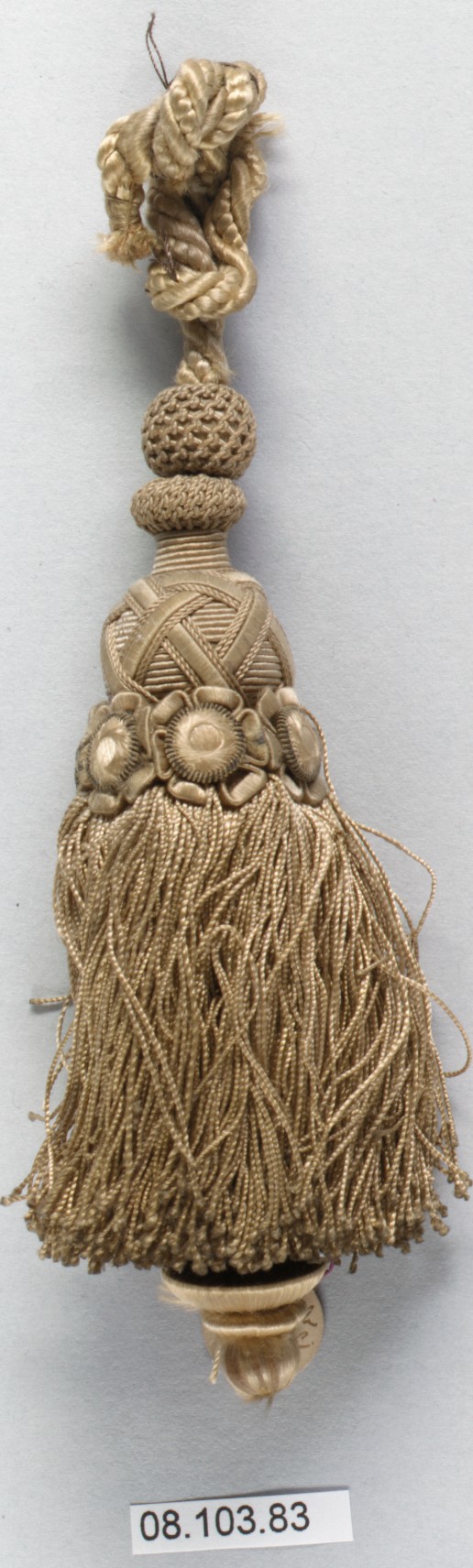
The Tassel: A Study in Global Heritage and Couture Craftsmanship
In the lexicon of couture, few embellishments carry as profound a narrative as the tassel. At Katherine Fashion Lab, this seemingly modest ornament is elevated to a standalone subject of rigorous study, where its global heritage converges with the luxurious tactility of silk. This analysis deconstructs the tassel not merely as a decorative afterthought but as a pivotal element of design language—a thread that binds centuries of cultural exchange, artisanal mastery, and contemporary aesthetic innovation.
Historical Genesis: The Tassel as a Cultural Artifact
The tassel’s origins are as diverse as the civilizations that have embraced it. Archaeological evidence traces its lineage to ancient Mesopotamia, where it adorned ceremonial garments and horse trappings as symbols of status and divine protection. In China, during the Zhou dynasty, silk tassels were integral to courtly regalia, their intricate knots encoding rank and virtue. The Silk Road, that ancient artery of trade, disseminated the tassel across continents, embedding it in the textile traditions of Central Asia, Persia, and eventually Europe.
By the Renaissance, the tassel had become a hallmark of ecclesiastical vestments and aristocratic fashion, its profusion of silk threads signifying wealth and piety. In the Ottoman Empire, tassels graced turbans and palace furnishings, while in India, they were woven into the pallu of saris and the borders of shawls, each knot a prayer for prosperity. This global heritage is not a mere historical footnote; it is the foundational DNA that Katherine Fashion Lab reinterprets through a couture lens.
Materiality: The Silk Imperative
Silk is the non-negotiable medium for this analysis. Its intrinsic properties—luminosity, tensile strength, and a fluidity that defies gravity—make it the optimal substrate for tassel construction. Unlike synthetic fibers, silk captures light with a depth that shifts from matte to gloss, creating a dynamic visual experience. The filament’s natural protein structure allows for precise knotting without fraying, enabling the dense, uniform fringes that define high-couture tassels.
At Katherine Fashion Lab, the sourcing of silk is a curatorial act. Mulberry silk from the Jiangsu province of China, known for its unbroken filament length, is preferred for its ability to hold complex dyeing techniques. The material is then hand-dyed using natural pigments—indigo, madder root, and cochineal—to achieve chromatic depths that synthetic dyes cannot replicate. This process ensures that each tassel is not only a structural component but a chromatic statement, its hue resonating with the garment’s narrative.
Technique: The Art of Hand-Knotting and Assembly
The creation of a couture tassel is a labor-intensive discipline that marries mathematical precision with artistic intuition. The process begins with the head, the structural core that anchors the tassel. Artisans at Katherine Fashion Lab employ the passementerie technique—a centuries-old French craft—to wrap silk threads around a wooden or metal form, creating a bulbous, textured base. This is followed by the skirt, where hundreds of individual silk strands are meticulously aligned and tied using a double-loop knot. The result is a uniform cascade that moves with a liquid grace.
Critical to this technique is the gimp, a twisted silk cord that binds the head to the skirt, often embellished with metallic threads or micro-beads. The tension of the gimp determines the tassel’s silhouette—tightly wound for a cylindrical form, looser for a bell shape. The final step is the netting, a decorative overlay that can incorporate intricate patterns such as herringbone or honeycomb, each requiring hours of hand manipulation. A single couture tassel, measuring five inches, can demand up to eight hours of artisan labor, underscoring its value as a bespoke object.
Design Integration: The Tassel as Structural and Symbolic Element
In the context of standalone study, the tassel is analyzed for its dual role: as a structural component that influences garment drape and as a symbolic device that communicates cultural identity. From a structural perspective, the weight of a silk tassel affects the fall of fabric. A heavy, densely packed tassel can anchor a hemline, creating a vertical line that elongates the silhouette. Conversely, a lighter, airy tassel adds movement to sleeves or necklines, introducing a kinetic quality to static garments.
Symbolically, the tassel’s global heritage allows for layered storytelling. Katherine Fashion Lab’s design team draws from a lexicon of motifs: the Chinese tassel knot, which symbolizes unity and eternity; the Persian tassel, often associated with protection from evil; and the Victorian tassel, a marker of refined taste. When applied to a modern gown, these references are not overt but subliminal, inviting the wearer and observer into a dialogue with history. For instance, a silk tassel fringe on a minimalist sheath dress might echo the fringe of a 1920s flapper dress, yet its material and technique root it firmly in contemporary luxury.
Cultural Resonance: The Tassel in Contemporary Couture
Today, the tassel occupies a unique space in fashion’s hierarchy. It is simultaneously a nod to tradition and a tool for avant-garde expression. At Katherine Fashion Lab, the tassel is deployed to challenge the notion of ornamentation as superfluous. In a recent collection, tassels were used to replace conventional closures—functioning as buttons or zippers—while also serving as visual focal points. A silk tassel adorning the back of a gown becomes a trailing signature, its movement echoing the wearer’s gait.
This reinterpretation extends to gender-neutral designs, where tassels on tailored jackets or trousers subvert traditional masculine tailoring. The silk material introduces a softness that contrasts with sharp lines, creating a tension that is both intellectual and sensual. The global heritage of the tassel also allows for cross-cultural dialogue: a Japanese-inspired kimono jacket might feature tassels dyed with shibori techniques, while an African-print silk dress incorporates tassels referencing the aso oke weaving tradition.
Conclusion: The Tassel as a Microcosm of Couture
The standalone study of the tassel at Katherine Fashion Lab reveals that this embellishment is a microcosm of couture itself—a synthesis of history, material science, and artistic vision. Silk, with its inherent elegance and adaptability, is the ideal vehicle for this exploration, while the global heritage of the tassel ensures that each creation is a testament to cultural continuity. In an era of fast fashion, the tassel demands patience, skill, and reverence. It is not an accessory; it is an artifact, a story, and a statement of intent. As Katherine Fashion Lab continues to push the boundaries of design, the tassel remains a constant reminder that true luxury lies in the details—and that those details, when crafted with mastery, can transcend time and geography.