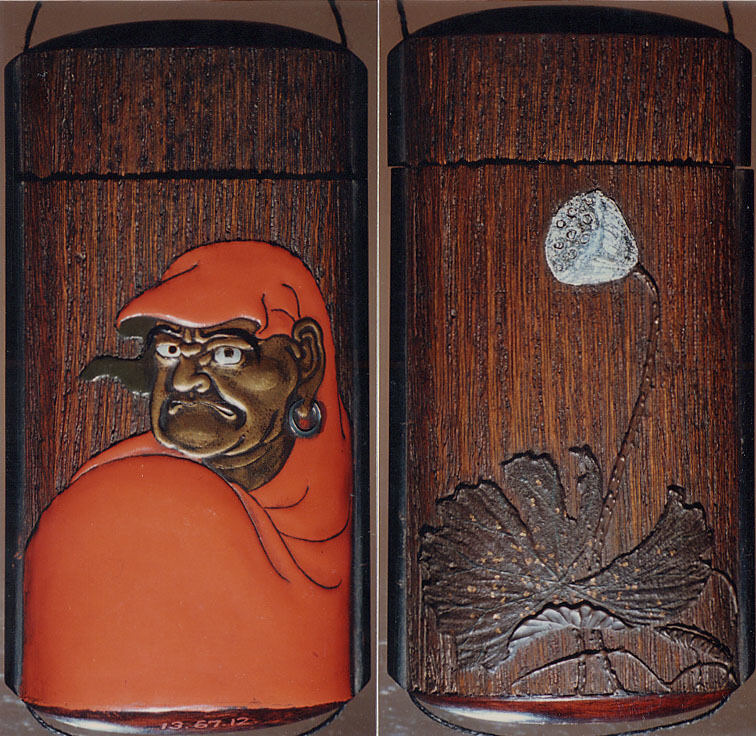
Heritage Analysis: Inrō with Portrait of Daruma and Lotus Motif
Introduction: The Object as Cultural Capital
The Inrō with Portrait of Daruma (obverse) and Large Lotus Leaf and Stalk with Seed Pod (reverse) represents a pinnacle of Edo-period Japanese craftsmanship and spiritual symbolism. As a portable container for seals and medicines, the inrō was not merely functional but a statement of status, taste, and philosophical alignment. This particular piece, executed in brown wood, gold, brown and red hiramakie, pewter inlay, and inlaid eyes, embodies a dual narrative: the fierce determination of Bodhidharma (Daruma) and the serene purity of the lotus. For Katherine Fashion Lab, this object offers a strategic blueprint for 2026 high-end luxury collections rooted in symbolic power, historical adornment, and spiritual meaning.
Symbolic Power: Daruma and the Lotus as Dual Archetypes
The obverse features Daruma, the legendary founder of Zen Buddhism, whose iconography is synonymous with resilience, enlightenment, and transcendence of worldly illusion. Daruma is often depicted with piercing, wide-open eyes—a detail executed here via inlaid eyes, emphasizing awakened vision. His red robes invoke protection and vitality, while his stern expression conveys unwavering discipline. In the context of luxury branding, Daruma symbolizes the pursuit of mastery and authenticity—qualities that resonate with discerning consumers seeking meaning beyond materiality.
The reverse presents a large lotus leaf and stalk with seed pod, a quintessential Buddhist symbol of purity arising from muddy waters. The lotus leaf’s expansive form represents protection and the unfolding of wisdom, while the seed pod signifies potential and rebirth. Together, these motifs create a dialectic: the active, confrontational energy of Daruma balanced by the passive, organic growth of the lotus. For a 2026 luxury strategy, this duality offers a narrative of struggle and serenity—a powerful emotional arc for collections that speak to resilience in an era of global uncertainty.
Historical Adornment: The Inrō as a Worn Philosophy
The inrō was suspended from the obi (sash) via a netsuke and ojime, making it a visible extension of the wearer’s identity. In Edo-period Japan, such objects were commissioned by samurai and merchant elites to display cultural literacy and spiritual alignment. The choice of Daruma and lotus would have signaled a commitment to Zen ideals, while the hiramakie lacquer technique—in which gold and colored powders are sprinkled onto wet lacquer—demonstrated artisanal mastery and economic power. The pewter inlay adds a subtle metallic contrast, suggesting modernity within tradition.
For Katherine Fashion Lab, this historical context underscores the importance of adornment as storytelling. In 2026, luxury consumers will increasingly seek pieces that function as talismans or philosophical anchors. The inrō’s portability and intimacy—designed to be touched, opened, and worn—offer a template for accessories that are both decorative and meditative. A strategic collection could reinterpret the inrō as a wearable amulet, using materials like lacquer, precious metals, and gemstone inlays to encode personal or cultural narratives.
Spiritual Meaning: Zen Aesthetics and Material Transcendence
The spiritual dimension of this inrō lies in its transformation of mundane materials into sacred objects. Brown wood, a humble substrate, becomes elevated through gold and lacquer—a metaphor for enlightenment emerging from ordinary life. Daruma’s inlaid eyes are not merely decorative; they are ritualistic, often completed by a devotee upon achieving a goal. The lotus seed pod, with its multiple seeds, suggests infinite potential within a single form.
This aligns with the Zen concept of wabi-sabi—the beauty of imperfection and transience. The inrō’s interior is plain, a deliberate contrast to its ornate exterior, reminding the wearer that true value lies beneath surface adornment. For a 2026 luxury strategy, this principle can be leveraged to create collections that celebrate craftsmanship, patina, and the passage of time. Pieces that age gracefully—through wear, oxidation, or ritual use—will appeal to consumers who reject fast fashion in favor of enduring objects with soul.
2026 High-End Luxury Strategy: Translating Heritage into Modern Desire
To operationalize this analysis, Katherine Fashion Lab should consider the following strategic pillars:
1. Narrative-Driven Design: The Daruma-lotus duality offers a ready-made brand archetype. A 2026 capsule collection could feature dual-sided motifs—one side representing struggle (Daruma), the other serenity (lotus)—on jewelry, handbags, or scarves. Each piece would come with a digital or printed narrative card explaining the symbolism, elevating the product to an educational artifact.
2. Material Alchemy: The inrō’s use of hiramakie and pewter inlay can inspire a focus on hybrid materials—for example, combining traditional lacquer with sustainable bio-resins or recycled metals. This respects heritage while addressing modern environmental ethics. Limited-edition pieces could feature hand-painted Daruma eyes, allowing clients to “complete” the ritual themselves, fostering emotional attachment.
3. Wearable Philosophy: Position accessories as portable meditation tools. Inspired by the inrō’s interior compartment, designs could include hidden spaces for personal mementos or affirmations. Marketing campaigns should emphasize the ritual of wearing—a daily act of mindfulness that aligns with the consumer’s journey toward self-mastery.
4. Collaborative Authenticity: Partner with contemporary Zen masters, lacquer artisans, or Japanese cultural institutions to co-create collections. This ensures cultural integrity while generating exclusivity. The 2026 launch could coincide with an exhibition on Edo-period adornment, positioning Katherine Fashion Lab as a bridge between heritage and avant-garde luxury.
Conclusion: The Inrō as Strategic Muse
The Inrō with Portrait of Daruma and Lotus is more than an antique; it is a strategic artifact for the future of luxury. Its symbolic power, historical resonance, and spiritual depth offer a roadmap for creating collections that are not merely consumed but revered. By embracing the duality of struggle and serenity, and by honoring the craft traditions that give objects their soul, Katherine Fashion Lab can lead the 2026 market toward a more meaningful, enduring luxury. The inrō reminds us that true elegance is not in the object alone, but in the story it tells and the transformation it inspires.