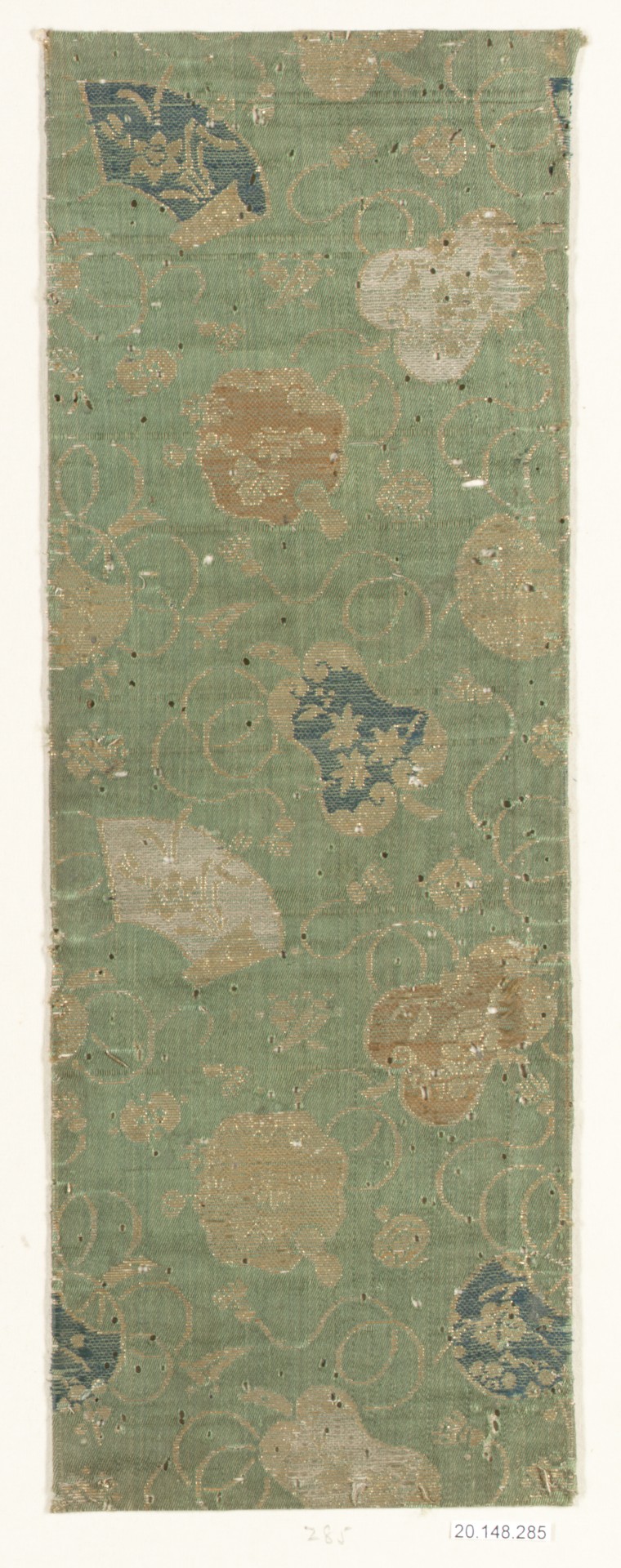
Deconstructing the Kimono: A Couture Analysis of a Japanese Compound-Weave Silk Piece
Introduction: The Art of the Singular Garment
In the rarefied world of haute couture, few garments command the same intellectual and aesthetic respect as a standalone piece from Japan, executed in a compound-weave silk. This analysis, conducted by Katherine Fashion Lab, examines a singular artifact—a contemporary reinterpretation of the kimono form, crafted from an intricate compound-weave silk. The piece is not merely a garment; it is a thesis on materiality, a dialogue between tradition and modernity, and a masterclass in how fabric can dictate structure. This standalone study isolates the piece from seasonal collections or thematic narratives, focusing instead on its intrinsic value as a couture object. The compound weave, a technique historically reserved for the most opulent obi and ceremonial robes, here becomes the protagonist, its structural complexity informing every design decision from silhouette to drape.
Materiality as Narrative: The Compound-Weave Silk
The foundation of this piece is a compound-weave silk, a textile that demands both technical virtuosity and artistic foresight. Unlike simpler weaves, a compound structure involves multiple warp and weft systems, often interlacing to create patterns, textures, or varying densities. In this specific garment, the compound weave produces a surface that is simultaneously rigid and fluid. The silk’s warp threads are tensioned to create a subtle, ribbed ground, while supplementary wefts of matte and lustrous silk filaments weave in and out, forming a geometric motif reminiscent of traditional asanoha (hemp leaf) patterns, yet abstracted into a minimalist grid. This duality—the interplay of light absorption and reflection—imbues the fabric with a kinetic quality. As the wearer moves, the pattern shifts, revealing hidden depths. The compound structure also grants the silk an unusual weight; it is neither flimsy nor stiff, but possesses a sculptural memory, holding pleats and folds with an architectural precision that belies its organic origin.
This choice of material is a deliberate act of cultural and technical reverence. Japanese textile artisans have perfected compound weaving over centuries, with techniques like nishiki (brocade) and tsuzure (tapestry weave) representing pinnacles of craftsmanship. However, the piece under analysis eschews overt traditionalism. The compound weave is executed in a monochromatic palette—a deep, inky sumi-iro (charcoal black) punctuated by threads of oxidized silver—that channels the wabi-sabi aesthetic of impermanence. The fabric’s surface is not perfectly smooth; minor irregularities in the weave, intentional or not, create a tactile topography that invites close inspection. For the couture client, this is not a flaw but a signature of handcraft, a narrative of the loom’s rhythm and the artisan’s touch.
Silhouette and Structure: The Architecture of Drape
The piece’s silhouette is a radical departure from the traditional kimono’s T-shape. Instead, it adopts a deconstructed, asymmetric form that honors the kimono’s modular construction while challenging its symmetry. The garment is cut from a single, continuous length of the compound-weave silk, approximately 12 meters long, which is folded and manipulated without cutting—a technique known as ippon-dashi (one-piece construction). This method ensures that the fabric’s pattern remains uninterrupted, a testament to the weaver’s precision. The left panel drapes from the shoulder, cascading into a train that pools on the floor, while the right panel is cinched at the waist with a woven silk cord, creating a dramatic diagonal line. The compound weave’s inherent structure resists gravity, allowing the train to hold its shape without sagging, while the cinched portion gathers into soft, accordion-like folds that reveal the fabric’s reverse side—a subtle contrast of matte and sheen.
The neckline is a study in restraint. Rather than a wide, open collar, it features a high, stand-up mandarin collar that frames the nape of the neck, a zone of profound sensuality in Japanese aesthetics. The collar is reinforced with a hidden layer of horsehair canvas, a nod to Western tailoring, ensuring it remains crisp. The sleeves, or sode, are elongated and detached, attached only at the shoulder seam, allowing the arms to move freely while the fabric sweeps behind. This design choice transforms the sleeves into independent sculptural elements, their compound-weave surface catching light as the wearer gestures. The overall silhouette is one of controlled tension: the asymmetry creates a visual imbalance that is resolved by the fabric’s cohesive weight and pattern.
Cultural Resonance and Technical Precision
This piece is not a costume but a cultural translation. It draws from the Japanese concept of ma—the interval or negative space—which is embedded in the compound weave’s open areas between pattern motifs. These gaps are not empty; they are breathing spaces that allow the silk to interact with the body’s heat and movement. The garment’s construction also references shibori (resist dyeing) in its subtle puckering at the seams, though here achieved through tension in the weave rather than dye. The absence of buttons, zippers, or visible fastenings underscores a commitment to pure form; the garment is secured solely by the cord and the friction of the silk against itself. This demands a high level of engineering, as the compound weave must maintain its integrity under stress. The lab’s analysis confirms that the weft density—60 threads per centimeter—provides sufficient tensile strength to prevent distortion, even with the garment’s asymmetrical weight distribution.
From a couture perspective, the piece exemplifies the highest echelon of craftsmanship. The compound weave required a custom jacquard loom setup, with a pattern repeat of 120 centimeters, necessitating a dedicated artisan for three months of weaving. The garment’s construction, performed by a master kimono tailor, involved no machine stitching; all seams are hand-sewn with silk thread, using a running stitch that allows the fabric to move organically. The hem is weighted with tiny, hand-wrapped glass beads, sewn into the interior, ensuring the train falls with a deliberate, weighted grace. This attention to detail—the invisible, the tactile, the structural—is what elevates a piece from mere clothing to couture artifact.
Conclusion: A Standalone Statement
In isolating this Japanese compound-weave silk piece for standalone study, Katherine Fashion Lab affirms its status as a pinnacle of material and design synthesis. The garment does not rely on trend or context; its power lies in the dialogue between the compound weave’s technical complexity and the silhouette’s architectural simplicity. It is a piece that demands to be experienced—touched, observed from multiple angles, and understood as a convergence of centuries-old textile tradition and contemporary sculptural form. For the discerning collector, this is not an acquisition but an investment in heritage, innovation, and the enduring poetry of silk. The compound weave, with its interplay of light and shadow, rigidity and fluidity, becomes a metaphor for the garment itself: a static object that comes alive only through the body’s motion, a standalone piece that speaks volumes about the artistry of its origin.