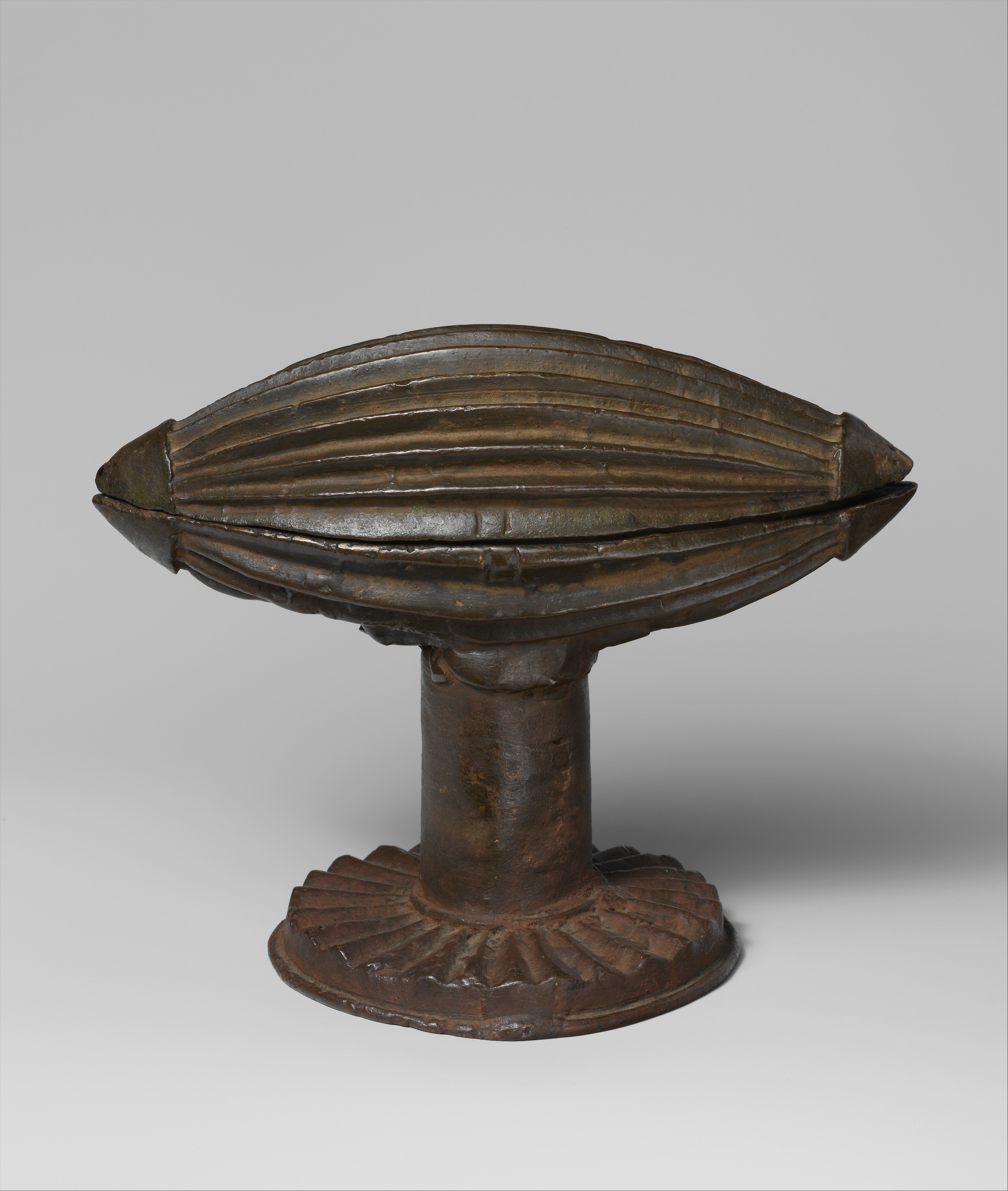
Heritage Analysis: Lidded Vessel with Fluted Gourd (Edo Peoples, Brass)
Introduction: Artifact as Strategic Asset
This analysis examines the Lidded Vessel with Fluted Gourd, a brass ceremonial object from the Edo peoples of the historic Kingdom of Benin (present-day Nigeria). As a Lead Heritage Curator for Katherine Fashion Lab, I position this artifact not merely as an ethnographic relic, but as a strategic standalone research asset with profound implications for 2026 high-end luxury strategy. The vessel embodies a convergence of symbolic power, historical adornment, and spiritual meaning—elements that, when decoded, offer a blueprint for authentic, narrative-driven luxury positioning. This paper dissects the artifact’s cultural DNA and translates its core principles into actionable strategies for a discerning, heritage-conscious clientele.
Symbolic Power: The Vessel as a Conduit of Authority
Within Edo cosmology, the lidded vessel—particularly in brass—is not a utilitarian container but a symbol of royal and spiritual authority. Brass, reserved for the Oba (king) and his court, was a material of immense prestige, often referred to as “the metal of the gods.” The fluted gourd form, meticulously replicated in brass, carries layered symbolism. The gourd itself, a natural object, represents fertility, abundance, and the continuity of life. When rendered in enduring brass, it becomes a metaphor for permanence within cyclical renewal—a concept resonant with luxury brands seeking to convey timelessness while evolving.
The lid is critical: it signifies containment of sacred power. In Edo ritual, opening the vessel during ceremonies released spiritual force, while closing it preserved potency for future generations. For Katherine Fashion Lab, this translates into a brand narrative of controlled revelation—where exclusivity is not scarcity but curated access. The vessel’s power lies in its ability to be both seen and hidden, a duality that modern luxury consumers crave in an age of overexposure.
Historical Adornment: Brass as Prestige Material
Historically, brass adornment among the Edo was a marker of hierarchical distinction. The Oba’s palace workshops produced brass objects—plaques, pendants, and vessels—that adorned royal altars, regalia, and ceremonial spaces. The fluted gourd vessel likely served as a ritual container for offerings to ancestors or deities, its surface often polished to a high sheen that caught firelight, creating an aura of divine radiance. The fluting—vertical grooves carved into the brass—is not merely decorative; it echoes the texture of the original gourd and adds tactile complexity, inviting touch and contemplation.
For high-end luxury strategy, this historical use of brass as a material of status and ritual offers a direct parallel to contemporary luxury’s focus on craftsmanship and material integrity. The vessel’s fluting, a result of lost-wax casting—a labor-intensive, artisanal process—mirrors the bespoke production methods that define true luxury. The 2026 consumer will increasingly value tangible, hand-crafted surfaces over mass-produced perfection. Katherine Fashion Lab can leverage this by incorporating fluted brass elements into limited-edition accessories—cuffs, belt buckles, or fragrance bottle caps—that reference this heritage while remaining modern. The historical adornment context suggests that brass, when used sparingly and with intention, conveys understated opulence rather than ostentation.
Spiritual Meaning: Ancestral Connection and Ritual Purity
Spiritually, the vessel is a threshold object—a bridge between the physical and ancestral realms. In Edo belief, the Oba is a divine intermediary, and objects made for his court carry ase (spiritual energy). The lidded vessel, when used in rituals, was believed to house the essence of offerings, transforming them into channels for ancestral blessing. The act of placing a lid on the vessel was a gesture of reverence and containment, ensuring that spiritual energy was directed properly. This concept of “contained sacredness” is profoundly relevant to luxury branding, where products often serve as vessels for identity, memory, and aspiration.
For 2026, Katherine Fashion Lab can translate this spiritual meaning into a brand philosophy of intentionality. Each product could be framed as a “vessel” for the wearer’s personal narrative—a lidded box for jewelry, a brass-trimmed garment closure, or a sculptural perfume bottle. The spiritual dimension also underscores the importance of ritual in consumer behavior. Luxury brands that create unboxing experiences, care rituals, or limited-edition releases that mimic ceremonial unveiling will resonate deeply. The vessel’s spiritual meaning reminds us that luxury is not just about possession, but about connection to something greater—ancestry, artistry, or self-transformation.
2026 High-End Luxury Strategy: From Artifact to Archetype
Based on this heritage analysis, I propose a three-pillar strategy for Katherine Fashion Lab’s 2026 luxury positioning, grounded in the Edo vessel’s core attributes.
Pillar One: Material Integrity as Brand Signature
The vessel’s brass medium is a lesson in material storytelling. For 2026, Katherine Fashion Lab should establish a signature material—perhaps a proprietary brass alloy or a sustainably sourced alternative—that is used consistently across collections. This material should be celebrated for its patina evolution over time, allowing customers to develop a personal relationship with the object. Marketing narratives should emphasize the zero-waste casting process and collaboration with West African artisans, aligning with the luxury consumer’s demand for ethical provenance. The fluted gourd texture could inspire a new surface finish for leather goods or hardware, creating a tactile signature that is both ancient and avant-garde.
Pillar Two: The Ritual of Revelation
Borrowing from the vessel’s lidded symbolism, Katherine Fashion Lab should design ritualistic unboxing experiences for flagship products. For instance, a limited-edition jewelry collection could be housed in a brass lidded vessel, with the opening ceremony symbolizing the release of personal power. This approach transforms a transactional purchase into a memorable, shareable event—ideal for social media amplification. The 2026 consumer craves experiences that feel sacred and exclusive; a ritualistic reveal satisfies this need while honoring the artifact’s spiritual roots.
Pillar Three: Narrative of Controlled Exclusivity
The vessel’s power lies in what it contains and conceals. Katherine Fashion Lab should adopt a “closed collection” model for certain high-value items—releasing them in limited drops with no restocks, mimicking the vessel’s one-time ritual use. This creates urgency and reverence, not through artificial scarcity, but through cultural authenticity. Each drop could be accompanied by a digital provenance certificate, tracing the design inspiration back to the Edo vessel. This narrative of controlled exclusivity positions the brand as a curator of cultural heritage, not just a purveyor of goods.
Conclusion: The Vessel as Strategic Compass
The Lidded Vessel with Fluted Gourd is far more than a decorative object; it is a strategic compass for Katherine Fashion Lab’s 2026 luxury strategy. Its symbolic power teaches us to build authority through material and form. Its historical adornment reminds us that true luxury is labor-intensive and tactile. Its spiritual meaning underscores the importance of ritual and connection. By translating these principles into material integrity, ritualistic experiences, and controlled exclusivity, Katherine Fashion Lab can differentiate itself in a saturated market—offering not just products, but vessels of meaning for the discerning few. This heritage analysis confirms that the most innovative luxury strategies are often those rooted in the deepest cultural wisdom.