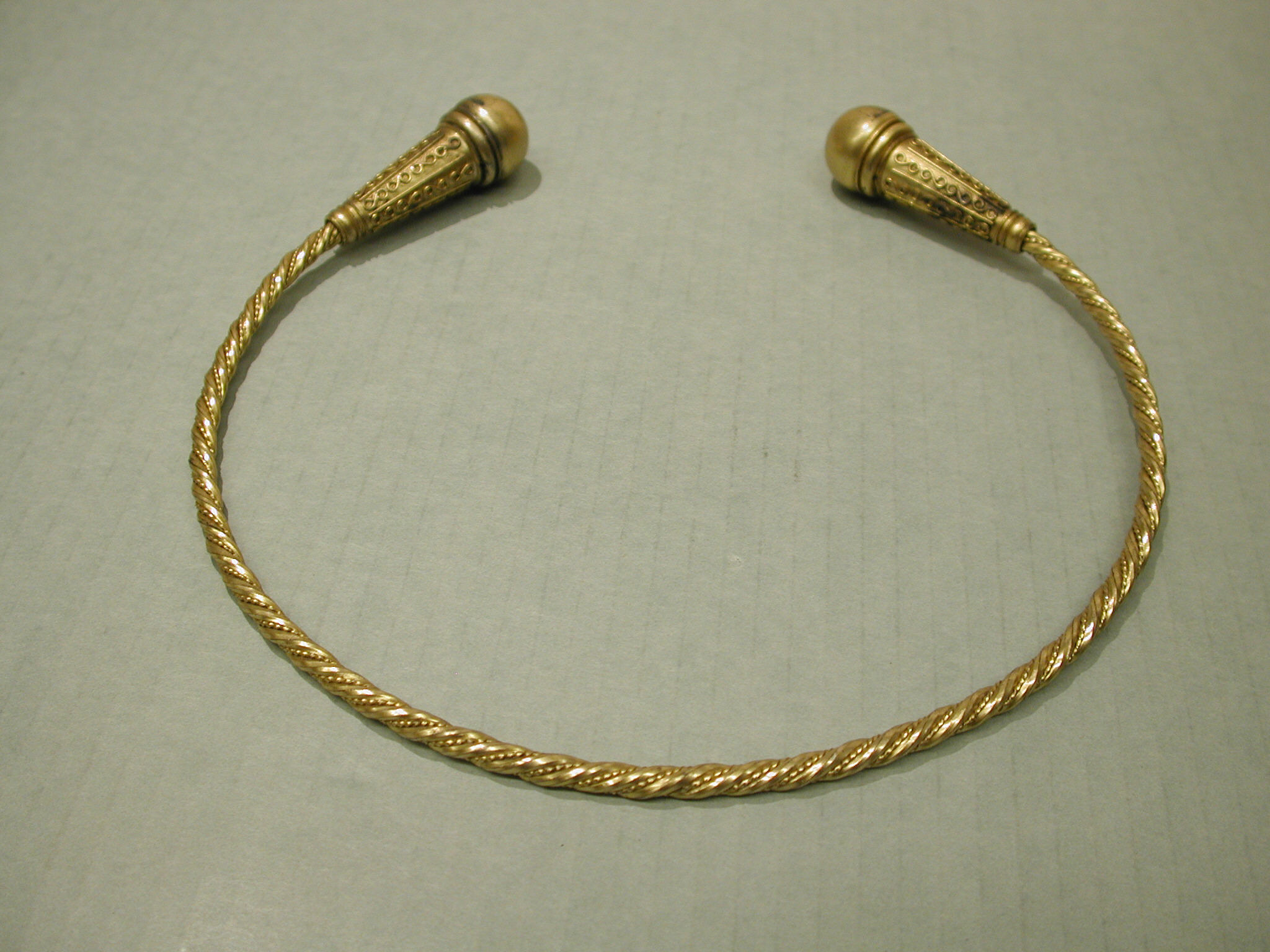
Heritage Analysis: The Torque as a Symbol of Power and Prestige
As Lead Heritage Curator for Katherine Fashion Lab, I present this strategic standalone research on the torque—a singular artifact of ancient civilization that transcends its material form to embody symbolic power, historical adornment, and spiritual meaning. This analysis positions the torque as a cornerstone for a 2026 high-end luxury strategy, leveraging its deep cultural resonance to elevate brand narrative and consumer engagement.
Symbolic Power: The Torque as a Marker of Authority
The torque, a rigid neck ring often crafted from plated base metal, emerges from ancient civilizations—notably the Celts, Thracians, and Scythians—as a potent emblem of authority. In Celtic culture, the torque was more than ornament; it signified warrior status, chieftaincy, and divine favor. Archaeological evidence from the La Tène period (circa 450–50 BCE) reveals torques in burial sites of elite individuals, often accompanying weapons and ceremonial objects. This placement underscores their role as markers of temporal and spiritual leadership. The torque’s circular form, unbroken and continuous, symbolized eternity, loyalty, and the unending cycle of power. For Katherine Fashion Lab, this symbolic weight offers a narrative of unyielding strength and heritage—qualities that resonate with high-net-worth consumers seeking authenticity and lineage in their luxury purchases.
In Thracian and Scythian contexts, torques were frequently depicted on royal regalia and coinage, reinforcing their association with sovereignty. The plated base metal medium—often gold or silver over bronze—allowed for both opulence and durability, mirroring the dual nature of leadership: visible wealth and underlying resilience. This duality is critical for a 2026 luxury strategy, where exclusivity must be paired with substance. By referencing the torque’s symbolic power, Katherine Fashion Lab can position its collections as heirlooms of modern authority, appealing to clients who view luxury as an extension of personal influence.
Historical Adornment: Craftsmanship and Cultural Transmission
The torque’s historical adornment function reveals sophisticated craftsmanship and cross-cultural exchange. Ancient artisans employed techniques such as repoussé, filigree, and granulation to decorate plated base metal torques, often incorporating animal motifs, geometric patterns, and religious iconography. For instance, the famous Celtic “Torque of Trichtingen” (circa 4th century BCE) features intricate spiral designs, reflecting a cosmology of interconnectedness. Similarly, Scythian torques from the Siberian Pazyryk burials exhibit zoomorphic forms—griffins, stags, and felines—that signify shamanistic beliefs and tribal identity. These details demonstrate that the torque was not merely decorative but a repository of cultural memory and technical mastery.
For Katherine Fashion Lab, this historical context provides a rich design lexicon. The plated base metal medium, historically accessible yet precious in appearance, aligns with contemporary sustainable luxury trends: it offers the aesthetic of gold or silver without the environmental cost of mining. By reinterpreting ancient motifs—such as the spiral, the knot, or the beast—through modern manufacturing, the brand can create pieces that feel both timeless and innovative. This approach also supports a 2026 strategy focused on heritage storytelling, where each torque becomes a conversation starter about ancient civilizations, thus differentiating Katherine Fashion Lab in a crowded market.
Spiritual Meaning: The Torque as a Talisman and Cosmic Link
Beyond secular power, the torque held profound spiritual meaning across ancient civilizations. In Celtic druidic traditions, the torque was believed to channel divine energy, protecting the wearer from malevolent forces and connecting them to the Otherworld. Its circular shape mirrored the sun, the moon, and the cycle of seasons, making it a talisman for fertility, rebirth, and cosmic harmony. The plated base metal, often reflective, was thought to deflect negative spirits—a concept echoed in later medieval folklore where metal neck rings warded off witchcraft. Similarly, in Thracian funerary practices, torques were placed on the deceased to guide the soul in the afterlife, symbolizing an unbroken bond between the earthly and the eternal.
This spiritual dimension is increasingly relevant for 2026 luxury consumers, who prioritize mindful consumption and emotional resonance. A torque from Katherine Fashion Lab can be marketed not just as a fashion accessory but as a personal amulet—a piece imbued with intention and history. The brand could develop a narrative around “protection” and “connection,” aligning with broader wellness trends. For example, limited-edition torques could be released during solstices or equinoxes, tying their spiritual meaning to celestial events. This strategy elevates the product from commodity to ritual object, fostering deeper loyalty and justifying premium pricing.
2026 High-End Luxury Strategy: Positioning the Torque for Exclusivity and Relevance
To integrate the torque into a 2026 high-end luxury strategy, Katherine Fashion Lab must navigate three core pillars: authenticity, scarcity, and experiential engagement. First, authenticity demands rigorous historical accuracy in design while allowing for contemporary reinterpretation. The plated base metal medium, often dismissed as “costume,” can be repositioned as a deliberate choice—a nod to ancient resourcefulness and a sustainable alternative to solid gold. By partnering with historians or archaeologists, the brand can ensure each torque’s motifs are culturally respectful, avoiding appropriation while celebrating heritage.
Second, scarcity is paramount. The torque, historically a rare and elite object, should be produced in limited quantities—perhaps 100 pieces per design—each numbered and accompanied by a certificate of provenance that details its ancient inspiration. This aligns with the 2026 luxury trend of “quiet luxury,” where understated exclusivity outweighs overt branding. The torque’s bold yet simple silhouette fits this aesthetic, offering a statement piece that signals connoisseurship without logos.
Third, experiential engagement transforms the torque into a gateway for cultural immersion. Katherine Fashion Lab could host private salons where clients learn about torque symbolism through interactive displays—e.g., virtual reality reconstructions of Celtic chieftains or Scythian burial mounds. Alternatively, a “Torque Ritual” event could allow clients to select custom engravings (e.g., runes, animal symbols) that reflect their personal spiritual journey. Such experiences create emotional bonds, increasing customer lifetime value and brand advocacy.
Conclusion: The Torque as a Strategic Asset
In conclusion, the torque is far more than an ancient artifact; it is a strategic asset for Katherine Fashion Lab’s 2026 luxury positioning. Its symbolic power, historical adornment, and spiritual meaning offer a narrative of authority, craftsmanship, and transcendence that resonates with discerning consumers. By leveraging the plated base metal medium as a symbol of sustainable heritage, and by implementing scarcity and experiential strategies, the brand can redefine torque-inspired jewelry as a pinnacle of modern luxury. This research affirms that the torque, when curated with integrity and vision, bridges past and future—a timeless emblem for a forward-thinking fashion house.