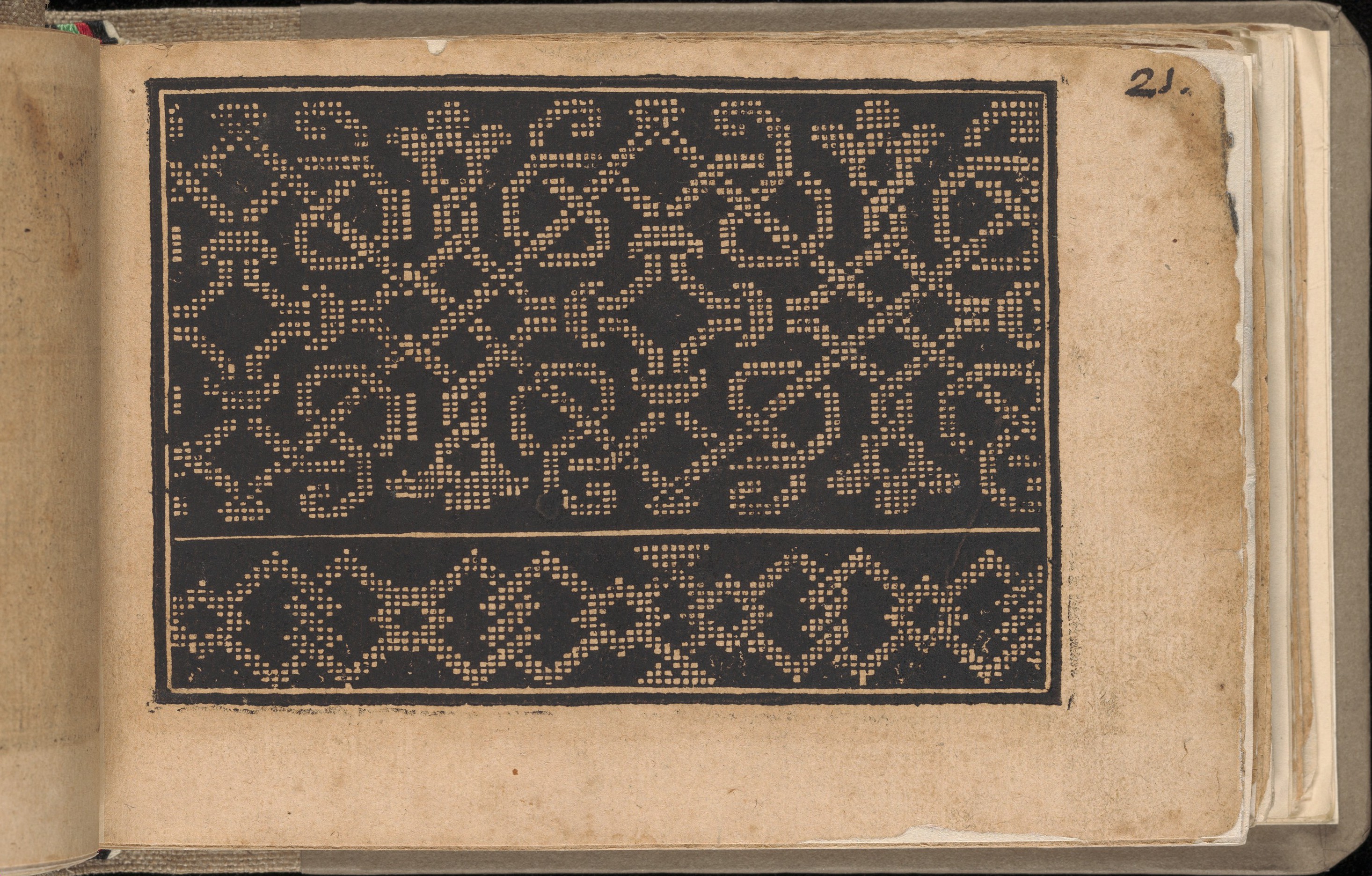
The Threads of Time: Deconstructing Schön newes Modelbuch (Page 21r)
In the hallowed archives of global heritage, few artifacts offer as intimate a portal into the sartorial psyche of the late 16th century as the Schön newes Modelbuch. Specifically, Page 21r—a woodcut print from this seminal pattern book—transcends its functional origins to become a profound couture analysis of an era in flux. As Lead Curator of Katherine Fashion Lab, I present this standalone study to unravel the technical, aesthetic, and cultural threads woven into this singular image. The woodcut, a medium of stark black lines against unadorned paper, is not merely a design template; it is a blueprint of power, identity, and the nascent globalism that would redefine fashion for centuries.
The Woodcut as a Couture Document
To understand Page 21r, one must first appreciate the revolutionary nature of the Modelbuch itself. Prior to the 16th century, fashion dissemination relied on aristocratic patronage, traveling tailors, and rare, hand-copied manuscripts. The advent of the printing press, combined with the woodcut technique, democratized style in an unprecedented manner. This page, likely published in the 1590s in Germany, is a product of this technological leap. The woodcut’s stark, two-dimensional rendering—devoid of color or shading—forces the viewer to focus on structure, proportion, and line. For a modern couture house, this is akin to a technical flat sketch: a language of construction that prioritizes silhouette over surface.
The materiality of the woodcut is critical. The carved wood block, inked and pressed onto paper, creates a permanent, reproducible image. This permanence is a stark contrast to the ephemeral nature of fabric. The black ink on off-white, hand-laid paper lends a graphic intensity that emphasizes the angularity of the garments. The lines are deliberate, almost architectural—each stroke a decision about drape, volume, and fit. In this sense, Page 21r is not a passive illustration but an active instruction manual for the tailor, the embroiderer, and the wearer. It is a couture document in its purest form: a dialogue between maker and material.
Deciphering the Silhouette: A Study of Form and Function
Page 21r presents a figure of unmistakable nobility, likely a German or Flemish aristocrat. The silhouette is defined by extreme verticality and controlled volume—a hallmark of late Renaissance fashion. The figure’s torso is encased in a tightly fitted bodice, likely boned or stiffened with buckram, creating a conical, almost architectural form. This bodice elongates the upper body, emphasizing the waist as a focal point. The neckline is high, framed by a substantial, starched ruff—the iconic Mühlsteinkragen or millstone collar. This ruff, rendered as a series of crisp, concentric pleats, is a marvel of textile engineering. It required precise starching, ironing, and often a wire support to maintain its rigid geometry. The ruff is not merely decorative; it is a symbol of status, wealth, and the labor-intensive luxury of linen maintenance.
Below the waist, the skirt—or farthingale—expands into a bell-like shape, supported by a framework of hoops (often whalebone or willow). The woodcut captures this volume through a series of vertical folds and horizontal bands, suggesting the underlying structure. The skirt’s width is a deliberate counterpoint to the narrow bodice, creating a dramatic A-line that commands space. This silhouette is a direct reflection of the Spanish-influenced court style that dominated much of Europe, yet the German interpretation often incorporated more localized embellishments, such as decorative braids or metal-thread embroidery, which the woodcut hints at through patterned lines on the bodice and sleeves.
The sleeves themselves are a study in contrast. They are puffed at the shoulder, then fitted along the arm, ending in a tight cuff. This paned sleeve—slashed to reveal an inner fabric—was a ubiquitous feature of Renaissance fashion, borrowed from Swiss and German mercenary attire. The slashes allowed for the display of a contrasting lining, often silk or velvet, and served as a canvas for elaborate embroidery. The woodcut’s linear precision suggests the slashes are arranged in a deliberate, symmetrical pattern, a testament to the era’s obsession with order and control over the body.
Global Heritage and the Threads of Exchange
While Page 21r is undeniably European in origin, its context within global heritage is inescapable. The late 16th century was an age of unprecedented global trade. The silks, velvets, and brocades that would have been used to realize this woodcut’s designs were not native to Germany. They arrived via complex networks—from Ottoman Turkey, Safavid Persia, and even Ming China. The very concept of a “model book” itself was influenced by Italian and French fashion plates, which in turn borrowed motifs from Islamic art and architecture. The geometric patterns on the bodice, for instance, echo the arabesque and girih designs seen in Middle Eastern textiles. The ruff, while distinctly European, required linen from the Baltic region and starch from wheat or rice—ingredients of a global supply chain.
Moreover, the woodcut’s material—paper—was itself a product of global exchange. Papermaking techniques had migrated from China through the Islamic world to Europe. The ink used was often lampblack, derived from burned oils or resins, a technology shared across continents. Thus, Page 21r is not an isolated artifact of European fashion; it is a node in a global network of materials, techniques, and aesthetics. The woodcut’s survival in archives worldwide—from the British Museum to the Germanisches Nationalmuseum—further underscores its role as a shared cultural asset.
Cultural and Symbolic Resonance
Beyond its technical merits, Page 21r is a barometer of social and political identity. The rigid, almost painful formality of the attire reflects the hierarchical structures of the Holy Roman Empire. The figure’s posture—erect, hands perhaps resting on a sword or fan (though not visible in the woodcut)—suggests control, discipline, and rank. The sumptuary laws of the time dictated what fabrics, colors, and ornamentation could be worn by different classes. The very act of commissioning or owning such a pattern book was a statement of privilege. The wearer of this garment would have been instantly recognizable as a member of the elite, their body encased in a costume that denied comfort in favor of symbolism.
The Schön newes Modelbuch also served as a tool of cultural diplomacy. As these patterns circulated across courts, they facilitated a shared visual language among European nobility. A German princess marrying into a Spanish or English court could rely on such books to ensure her wardrobe aligned with international standards of elegance. Page 21r, therefore, is not just a fashion plate; it is a document of soft power, a means by which aesthetics reinforced political alliances.
Implications for Modern Couture
For Katherine Fashion Lab, the study of Page 21r offers profound lessons. The woodcut’s emphasis on structure over embellishment challenges the contemporary obsession with surface decoration. In an age of fast fashion and digital rendering, this 400-year-old print reminds us that true couture begins with a rigorous understanding of form. The interplay of volume and restraint—the conical bodice versus the bell skirt—is a masterclass in silhouette. The paned sleeve, with its controlled slashing, prefigures modern deconstruction, from Rei Kawakubo to Martin Margiela.
Furthermore, the global heritage embedded in this woodcut compels us to reconsider the origins of our own designs. Every stitch, every fabric, every pattern carries a history of exchange. As we move toward a more sustainable and ethically aware fashion industry, the Modelbuch reminds us that fashion has always been a global conversation. The woodcut’s permanence—its ability to outlast the garments it depicts—forces us to think about legacy. What will our digital renderings and synthetic fabrics say about us in 400 years?
In conclusion, Schön newes Modelbuch, Page 21r, is far more than a historical curiosity. It is a couture analysis of its time, a technical manual, a symbol of power, and a testament to global connectivity. Its woodcut lines, stark and deliberate, speak across centuries, inviting us to see fashion not as a fleeting trend but as an enduring, material dialogue between the past and the present. At Katherine Fashion Lab, we honor this legacy by studying such artifacts with the rigor they deserve—not as relics, but as living blueprints for the future of design.