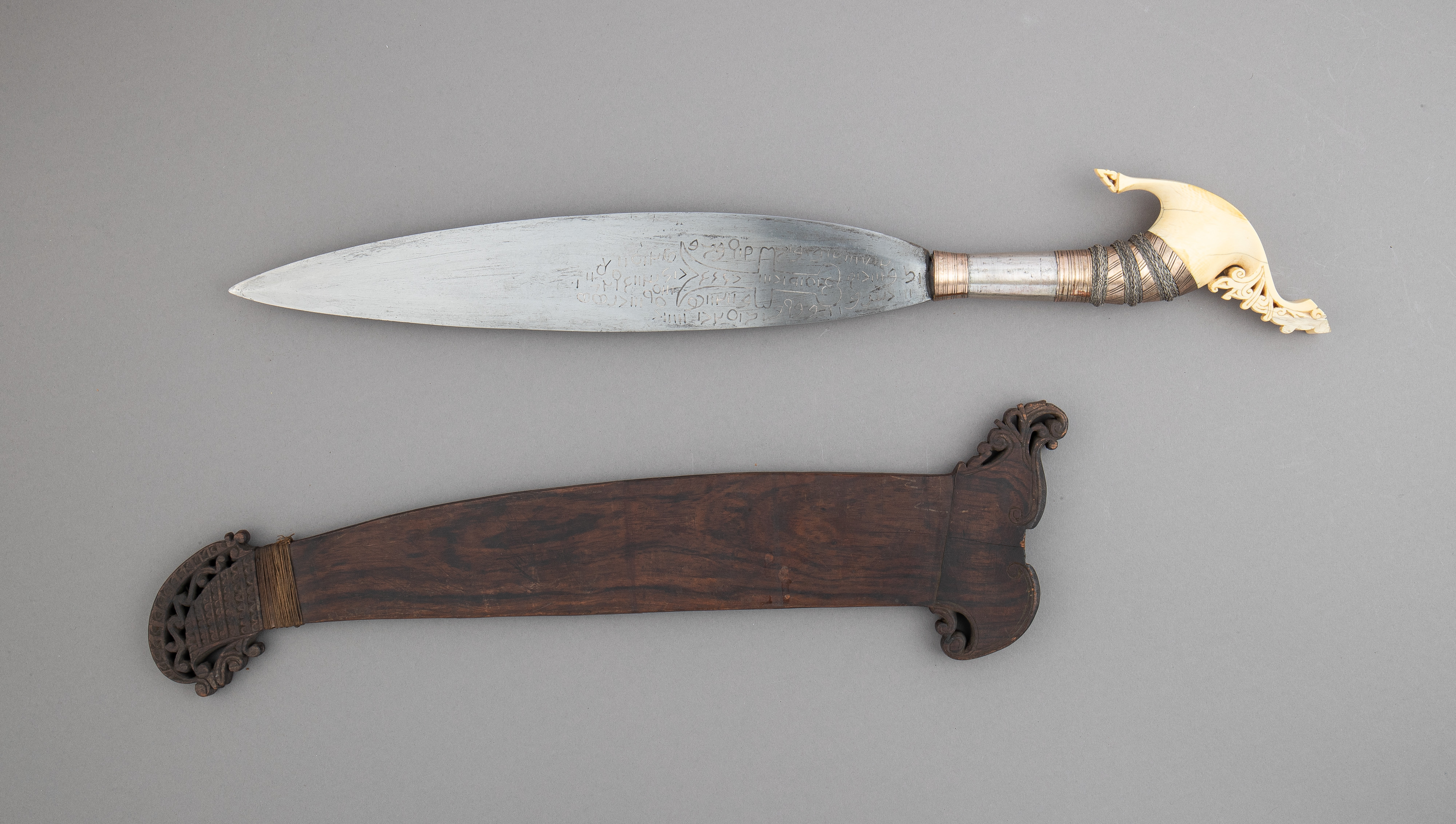
Heritage Analysis: The Barong Knife as a Symbol of Power and Prestige
The Barong knife, originating from the Sulu Archipelago and the Zamboanga Peninsula of the Philippines, represents a confluence of martial necessity, spiritual belief, and aristocratic adornment. For Katherine Fashion Lab, this artifact offers a profound template for a 2026 high-end luxury strategy that moves beyond aesthetic appropriation to embrace cultural narrative and symbolic authenticity. This analysis examines the Barong’s symbolic power, historical adornment, and spiritual meaning, concluding with actionable insights for luxury brand positioning.
Symbolic Power: The Barong as a Marker of Authority and Protection
The Barong is not merely a weapon; it is a deeply encoded symbol of authority and protection within the Moro and Lumad cultures of the southern Philippines. Its distinctive leaf-shaped blade, wide at the tip and narrowing toward the hilt, is designed for powerful, slashing strokes—a physical manifestation of decisive action and defense. In pre-colonial and colonial contexts, the Barong was carried by datus (chiefs) and warriors as a visible sign of rank and martial prowess. The act of drawing the Barong was laden with ceremonial significance, often reserved for moments of high ritual or imminent conflict.
Strategic Insight for Luxury: The Barong’s symbolism of decisive power and protective authority aligns with the luxury consumer’s desire for objects that confer status and security. A 2026 collection could reinterpret this through sculptural accessories—cuffs, brooches, or belt buckles—that echo the blade’s silhouette. The narrative should emphasize “the edge of authority,” positioning each piece as a talisman of personal sovereignty. This taps into the growing luxury trend of “armor dressing,” where fashion functions as both adornment and psychological shield.
Historical Adornment: Materials as a Language of Prestige
The Barong’s sheath and handle are a masterclass in material storytelling. The specimen in question incorporates steel, wood, ivory, silver, copper, and gold—each element carrying distinct connotations. The ivory pommel (often from carabao or elephant tusk) signifies rarity and connection to ancestral spirits, while the silver and gold inlays on the sheath denote wealth and royal patronage. The copper and wood base provide structural integrity, grounding the object in functional reality.
Historically, the Barong’s adornment was not static; it evolved with trade routes. The introduction of Spanish silver and Chinese gold thread into Moro metalwork created a hybrid aesthetic that communicated cross-cultural sophistication. The sheath often featured okir motifs—flowing, geometric patterns inspired by nature and Islamic geometry—which served as a visual language of identity and faith.
Strategic Insight for Luxury: Katherine Fashion Lab can leverage this material hierarchy to craft a “material narrative” collection. For 2026, consider limited-edition pieces that juxtapose raw wood with polished precious metals, mirroring the Barong’s contrast between utility and opulence. The use of ivory alternatives (e.g., tagua nut or fossilized mammoth tusk) can ethically echo the original while appealing to modern sustainability standards. Each material should be named and contextualized in product storytelling—e.g., “Carabao Horn Pommel,” “Gold-Inlaid Okir Motif”—to educate the consumer and elevate perceived value.
Spiritual Meaning: The Barong as a Vessel for Ancestral Power
In indigenous belief systems, the Barong was often considered a living entity, imbued with anting-anting (spiritual power). The forging process involved rituals to invoke protection and strength, and the knife was believed to carry the spirit of its maker and wielder. The ivory component, in particular, was thought to house ancestral wisdom, while the silver was associated with purity and warding off evil. The Barong was not merely carried; it was consecrated through prayer, oil, and blood offerings, making it a sacred object as much as a weapon.
This spiritual dimension elevates the Barong from a historical artifact to a talismanic luxury good. In contemporary terms, it represents the intersection of craftsmanship and metaphysical intent—a concept that resonates with the luxury consumer’s growing interest in meaningful consumption and ritualistic objects.
Strategic Insight for Luxury: Katherine Fashion Lab can develop a “Spirit of the Blade” capsule for 2026, focusing on limited-release talismans such as pendant knives, cufflinks, or decorative sheaths. The marketing narrative should highlight the ritual of creation: collaborations with Filipino artisans who practice traditional forging and consecration. This approach not only ensures cultural respect but also creates a story of provenance that justifies premium pricing. Each piece could come with a certificate of spiritual intent, describing the protective symbolism embedded in its design.
2026 High-End Luxury Strategy: Heritage as Competitive Advantage
Positioning the Barong within a Global Luxury Framework
For Katherine Fashion Lab, the Barong is not a single product but a strategic archetype. Its combination of martial elegance, material opulence, and spiritual depth offers a blueprint for a “heritage luxury” line that differentiates the brand from European-centric competitors. In 2026, luxury consumers—particularly in Asia and the Middle East—are increasingly seeking authentic cultural narratives that reflect their own heritage or offer exotic distinction. The Barong’s Moro and Lumad roots provide a rich, underexplored vein of inspiration that avoids the overused tropes of Japanese or Chinese motifs.
Product Line Recommendations
1. The “Authority” Collection (Accessories): Brooches, belt buckles, and wearable art pieces inspired by the Barong’s blade and sheath. Use sterling silver, 18k gold, and ethically sourced tagua nut. Retail price: $2,500–$15,000. Marketing tagline: “Wear the Edge of Command.”
2. The “Ritual” Collection (Limited Edition): A series of 100 numbered pendant knives, each consecrated by a master artisan from Zamboanga. Housed in a hand-carved wooden box with a story booklet. Retail price: $25,000–$50,000. Marketing tagline: “A Guardian for the Modern Journey.”
3. The “Okir” Collection (Ready-to-Wear): Silk scarves, shawls, and leather goods featuring laser-engraved or embroidered okir motifs. Retail price: $800–$4,000. Marketing tagline: “Geometry of the Soul.”
Cultural Stewardship and Ethical Strategy
A critical component of the 2026 strategy is cultural stewardship. Katherine Fashion Lab must engage in profit-sharing agreements with Moro and Lumad artisan cooperatives, ensuring that 10% of proceeds from Barong-inspired collections fund cultural preservation programs. Additionally, the brand should produce a documentary series on the Barong’s history, featuring interviews with elders and master smiths. This not only builds brand credibility but also positions Katherine Fashion Lab as a custodian of intangible heritage, a role increasingly valued by discerning luxury clients.
Conclusion: The Barong as a Catalyst for Luxury Innovation
The Barong knife transcends its historical function to become a potent symbol of power, adornment, and spirituality. For Katherine Fashion Lab, it offers a unique opportunity to launch a 2026 luxury strategy that is culturally resonant, materially innovative, and ethically grounded. By honoring the Barong’s symbolic weight, material language, and spiritual essence, the brand can create a collection that stands as a testament to heritage—not as a relic of the past, but as a living, evolving expression of high-end luxury. The edge of the blade becomes the edge of a new market: one defined by narrative depth, artisanal integrity, and the timeless allure of the talismanic object.