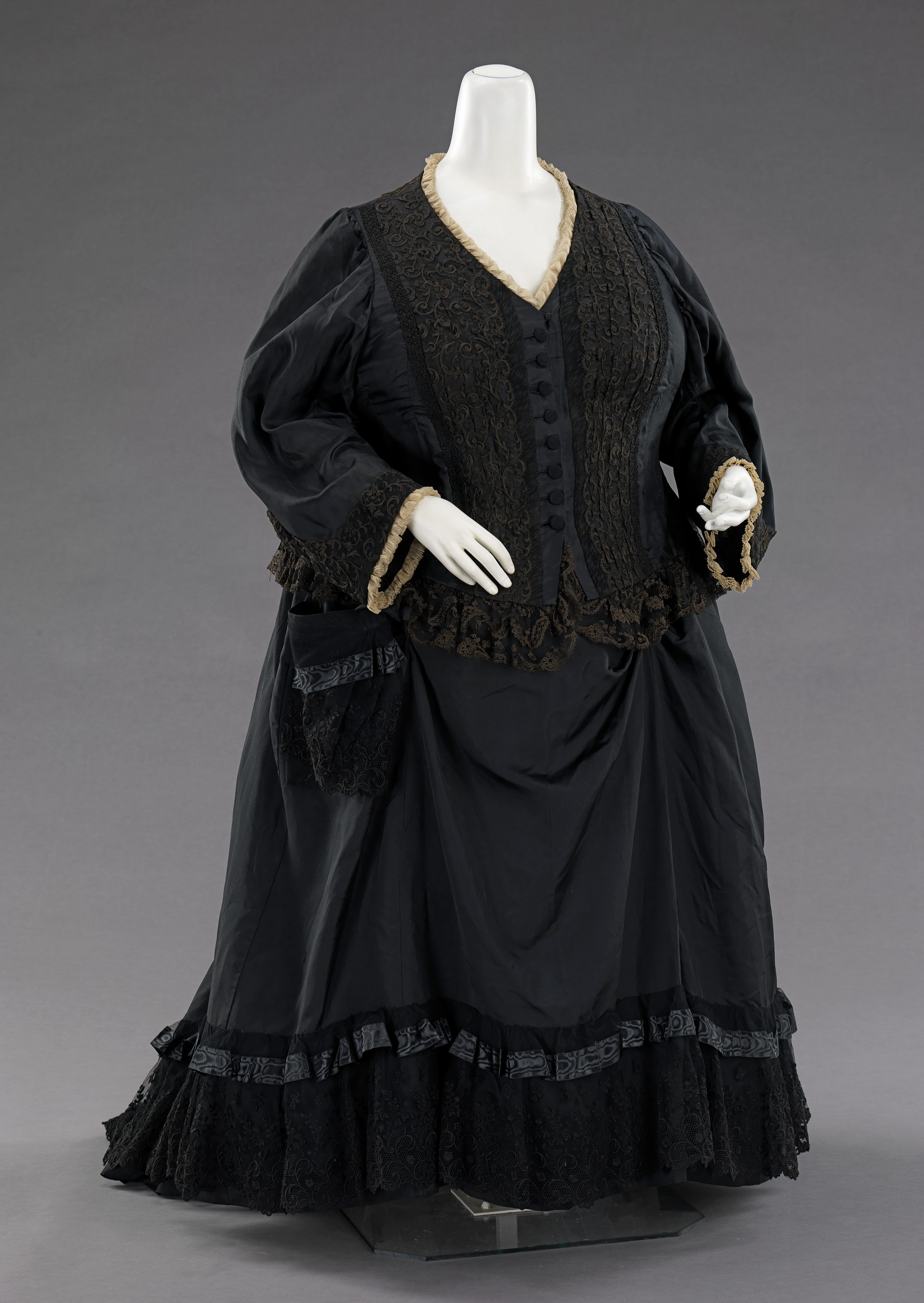
The Elegy of Fabric: A Couture Analysis of the British Mourning Dress in Silk
Historical Context and the Semiotics of Grief
The Victorian era, which spanned from 1837 to 1901, codified mourning into an intricate social language, particularly within British upper and middle classes. Queen Victoria’s own protracted mourning for Prince Albert established a template of rigorous etiquette that governed every aspect of a widow’s appearance. Within this framework, the mourning dress transcended mere clothing; it became a complex semiotic system communicating the depth, duration, and propriety of grief. The use of silk, a fabric historically associated with luxury, status, and refinement, introduces a fascinating paradox. On one hand, the matte, non-reflective surface of silk—particularly crape silk—was mandated for its ability to absorb light, visually symbolizing the extinguishing of joy. On the other, the inherent cost and delicacy of silk reaffirmed the wearer’s social standing, even in sorrow. For Katherine Fashion Lab’s standalone study, this tension between conspicuous consumption and devout austerity is the central narrative. The garment is not merely a response to death; it is a carefully orchestrated performance of respect, class, and emotional control.
Materiality and the Paradox of Silk
The choice of silk is the foundational element of this analysis. In the strictest periods of deep mourning, known as “full mourning,” fabrics were required to be dull, non-reflective, and devoid of sheen. Silk crape (or crêpe) was the material of choice, its crimped, matte texture achieved through a specialized weaving process that left the surface deliberately uneven. This texture was not merely aesthetic; it carried a profound symbolic weight. The lack of luster represented the absence of life, the suppression of vanity, and the internalization of grief. However, the paradox emerges when we consider the luxury inherent in silk itself. A woman in full mourning was expected to wear a dress of the highest quality, often trimmed with additional bands of crape or paramatta (a silk-and-worsted blend). The message was clear: one could afford to grieve properly. Katherine Fashion Lab’s reconstruction of this piece would emphasize the tactile experience—the stiffness of the crape, the weight of the silk against the skin, and the deliberate discomfort that mirrored emotional pain. The fabric becomes a mnemonic device, forcing the wearer into a constant, physical awareness of loss.
Silhouette and the Architecture of Mourning
The silhouette of the British mourning dress from the 1860s–1880s is a study in geometric restraint. The bodice is tightly fitted, often with a basque waistline that extends into a point at the front, emphasizing a rigid, upright posture. This structure was functional: the corset underneath was not merely for fashion but for discipline, physically preventing the wearer from slouching or exhibiting uncontrolled emotion. The skirt, supported by a crinoline or later a bustle, created a bell or cone shape that isolated the body from its surroundings. In mourning, this silhouette took on added meaning. The fullness of the skirt, often made from multiple yards of silk, created a barrier between the widow and the world. She was present but untouchable, a monument to her own sorrow. Katherine Fashion Lab’s analysis would highlight the architectural precision of the seams and the strategic placement of pleats, which channeled the eye downward, toward the hem, reinforcing a sense of gravity and descent. The absence of decorative trims—lace, ribbons, or floral appliqués—was a deliberate void, a negative space that spoke louder than any embellishment.
Color and the Language of Absence
Color in British mourning was strictly codified. The initial period demanded jet black, a color that absorbs all light and reflects none. This was not a choice but an obligation. However, the use of black silk presents a technical challenge. The dyeing process for black silk in the 19th century often involved iron mordants, which could weaken the fibers over time. This fragility added another layer of meaning: the dress itself was impermanent, just as life was fleeting. The surface of the silk would develop a subtle, almost imperceptible patina of wear, a visual record of the mourning period. After a prescribed duration—typically one year and a day for a widow—the dress could transition to “half-mourning,” allowing for the introduction of grey, mauve, or lavender silks. These muted hues represented a gradual return to life, but the fabric remained silk, ensuring that the social performance continued. Katherine Fashion Lab’s study would note that the shift in color was not a liberation but a measured transition, with the silk’s texture and weight still enforcing a posture of subdued dignity.
Construction Techniques and the Couture Imperative
The construction of a mourning dress in silk required extraordinary skill. The fabric’s tendency to fray, crease, and show every stitch demanded precision. Seams were often French-seamed or flat-felled to ensure a clean finish on both sides, as the inside of the garment was considered equally important in high-quality couture. The bodice was typically lined with cotton silesia or linen to protect the silk from perspiration and to provide structure. The fastenings—hooks, eyes, and buttons—were covered in silk or jet, a black fossilized coal that was the only acceptable ornamentation. Jet buttons and brooches were not decorative; they were functional and symbolic, representing the mineralized remains of organic matter, a direct metaphor for death and preservation. For Katherine Fashion Lab, the analysis would emphasize the invisibility of labor. The finest mourning dresses appeared effortless, their complexity hidden beneath a surface of austere simplicity. This aligns with the couture ethos: the highest art conceals the art itself.
Cultural Resonance and the Modern Gaze
In contemporary fashion, the British mourning dress in silk stands as a poignant artifact of a society that demanded grief be both public and disciplined. The garment’s austerity challenges modern notions of self-expression, where mourning is often private and personal. Katherine Fashion Lab’s study would argue that this dress represents a form of emotional architecture, where the body is encased in a structure that dictates behavior. The silk, with its inherent luxury, complicates the narrative of humility. It suggests that even in death, class distinctions persisted. The widow of means could afford to be shrouded in silk, while the poor made do with wool or cotton. This socioeconomic dimension is crucial for a couture analysis, as it reveals the intersection of grief, gender, and capital. The dress is not just a garment; it is a document of social contract, a testament to the lengths to which individuals would go to maintain propriety in the face of the ultimate human experience.
Conclusion: The Silent Testimony of Silk
Katherine Fashion Lab’s standalone analysis of this British mourning dress in silk reveals a garment that is simultaneously a prison and a shield, a statement of status and a confession of loss. The fabric’s matte surface, the disciplined silhouette, the strict color palette, and the invisible construction techniques all converge to create a powerful, silent testimony. This dress does not weep; it stands. It does not speak; it commands. In the hands of a contemporary couture house, the historical mourning dress offers a profound lesson in the power of restriction, the eloquence of absence, and the enduring paradox of using the finest materials to express the deepest sorrow. The silk, once vibrant and reflective, is rendered mute, a perfect metaphor for a grief that must be seen but never heard.