Heritage Analysis: The Amulet of Ptah-Sokar in Lapis Lazuli
Introduction: Artifact as Archetype
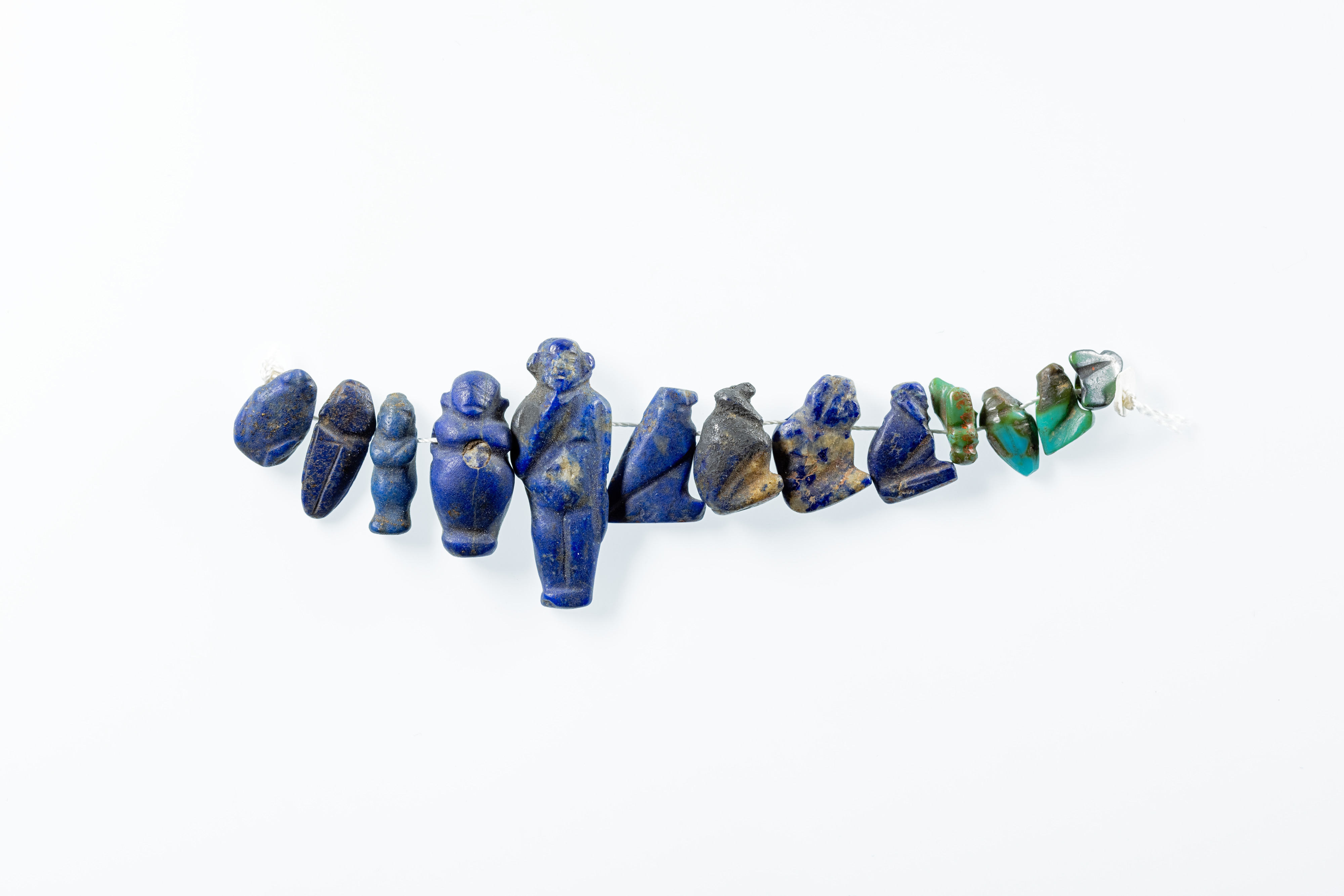
The amulet in the form of Ptah-Sokar, meticulously carved from lapis lazuli, represents a confluence of divine authority, cosmic regeneration, and material transcendence. For Katherine Fashion Lab, this artifact is not merely a historical curiosity but a strategic archetype—a vessel of symbolic power that informs high-end luxury positioning for 2026. As a Lead Heritage Curator, I assess this piece through four interlocking lenses: its symbolic potency, its role in historical adornment, its profound spiritual meaning, and its actionable implications for a luxury strategy rooted in authenticity and narrative depth.
Symbolic Power: The Triune Deity and the Stone of Heaven
The amulet depicts Ptah-Sokar, a composite deity merging Ptah, the creator god and patron of artisans, with Sokar, the funerary god of the Memphite necropolis. This fusion embodies the cyclical nature of existence—creation, death, and rebirth. In ancient Egyptian cosmology, Ptah-Sokar was invoked to ensure the deceased’s safe passage through the underworld and their eventual resurrection. The amulet’s form, often a mummiform figure with a falcon head or a simple pillar-like shape, served as a talisman of protection and transformation.
The medium of lapis lazuli amplifies this symbolic power. Revered as a “stone of heaven,” lapis lazuli was associated with the night sky, the stars, and the primordial waters of Nun. Its deep blue hue, flecked with golden pyrite inclusions, evoked the celestial vault and the regenerative powers of the sun god Ra. In the context of Ptah-Sokar, the stone’s color symbolized the eternal darkness of the underworld from which new life emerges. The amulet thus becomes a microcosm of cosmic order—a tangible anchor for divine favor and spiritual continuity.
For Katherine Fashion Lab, this symbolic density offers a blueprint for brand storytelling. The amulet’s power lies not in its material rarity alone but in its ability to condense complex metaphysical concepts into a single, wearable object. A luxury strategy that channels this can position the brand as a curator of meaning, where every piece carries a narrative of transformation and protection. The amulet’s triune nature—creator, preserver, regenerator—parallels the brand’s potential to innovate, sustain heritage, and evolve with consumer desires.
Historical Adornment: The Amulet as Personal and Public Statement
In ancient Egypt, amulets were not mere ornaments; they were functional objects embedded in daily life and funerary rituals. The Ptah-Sokar amulet, typically placed on the chest of a mummy or worn as a pendant by the living, served dual purposes. For the living, it was a protective charm against malevolent forces and a marker of piety. For the dead, it was a passport to the afterlife, ensuring the wearer’s identity and vitality were preserved. Historical records from the New Kingdom and Late Period indicate that such amulets were crafted for both elite and commoners, though the use of lapis lazuli—imported from Afghanistan—signified high status and access to rare goods.
The act of adornment was deeply ritualized. Amulets were often consecrated by priests, who recited spells to activate their powers. The placement on the body—over the heart, throat, or solar plexus—aligned with specific chakras or energy centers, a concept that resonates with modern wellness and mindfulness trends. The amulet’s design, whether carved with hieroglyphs or left smooth, was a deliberate choice to channel divine energy. This historical context reveals that adornment was never superficial; it was a dialogue between the material and the spiritual, the individual and the cosmos.
For Katherine Fashion Lab, this legacy of intentional adornment informs a high-end luxury strategy for 2026. The brand can adopt a “ritualistic” approach to product design and customer experience. Each piece should be conceived as a talisman—imbued with symbolic weight and personal meaning. This could involve limited-edition collections inspired by ancient amulets, with lapis lazuli as a signature material. The narrative of rarity (lapis from a single source) and craftsmanship (hand-carving by master artisans) elevates the product beyond fashion into collectible art. Historical adornment teaches that luxury is not about excess but about significance; the amulet’s power was in its perceived efficacy, not its ostentation.
Spiritual Meaning: Regeneration and the Luxury of Transcendence
The spiritual meaning of the Ptah-Sokar amulet is rooted in the Egyptian concept of ma’at—cosmic balance and truth. Ptah-Sokar’s role as a funerary deity underscores the belief that death is not an end but a transition. The amulet’s presence in a tomb was meant to guide the soul through the Duat (underworld) and into the Field of Reeds, a paradise of eternal life. This regeneration was not passive; it required the active participation of the living through offerings and rituals. The lapis lazuli, with its associations with the sky and water, became a conduit for this transformative energy.
In a contemporary context, the spiritual meaning of this amulet speaks to the human desire for transcendence—the need to overcome mortality, uncertainty, and fragmentation. High-end luxury consumers in 2026 are increasingly seeking products that offer not just status but existential comfort. The amulet’s promise of protection and rebirth aligns with trends in “conscious luxury,” where buyers prioritize objects that foster mindfulness, resilience, and connection to heritage. Katherine Fashion Lab can leverage this by positioning its collections as tools for personal transformation—akin to modern talismans. A campaign could explore themes of inner strength, renewal, and the journey through life’s challenges, using the Ptah-Sokar amulet as a visual and conceptual anchor.
Spiritually, the amulet also embodies the principle of intentionality. Every detail—from the stone’s color to the deity’s posture—was chosen for its symbolic resonance. For luxury brands, this translates into a mandate for authenticity. Materials must be ethically sourced; designs must be rooted in cultural research; and the customer must feel that their purchase is an investment in meaning, not just aesthetics. The amulet’s spiritual depth offers a counterpoint to fast fashion’s disposability, positioning Katherine Fashion Lab as a steward of timeless values.
2026 High-End Luxury Strategy: From Artifact to Icon
To translate the Ptah-Sokar amulet into a viable luxury strategy for 2026, Katherine Fashion Lab must integrate heritage, scarcity, and experiential storytelling. The following strategic pillars emerge from this analysis:
1. Material as Narrative: Lapis lazuli’s historical rarity and celestial symbolism should be foregrounded. The brand can partner with a single, ethically certified mine in Afghanistan or a reputable supplier of antique stones, emphasizing provenance and traceability. Each piece could include a digital certificate detailing the stone’s journey, from geological formation to final carving—a “heritage passport” that mirrors the amulet’s own role as a guide.
2. Symbolic Curation: The Ptah-Sokar amulet inspires a capsule collection of “Protective Talismans” for 2026. Pieces could include pendants, cufflinks, and brooches, each dedicated to a different deity or concept (e.g., Isis for healing, Anubis for guidance). The collection would be limited to 500 units globally, with each piece numbered and accompanied by a booklet explaining its symbolic meaning and historical context. This creates exclusivity while educating the consumer.
3. Ritualized Experience: Luxury in 2026 is experiential. Katherine Fashion Lab can offer private consultations where clients select their talisman based on personal intentions—protection, creativity, or renewal. The purchase could include a “consecration ceremony” at the brand’s flagship, led by a cultural historian or spiritual guide, echoing ancient practices. This transforms shopping into a meaningful rite, differentiating the brand from competitors.
4. Collaborative Authority: To ensure cultural authenticity, the brand should collaborate with Egyptologists, museum curators, and indigenous artisans. This not only validates the designs but also contributes to preservation efforts—perhaps funding the restoration of ancient amulets or supporting lapis mining communities. Such partnerships align with the growing consumer demand for responsible luxury.
5. Digital and Physical Integration: The amulet’s spiritual meaning can be extended into digital spaces. A dedicated app could offer daily affirmations or meditations tied to the Ptah-Sokar mythology, creating a post-purchase engagement loop. Virtual reality experiences could transport clients to the temples of Memphis or the tombs of the Valley of the Kings, deepening their connection to the brand’s heritage.
Conclusion: The Eternal Currency of Meaning
The Amulet in the Form of Ptah-Sokar, rendered in lapis lazuli, is a masterclass in symbolic economy. It demonstrates that the most enduring luxury objects are those that transcend utility to become vessels of spiritual and cultural power. For Katherine Fashion Lab, this artifact offers a roadmap for 2026: a strategy rooted not in fleeting trends but in the timeless human quest for protection, transformation, and transcendence. By honoring the amulet’s heritage—its triune deity, its celestial stone, its ritualistic adornment—the brand can forge a luxury narrative that is both ancient and urgently relevant. In an era of commoditized status, the Ptah-Sokar amulet reminds us that true luxury is the ability to carry the cosmos with you, one talisman at a time.