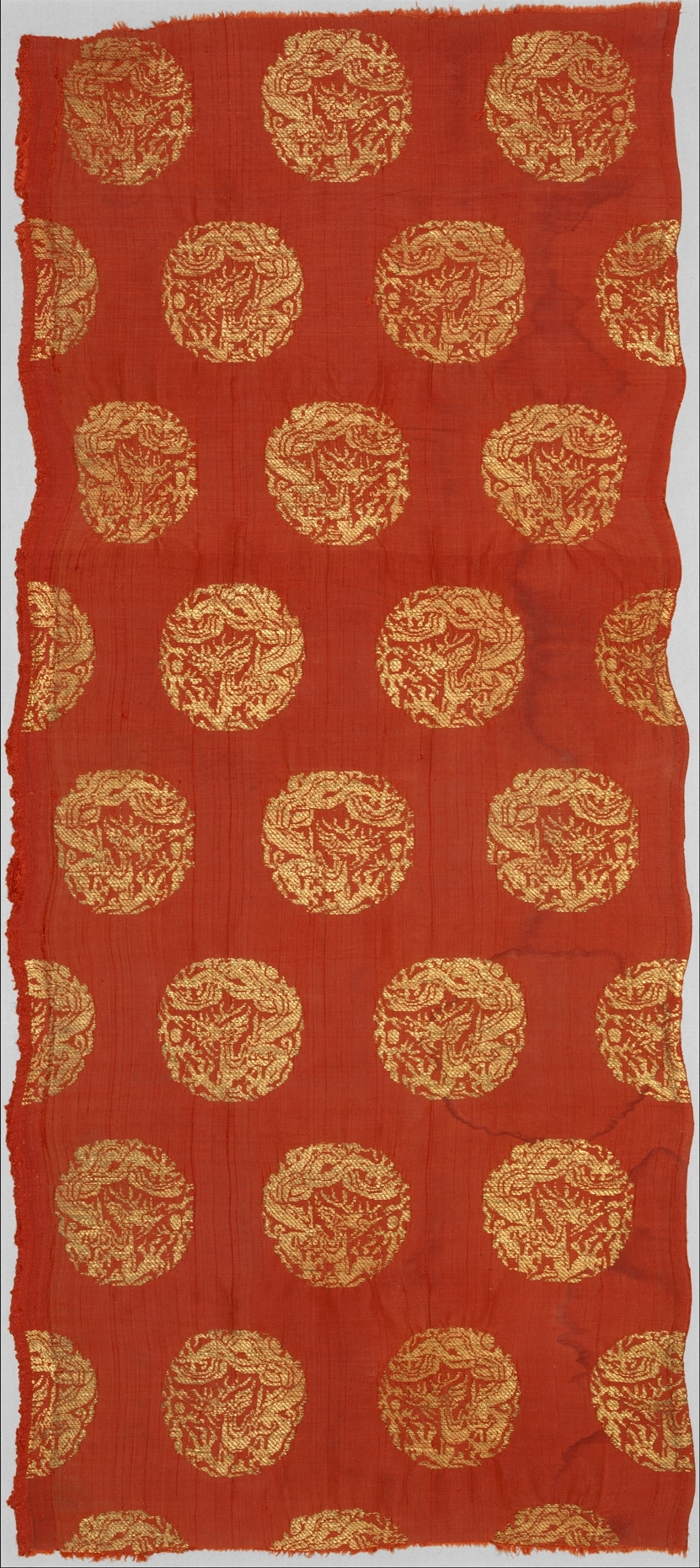
Textile with Coiled Dragons: A Couture Analysis of Chinese Silk Brocade
Introduction: The Intersection of Heritage and Haute Couture
In the realm of high fashion, textiles are not merely materials; they are narratives woven into tangible form. The Textile with Coiled Dragons, a warp-faced plain weave silk brocade originating from China, exemplifies this principle with extraordinary sophistication. As a standalone study for Katherine Fashion Lab, this piece transcends its historical roots to offer a masterclass in structural integrity, symbolic resonance, and aesthetic precision. The coiled dragon motif—a potent emblem of imperial power, cosmic energy, and auspicious fortune—is rendered through a meticulous interplay of silk and metal thread, creating a fabric that demands both technical reverence and creative reinterpretation. This analysis dissects the textile’s material composition, weaving technique, and symbolic language, positioning it as a cornerstone for contemporary couture innovation.
Materiality: Silk and Metal Thread as Dual Protagonists
The foundation of this textile lies in its warp-faced plain weave structure, where the warp threads dominate the surface, creating a smooth, lustrous canvas. The use of silk—a fiber synonymous with Chinese luxury since antiquity—provides an unparalleled softness and sheen. Silk’s natural protein structure allows for exceptional dye absorption and light refraction, giving the fabric a depth that shifts with movement. However, the true distinction emerges from the metal thread brocaded into the weave. This metal thread, typically composed of gilded paper or fine metallic strips wrapped around a silk core, introduces a contrasting rigidity and reflectivity. In the coiled dragon motif, the metal thread is strategically placed to outline scales, claws, and swirling bodies, creating a chiaroscuro effect that mimics the iridescence of dragon lore. The juxtaposition of silk’s fluidity with metal’s luminosity generates a tactile tension—a dialogue between organic and inorganic, ancient and enduring.
Weaving Architecture: Warp-Faced Plain Weave and Brocading Technique
The Precision of Warp-Faced Construction
In a warp-faced plain weave, the warp threads are densely packed, obscuring the weft entirely on the surface. This technique demands exacting tension and yarn count, as the warp must bear the visual burden of the design. For the Textile with Coiled Dragons, this structure ensures a uniform, almost satin-like finish that highlights the metal thread’s reflective properties. The plain weave’s simplicity belies its complexity: each intersection of warp and weft must be calibrated to prevent distortion, especially given the metal thread’s relative stiffness. This architectural choice prioritizes durability and surface clarity, essential for a fabric intended to withstand the rigors of couture construction—be it draping, tailoring, or embroidery integration.
Brocading with Metal Thread: A Study in Contrast
Brocading introduces supplementary weft threads that are woven only where the pattern requires, leaving the background unadorned. In this textile, the metal thread acts as the supplementary element, floating across the reverse side to create the coiled dragon imagery. The technique requires a delicate balance: the metal thread must be tensioned precisely to avoid puckering the silk warp, while its thickness demands careful spacing to maintain the weave’s integrity. The coiled dragon motif likely employs a combination of twill and satin brocading floats to simulate texture—satin floats for smooth, undulating bodies and twill floats for textured scales. This differentiation enriches the visual hierarchy, making the dragons appear to writhe across the fabric’s surface. The result is a textile that is both structurally sound and visually dynamic, a testament to the weaver’s mastery of counterbalance.
Symbolic Language: The Coiled Dragon as Cosmological Emblem
Imperial Authority and Cosmic Energy
In Chinese iconography, the dragon is not a creature of destruction but a benevolent force representing yang energy, imperial authority, and natural harmony. The coiled posture—often depicted in a circular or spiral formation—symbolizes eternity, cyclical renewal, and the unbroken chain of dynastic power. For Katherine Fashion Lab, this motif offers a rich semiotic palette. The dragon’s coiled form can be interpreted as a metaphor for the creative process itself: a continuous loop of inspiration, refinement, and reinvention. In a couture context, this symbolism translates into garments that convey strength, elegance, and timelessness. A gown featuring this textile might be designed with asymmetrical draping to echo the dragon’s serpentine motion, or structured with stiffened panels to mimic its protective coiled stance.
Metal Thread as a Conduit for Light and Meaning
The use of metal thread amplifies the dragon’s symbolic weight. Gold and silver tones have historically been reserved for imperial regalia, denoting divinity and wealth. In this textile, the metal thread catches ambient light, creating a dynamic interplay of shadows and highlights that mirrors the dragon’s mythical ability to control weather and celestial bodies. For the couturier, this luminosity invites experimentation with illumination—perhaps integrating LED elements or reflective coatings that respond to movement, transforming the garment into a living artifact. The metal thread also introduces a tactile contrast: cool and smooth against the skin, it evokes the dragon’s legendary scales, heightening the sensory experience of wearing the fabric.
Couture Applications: From Standalone Study to Runway Masterpiece
Structural Challenges and Design Opportunities
As a standalone study, the Textile with Coiled Dragons presents both constraints and catalysts for innovation. The metal thread’s weight and stiffness limit draping fluidity, necessitating architectural cuts and strategic seaming. A tailored jacket with sharp shoulders and a fitted waist could showcase the dragon motif across the back, while a floor-length column dress might use the fabric as a central panel, flanked by softer silk organza to balance rigidity. The warp-faced structure also resists fraying, making it suitable for precision cutting and laser etching—techniques that could further abstract the dragon motif into geometric fragments. For Katherine Fashion Lab, this textile invites a dialogue between tradition and futurism, where ancient symbolism meets avant-garde construction.
Color Palette and Styling Synergy
The textile’s inherent color story—typically deep indigo, crimson, or black for the silk background, paired with gold or silver metal thread—dictates a restrained palette. Accessories and layering pieces should complement without competing. A black silk base allows the metal thread to dominate, while a crimson ground evokes festive auspiciousness. For a modern couture presentation, pairing this textile with matte leather or raw silk in analogous tones can create a textural conversation. Minimalist jewelry in oxidized silver or gunmetal would echo the metal thread without overwhelming it. The coiled dragon motif itself can inspire silhouette: a cape with exaggerated shoulders mimicking dragon wings, or a train that unfurls like a serpent’s tail.
Conclusion: A Textile as a Cultural and Creative Compass
The Textile with Coiled Dragons is far more than a historical artifact; it is a blueprint for couture that honors heritage while embracing innovation. Its warp-faced plain weave and metal-thread brocading exemplify a technical rigor that challenges contemporary designers to push boundaries. The coiled dragon motif, steeped in Chinese cosmology, offers a symbolic language that resonates with themes of power, renewal, and artistry. For Katherine Fashion Lab, this textile stands as a testament to the enduring relevance of handcrafted materials in an era of mass production. Whether reinterpreted as a sculptural gown, a deconstructed jacket, or a hybrid garment that merges tradition with technology, this silk brocade demands respect, creativity, and a nuanced understanding of its cultural weight. In the hands of a skilled couturier, it becomes not just a fabric, but a narrative—one that coils, reflects, and inspires.