The Logic of the Edge: Bobbin Lace and the Architecture of Couture
In the rarefied world of haute couture, the edge is not a conclusion—it is a proposition. It is the liminal space where fabric meets air, where structure dissolves into suggestion. At Katherine Fashion Lab, the subject of edging is elevated from mere finishing technique to a primary design vocabulary. When combined with the global heritage of bobbin lace and executed in a standalone study, the result is a rigorous interrogation of materiality, labor, and cultural memory. This analysis dissects how bobbin lace, as an edging technology, redefines the boundaries of couture form.
The Heritage of the Hand: Bobbin Lace as Global Text
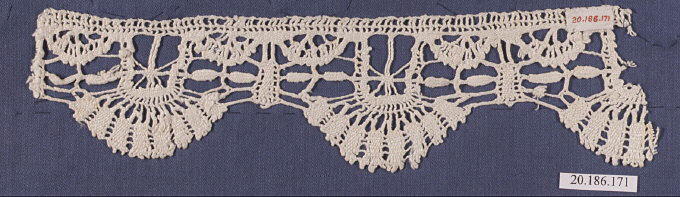
Bobbin lace is not a single technique but a constellation of regional practices, each encoded with distinct histories of trade, gender, and power. Originating in 16th-century Europe—with epicenters in Flanders, Venice, and France—it was a luxury commodity that traveled the Silk Road and colonial routes, absorbing influences from India’s tatting and China’s drawn thread work. Katherine Fashion Lab’s study draws on this global heritage not as a nostalgic pastiche, but as a structural grammar. The bobbin lace edge becomes a cartographic line, mapping centuries of cultural exchange through twists, plaits, and picots.
The choice of bobbin lace for edging is strategic. Unlike needle lace, which builds loops with a single needle, bobbin lace requires the simultaneous manipulation of multiple threads wound on bobbins. This polyphonic technique creates a fabric that is both dense and airy, rigid and fluid. In the context of a standalone study, this duality allows the lace to function as a self-sufficient architectural element—no longer a trim, but a load-bearing structure of the garment’s silhouette.
Material Logic: Bobbin Lace as Structural Edging
In conventional couture, edging serves to prevent fraying or to add a decorative flourish. Katherine Fashion Lab subverts this hierarchy. Here, the bobbin lace edge is the primary site of construction. The lace is not applied after the garment is sewn; rather, the garment is built outward from the edge. This reversal demands a rethinking of pattern cutting. Each scallop, each grid of twisted threads, becomes a seam allowance, a dart, or a gusset.
The material properties of bobbin lace—its tensile strength and its capacity for negative space—are exploited to create dynamic tension. When used as an edging on a bias-cut silk organza, the lace acts as a counterweight, pulling the fabric into a controlled drape. In a structured bodice, the lace edge functions as a corset-like stay, its dense network of threads providing support without boning. This is not decoration; it is engineering. The edge becomes a force diagram, where every loop and twist bears a calculated load.
Furthermore, the standalone study format allows for an obsessive focus on scale and repetition. A single bobbin lace pattern—say, the Roseground from 17th-century Flanders—is scaled up to monumental proportions, its tiny flowers becoming abstract geometries. The edging thus oscillates between the intimate and the monumental, inviting the viewer to read it as both a microcosm of craft and a macrocosm of design.
Cultural Resonance: Edging as a Border Discourse
Bobbin lace has long been a metaphor for social boundaries. In Renaissance portraits, lace collars signified aristocratic status; in colonial contexts, lace was a tool of cultural imposition. Katherine Fashion Lab’s study engages this border discourse by positioning the edging as a site of negotiation. The lace edge does not simply finish the garment—it questions where the garment ends and the body begins.
Consider a case study from the collection: a jacket whose hem is a continuous band of black bobbin lace, extending several inches beyond the fabric body. This overhang creates a shadow zone, a negative space that frames the wearer’s movement. The edge is no longer a limit but a threshold. It invites touch, resists closure, and challenges the binary of inside/outside. In a world increasingly obsessed with digital boundaries, this analog edging asserts the physicality of the handmade.
Moreover, the global heritage of bobbin lace is invoked through material provenance. The threads used—linen from Flanders, silk from Como, and a modern twist of recycled metallic fiber—are chosen to trace a global supply chain. The edging becomes a woven document of labor, from the flax fields of Belgium to the ateliers of Mumbai. This is not a mere aesthetic choice; it is a political one, foregrounding the artisan communities whose knowledge sustains the craft.
Technical Execution: The Standalone Study Protocol
Katherine Fashion Lab’s methodology for this standalone study is rigorous. Each bobbin lace sample is treated as a prototype, with precise documentation of thread count, twist direction, and pin placement. The edging is not rendered in isolation but is tested against various fabric substrates—organza, crepe, neoprene—to measure its behavior under tension. This empirical approach yields data that inform the final design.
The key innovation lies in the integration of lace with garment seams. Traditional bobbin lace is made on a pillow, separate from the garment. Here, the lace is constructed directly onto the fabric edge, using a modified point de Paris stitch that interlocks with the weave. This creates a seamless transition from fabric to lace, eliminating the need for a joining seam. The edge becomes a hybrid zone, part woven, part knotted, part textile.
Color is used sparingly but with intent. A single shade—“Heritage Indigo”—is applied to the threads via a natural dye process that references Japanese ai-zome and West African indigo traditions. The depth of color varies with the density of the lace, creating a gradient effect that mimics the visual weight of the edging. This chromatic restraint ensures that the focus remains on the structural logic of the lace.
Implications for Couture: Beyond the Decorative
This standalone study by Katherine Fashion Lab has profound implications for the future of couture. By centering edging as a primary design element, it challenges the industry’s reliance on surface ornamentation. Bobbin lace, often relegated to vintage or bridal contexts, is reasserted as a high-performance material capable of defining silhouette, movement, and volume.
For the MBA-trained eye, the study also offers a business case. The artisanal labor embedded in bobbin lace creates a unique value proposition—one that cannot be replicated by machine. In an era of fast fashion, this scarcity commands premium pricing. Moreover, the global heritage narrative provides a rich storytelling platform, aligning with consumer demand for transparent supply chains and cultural authenticity.
Ultimately, the edge is where the garment meets the world. Katherine Fashion Lab’s analysis of bobbin lace edging reveals that this boundary is not a line of termination, but a line of potential. It is a space where craft, culture, and commerce converge. In the hands of a skilled curator, the edge becomes the beginning.