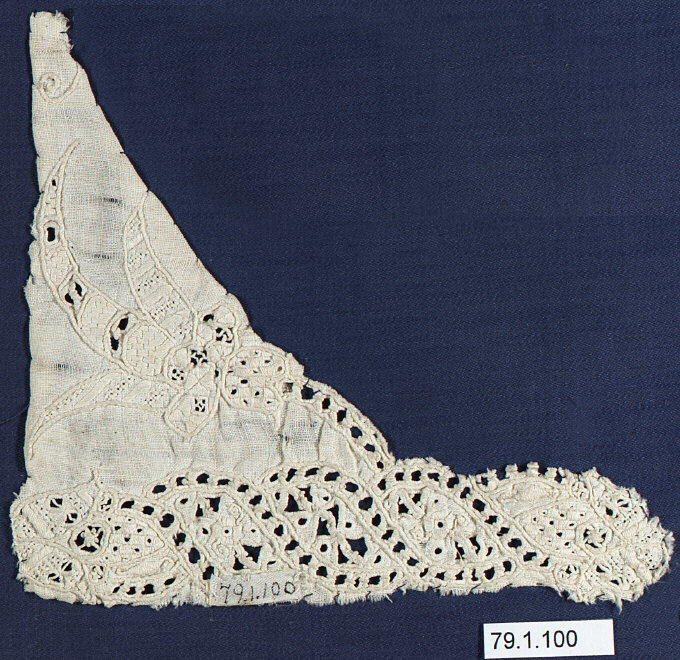
Deconstructing Continuity: A Study of 'Fragment' in Global Sartorial Discourse
The concept of the fragment stands as a profound and provocative force within the lexicon of contemporary couture. It is not merely a representation of brokenness, but a deliberate intellectual and aesthetic stance—a rejection of totalizing narratives in favor of polyphonic, incomplete, and deeply personal histories. For Katherine Fashion Lab, this exploration moves beyond deconstruction as a mere aesthetic; it is an ontological investigation into how heritage is perceived, preserved, and re-contextualized. Utilizing linen and the precise, devotional art of cutwork, this standalone study, titled "Fragment," interrogates the very fabric of memory and identity, proposing that wholeness is often an illusion, and truth resides in the eloquent gaps between threads.
The Philosophical Substrate: Fragment as a Global Condition
In a globalized context, heritage is rarely a seamless, monolithic heirloom. It is, instead, an assemblage of dislocated narratives, adaptive techniques, and reinterpreted symbols. The "Fragment" study embraces this condition. It posits that the modern identity—individual and collective—is inherently fragmentary, shaped by diaspora, digital ephemerality, and the layered palimpsests of cultural exchange. The choice of a global, rather than a geographically specific, origin is thus strategic. It acknowledges that the experience of fragmentation is a universal human condition, though its manifestations are infinitely varied. Couture, in this framework, becomes the medium through which these disparate fragments are given a new, coherent form—a temporary assembly that honors their fractured origins without seeking to erase their seams.
Material Allegory: Linen and the Archaeology of Memory
The selection of linen is the first masterstroke of this analysis. As one of humanity's oldest textiles, linen carries the genetic memory of cultivation, labor, and ritual. Its inherent qualities—a crisp hand, a propensity for sharp pleats, a luminous, earthy texture—make it an ideal canvas for exploring time. Linen wrinkles, it records the passage of the body and the day; it is a chronicle. In "Fragment," linen is treated not as a blank slate but as an excavated artifact. Its natural irregularities, the slubs and variations in weave, are emphasized as testaments to organic origin, much like the imperfections in historical narratives. The fabric becomes the foundational stratum, the "ground" from which certain patterns (histories) will be meticulously removed, leaving behind a resonant absence.
The Art of Absence: Cutwork as Curatorial Practice
Here, the study pivots from substrate to intervention through the exacting technique of cutwork. Traditionally associated with folkloric embellishment and ecclesiastical linens, cutwork is an art of calculated removal and structural reinforcement. One does not simply cut; one must plan the negative space so that the remaining fabric retains its integrity, often outlined with stabilizing stitches. In the context of "Fragment," this process is a powerful metaphor for the curation of heritage. Each cut represents a choice: what is remembered, what is omitted, what is highlighted. The resulting openwork is not a void but a designed aperture—a window into a layered reality. The fragments of linen that remain, now bordered by embroidery or the sheer drop of the void, become isolated motifs floating in space. A traditional floral pattern may be interrupted, with only a single petal surviving, suspended by threads, telling a more potent, abstract story than the complete bouquet ever could.
Formal Analysis: Composition, Silhouette, and the Eloquent Gap
The standalone garment or object in this study likely manifests as a study in contrasts between structural solidity and ethereal dissolution. Imagine a tailored linen bodice, its architecture precise and almost architectural, suddenly giving way to a skirt or sleeve composed almost entirely of intricate cutwork. The body becomes partially visible and obscured through the lattice, challenging notions of exposure and protection. The silhouette itself may be fragmented—asymmetric hemlines, detached sleeves connected only by filaments of embroidery, a corset that appears to be reassembled from disparate panels. The "eloquent gap" is the central protagonist. These are not tears or damages; they are deliberate, clean-edged absences that create a new relationship between the wearer, the garment, and the surrounding environment. Light and shadow become active collaborators, casting ever-changing patterns on the skin beneath, emphasizing that the fragment is not static but dynamically engaged with its context.
Contextualization: A Standalone Study in the Couture Ecosystem
Positioned as a standalone study, "Fragment" liberates itself from the demands of a seasonal collection or commercial narrative. It operates as a pure research proposition within the laboratory of couture. This allows the investigation to remain focused, uncompromised, and deeply theoretical. Its value lies not in wearability but in its capacity to provoke thought and demonstrate a principle. It is a manifesto in cloth and void. In the broader ecosystem of Katherine Fashion Lab, such a study serves as a crucial keystone, informing future explorations into mending, collage, hybridity, and the sustainable ethos of viewing existing materials—both physical and cultural—as repositories of fragments waiting to be reconfigured.
Conclusion: The Whole in the Part
Katherine Fashion Lab's "Fragment" ultimately arrives at a resonant conclusion: that within the fragment lies the potential for a more authentic, complex, and inclusive understanding of wholeness. By employing the ancient, honest materiality of linen and the disciplined artistry of cutwork, the study demonstrates that heritage is not a static relic to be preserved intact, but a living, breathing assemblage. It is an ongoing process of selection, interpretation, and delicate assembly. The true couture achievement here is the translation of a profound global condition—our fragmented, multifaceted identities—into a tangible, beautiful, and intellectually rigorous form. It suggests that our strength and our story often reside not in unbroken continuity, but in the artful, resilient, and stunning way we choose to connect the pieces.