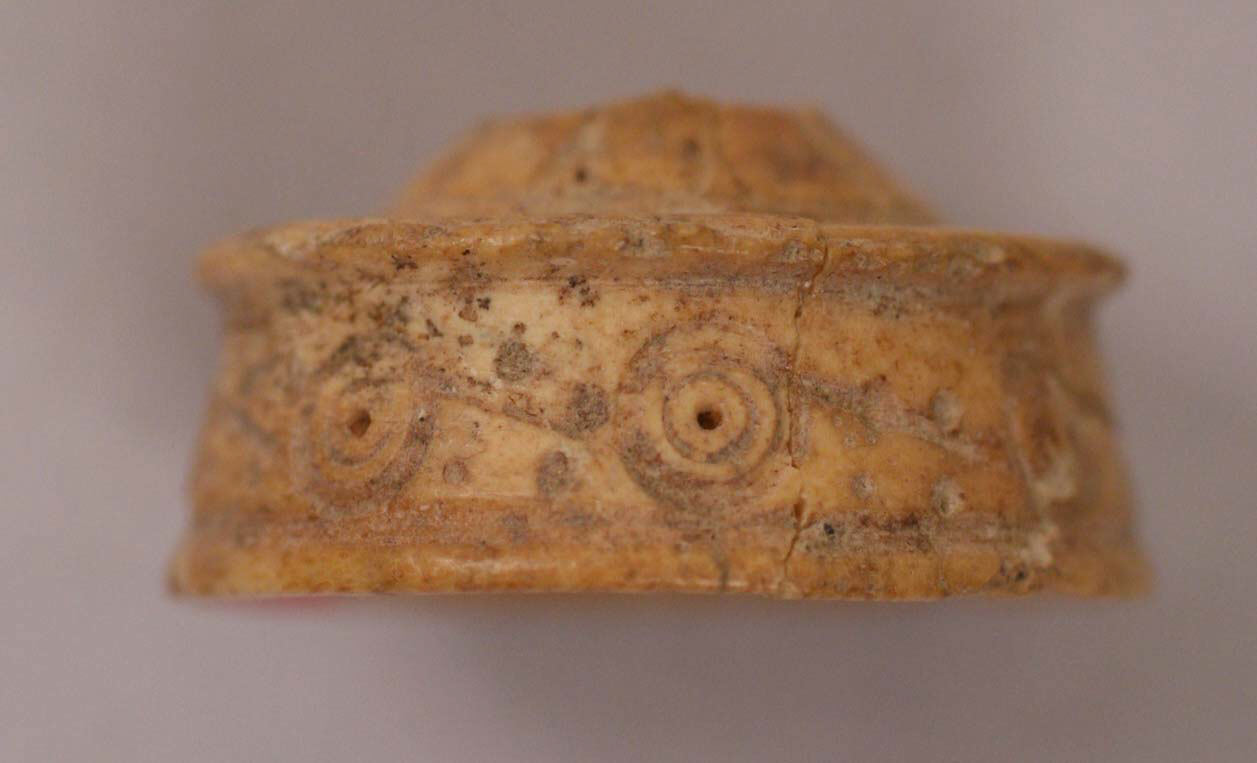
Heritage Analysis: The Bone Button and Bead of Ancient Civilizations
In the annals of human adornment, few objects carry the dual weight of functional necessity and profound symbolic resonance as the button and the bead. For Katherine Fashion Lab, a deep dive into the ancient bone button and bead—specifically those incised and inlaid with paint from early civilizations—offers a strategic blueprint for 2026 high-end luxury. This analysis examines the object’s symbolic power, historical role in adornment, and spiritual meaning, culminating in a forward-looking luxury strategy that leverages heritage authenticity to command premium positioning.
Symbolic Power: The Button and Bead as Status and Identity
The bone button and bead were never mere fasteners or decorative trinkets. In ancient Mesopotamia, the Indus Valley, and pre-dynastic Egypt, these small objects functioned as potent markers of social hierarchy, tribal affiliation, and personal achievement. The incised patterns—geometric lines, animal motifs, or abstract spirals—were not arbitrary; they encoded clan symbols, protective emblems, or narratives of conquest. The inlaid paint, often derived from crushed minerals like ochre, lapis lazuli, or malachite, elevated the object from utilitarian to talismanic.
For Katherine Fashion Lab, this symbolic layering is critical. The button and bead become micro-canvases of power. In a high-end luxury context, replicating this symbolic density—through hand-incised patterns that reference a client’s lineage or bespoke iconography—transforms an accessory into a personal artifact. The 2026 luxury consumer seeks not just beauty but narrative ownership; the bone button and bead offer a tangible link to ancient authority structures, positioning the wearer as a custodian of legacy.
Historical Adornment: From Utility to Ritual
Archaeological evidence from sites such as Çatalhöyük (c. 7500 BCE) and the Royal Tombs of Ur (c. 2600 BCE) reveals that bone buttons and beads were sewn onto garments, strung as necklaces, or woven into headdresses. Their placement on the body was deliberate: near the heart, at the throat, or along the spine—areas believed to channel spiritual energy. The incised lines often mimicked the striations of bone or the flow of water, suggesting a reverence for natural cycles. The inlaid paint, frequently red or black, invoked blood (life force) and the void (the underworld).
This historical context informs a strategic product line for Katherine Fashion Lab. By emphasizing the ritualistic placement of buttons and beads on garments—such as along the spine of a gown or at the pulse points of a cuff—the brand can evoke ancient practices of protection and empowerment. The 2026 luxury customer, increasingly drawn to wellness and intentionality, will resonate with adornment that functions as a wearable amulet. The bone medium, with its organic warmth and tactile irregularity, stands in deliberate opposition to mass-produced plastic or metal, reinforcing an ethos of slow, sacred craftsmanship.
Spiritual Meaning: The Bone as Vessel of Ancestral Memory
Bone, as a material, carries profound spiritual weight across ancient cultures. It is the last remnant of the physical self, a bridge between the living and the dead. In shamanic traditions, bone tools and ornaments were believed to house ancestral spirits or facilitate communication with the divine. The act of incising—cutting into the bone—was a form of consecration, while the inlaid paint activated the object’s spiritual potency. The button and bead, worn against the skin, became conduits for protection, fertility, or victory in battle.
For Katherine Fashion Lab, this spiritual dimension offers a unique value proposition in the saturated luxury market. The brand can position its bone button and bead collections as contemporary relics—objects imbued with intention through handcraft and material integrity. A 2026 strategy might include a “Spiritual Provenance” initiative, where each piece is accompanied by a narrative of its bone origin (e.g., ethically sourced from sustainable heritage livestock) and the symbolic meaning of its incised motif. This transforms the purchase into a ritual act, aligning with the growing consumer demand for authenticity and metaphysical connection.
Material Integrity: Bone as a Luxury Medium
Bone, often overlooked in favor of precious metals or gemstones, possesses unique aesthetic and tactile properties. Its natural grain, slight translucency, and capacity for deep color absorption make it an ideal canvas for incised and inlaid work. Unlike synthetic materials, bone ages gracefully, developing a patina that enhances its narrative value. For high-end luxury, this imperfection is an asset—it signals rarity and a return to artisanal roots.
Katherine Fashion Lab can leverage this by limiting production runs of bone buttons and beads to fewer than 100 units per design, each numbered and authenticated. The incised patterns should be executed by master carvers trained in ancient techniques, while the inlaid paint uses natural pigments sourced from the same regions as the originals (e.g., Afghan lapis, Spanish ochre). This commitment to material and method creates a defensible luxury niche, where the object’s cost is justified by its cultural and spiritual provenance rather than raw material price.
2026 High-End Luxury Strategy: The Heritage Code
The 2026 luxury landscape will be defined by three consumer priorities: exclusivity, narrative depth, and ethical resonance. The ancient bone button and bead, when strategically reinterpreted, satisfies all three. Katherine Fashion Lab should implement a “Heritage Code” strategy that integrates these objects into a broader luxury ecosystem.
Product Architecture: The Button and Bead as Signature Elements
Rather than standalone accessories, bone buttons and beads should anchor signature product categories: limited-edition jackets where buttons serve as closure and talisman, or heirloom necklaces where beads form a narrative sequence. Each piece should be accompanied by a “Heritage Dossier”—a booklet detailing the bone’s origin, the incised pattern’s historical meaning, and the artisan’s biography. This transforms the purchase into an acquisition of knowledge, appealing to the discerning collector.
Pricing and Positioning: The Artifact Premium
Pricing should reflect the object’s dual value as artifact and adornment. A single bone button, hand-incised and inlaid with natural pigment, can command $500–$2,000 when presented as part of a curated set. A full garment featuring 10 such buttons becomes a $15,000–$30,000 piece. This “artifact premium” is justified by the labor intensity (up to 40 hours per button) and the narrative exclusivity. The brand must resist dilution; no diffusion lines or mass-market adaptations should carry the bone motif.
Marketing Narrative: The Living Archive
Marketing for 2026 should eschew traditional fashion imagery in favor of archaeological and ethnographic storytelling. Campaigns can be shot in museum settings or at archaeological sites, with models styled as modern-day priestesses or warriors. Digital content should include 360-degree views of the incised details, paired with audio narratives from historians and spiritual leaders. The brand’s website can host a “Heritage Map” tracing the evolution of the button and bead from ancient Mesopotamia to the present, positioning Katherine Fashion Lab as a custodian of this lineage.
Sustainability and Ethics: The Bone Sourcing Protocol
Bone sourcing must be transparent and ethical. Katherine Fashion Lab should partner with certified farms and abattoirs that practice regenerative land management, ensuring that bone is a byproduct of food systems rather than a driver of animal exploitation. Each batch should be traceable to a specific region and animal, with documentation verifying humane treatment. This aligns with the 2026 luxury consumer’s demand for radical transparency and positions bone as a sustainable alternative to endangered materials like ivory or tortoiseshell.
Conclusion: The Button and Bead as Strategic Imperative
The ancient bone button and bead, incised and inlaid with paint, is far more than a decorative artifact. It is a repository of symbolic power, a tool of historical adornment, and a vessel of spiritual meaning. For Katherine Fashion Lab, this object offers a clear path to differentiation in the 2026 high-end luxury market. By honoring its heritage through meticulous craftsmanship, narrative depth, and ethical integrity, the brand can transform a humble fastener into a cornerstone of luxury identity. The button and bead, once lost to time, becomes a strategic asset—a microcosm of the brand’s commitment to legacy, artistry, and meaning. In a market saturated with the ephemeral, the bone object endures. So too will Katherine Fashion Lab’s legacy, if it chooses to wear this heritage with intention.