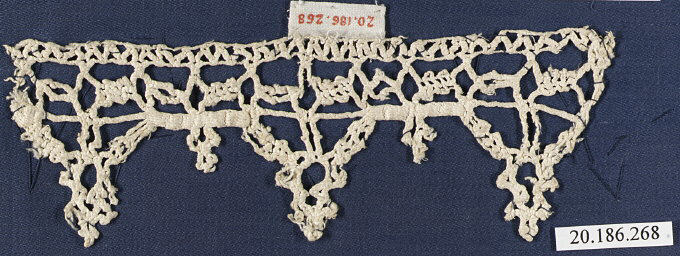
The Art of the Edge: Bobbin Lace and the Global Heritage of Couture Edging
In the rarefied world of haute couture, the devil—and the divinity—resides in the details. No detail is more telling than the edge. It is the final punctuation mark, the silent signature of a garment’s craftsmanship and conceptual depth. At Katherine Fashion Lab, our latest standalone study delves into the profound narrative power of edging, specifically through the lens of bobbin lace. This is not merely a trim; it is a textile chronicle of global heritage, a technique that has traversed continents and centuries to find its most sophisticated expression in contemporary couture. This analysis deconstructs the technical mastery, cultural lineage, and aesthetic implications of bobbin lace as a defining edge in modern fashion.
The Technical Precision of Bobbin Lace: A Study in Structural Poetry
Bobbin lace is a paradox of fragility and strength. Unlike needle lace, which is built with a single needle and thread, bobbin lace is crafted by braiding and twisting multiple threads, each wound around a weighted bobbin. The process is painstakingly slow, requiring a level of manual dexterity and spatial intelligence that borders on the mathematical. For Katherine Fashion Lab, the choice of bobbin lace for edging is a deliberate exercise in architectural detailing. The edge is not an afterthought; it is a structural component that defines the silhouette and the drape.
The materiality of bobbin lace—typically linen, silk, or cotton—offers a unique interplay of opacity and transparency. When applied as an edging, it creates a gradient of density. The solid fabric of the garment gradually dissolves into the airy lattice of the lace, producing a visual and tactile transition that is both ethereal and deliberate. This is particularly powerful in standalone studies, where the edge is isolated as the primary subject. The lace becomes a border that is simultaneously a boundary and an invitation—a liminal space between the garment and the world.
The production process itself is a testament to artisanal heritage. Each twist of the bobbin, each pin placement on the lace pillow, is a gesture of control and surrender. The lacemaker must anticipate how each thread will interact with the next, creating patterns—such as the traditional point de Paris or Milanese—that are both repetitive and improvisational. In the context of Katherine Fashion Lab, this technique is elevated beyond folk craft. It is recontextualized as a form of textile engineering, where the edge is engineered to provide structure without rigidity, and ornamentation without excess.
Global Heritage: The Cultural Cartography of Bobbin Lace Edging
To understand bobbin lace as a global heritage, one must trace its journey from the flax fields of Flanders to the courts of Venice, and from the convents of Spain to the ateliers of modern Paris. This is not a monolithic tradition; it is a polyphonic narrative of cultural exchange. The edging technique—often used to finish collars, cuffs, and hems—became a marker of status, identity, and regional pride.
In Belgium, particularly in Bruges and Mechelen, bobbin lace reached a pinnacle of refinement in the 16th and 17th centuries. The edges were so fine they were called “point de gaze,” a lace so delicate it appeared to be woven from spider silk. This heritage informs Katherine Fashion Lab’s approach to minimalist luxury. The edge is not loud; it whispers of centuries of skill. The Belgian influence is evident in the preference for geometric, repeating patterns that create a rhythmic border—a visual cadence that organizes the garment’s silhouette.
Moving south, Italian bobbin lace, particularly from Genoa and Milan, introduced bolder, more sculptural edges. The merletto a tombolo used thicker threads and more pronounced motifs, such as floral or arabesque shapes. For a standalone study, this offers a different vocabulary: the edge becomes a bas-relief, a three-dimensional frame that projects from the fabric. Katherine Fashion Lab leverages this by using Italian-inspired bobbin lace to create contrast edges that break the visual plane, adding depth and shadow to otherwise flat surfaces.
The Iberian tradition—specifically from Spain and Portugal—infuses bobbin lace with a Moorish aesthetic, characterized by intricate star-like patterns and interlacing curves. This heritage is particularly resonant in contemporary couture for its architectural complexity. The edge becomes a labyrinth, drawing the eye into its interstices. In a standalone analysis, this type of edging acts as a focal point, demanding close inspection. It is a testament to the idea that the edge is not peripheral; it is central to the garment’s narrative.
Finally, the Asian adaptation of bobbin lace—seen in regions like the Philippines and India—introduces a syncretic element. Here, indigenous motifs merge with European techniques brought by colonial trade. The result is a hybrid edge that speaks to cultural resilience and adaptation. Katherine Fashion Lab honors this by incorporating non-traditional colorways—such as indigo or cochineal—into the lace, challenging the convention that bobbin lace must be white or ecru. This global heritage is not a museum piece; it is a living, evolving language of design.
Standalone Study: The Edge as a Complete Design Statement
In most fashion contexts, edging is a supporting player. It finishes a hem or accents a neckline. But in a standalone study, the edge is promoted to protagonist. Katherine Fashion Lab’s approach is to isolate the bobbin lace edging as the primary subject of investigation, stripping away the garment to focus on the border itself. This requires a radical shift in perspective: the edge is no longer a margin; it is the center.
This study examines how bobbin lace edging can define space, volume, and movement. Consider a length of bobbin lace, say 30 centimeters wide, crafted from silk and metallic threads. When displayed as a standalone piece—perhaps mounted on a transparent substrate or suspended in a frame—it becomes a textile sculpture. The edge is both the boundary and the content. The negative space within the lace becomes as important as the thread itself. This is a lesson in negative-positive design, where the holes in the lace are not absences but active components of the pattern.
From a curatorial perspective, a standalone study of bobbin lace edging challenges the viewer to reconsider hierarchy in fashion. Why must the edge be subordinate? By isolating it, Katherine Fashion Lab argues that the edge carries its own narrative weight. It can be a symbol of transition—the liminal space between the body and the environment. It can be a political statement, as in the use of traditional lace from a specific region to assert cultural identity. Or it can be a pure aesthetic exploration, where the interplay of light and shadow across the lace’s surface becomes the primary experience.
Technically, this standalone focus also allows for a deeper analysis of construction. How does the edge behave when it is not attached to a garment? Does it curl, drape, or remain rigid? Bobbin lace, despite its delicate appearance, has inherent stiffness due to the density of its twists. This makes it ideal for self-supporting edges—borders that can stand away from the body, creating a ruffle or a flounce without additional interfacing. In a standalone study, this property is magnified. The edge becomes a piece of architecture, a miniature facade of thread.
Conclusion: The Future of Edging in Couture
Katherine Fashion Lab’s analysis of bobbin lace edging reaffirms that the most profound innovations in couture often lie at the margins—literally and figuratively. By elevating a traditional technique from global heritage into a standalone subject, we unlock new possibilities for design. The edge is no longer a finish; it is a beginning. It is a thread that connects the hands of a 17th-century Flemish lacemaker to the vision of a 21st-century designer. In this study, bobbin lace is not just a material; it is a manifesto for detail-driven craftsmanship and cultural continuity. The edge, it turns out, is where the story truly begins.