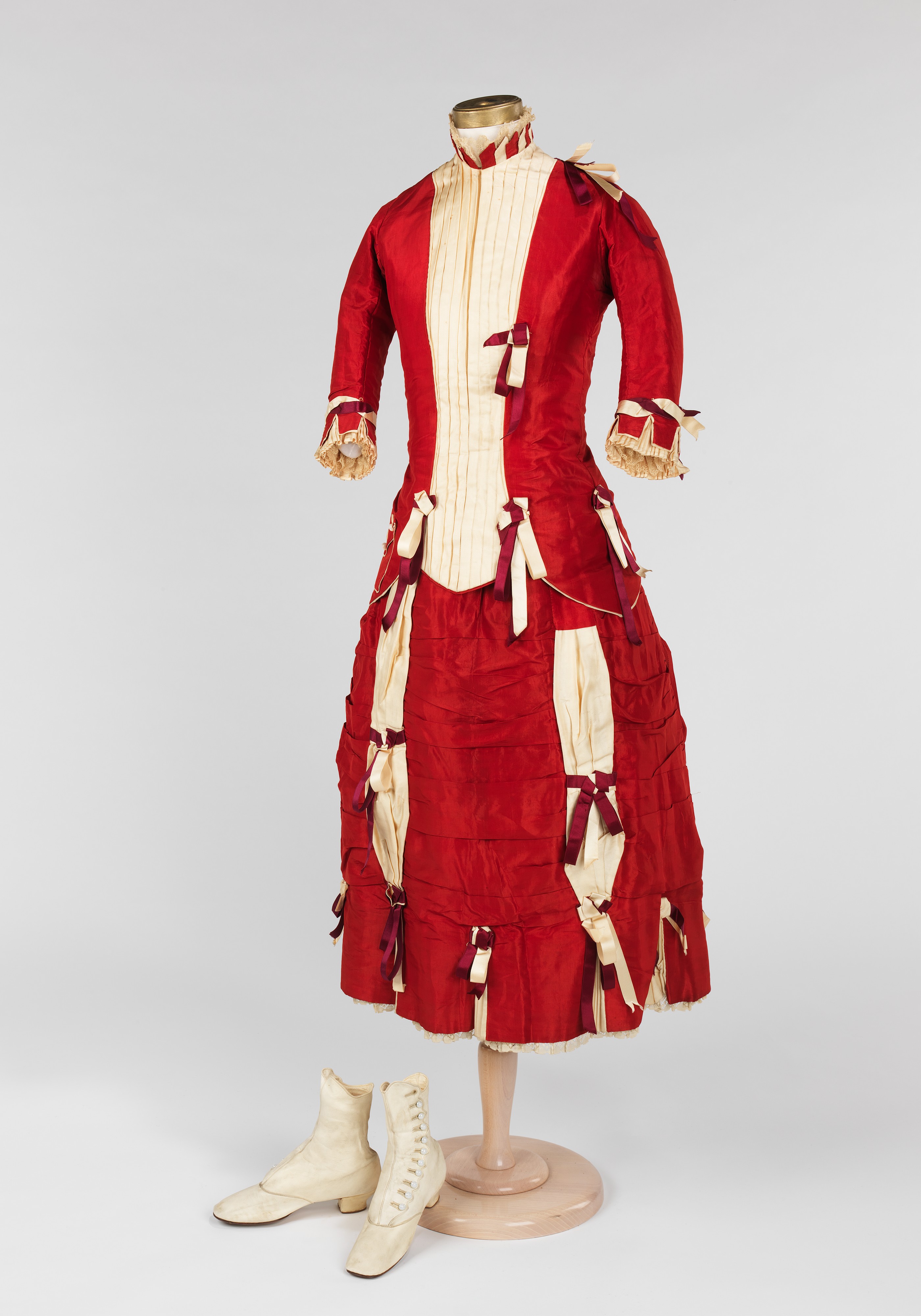
The American Paradox: Deconstructing the Katherine Fashion Lab Ensemble
Within the rarefied world of haute couture, few creations manage to encapsulate a nation’s cultural identity while simultaneously challenging its foundational myths. The Katherine Fashion Lab ensemble—a standalone study in American design—achieves precisely this feat. Crafted from a triumvirate of materials that are at once luxurious and industrial—silk, leather, and glass—this piece is not merely a garment; it is a thesis on the American character. It speaks to a heritage of pragmatism, a reverence for raw nature, and an unapologetic appetite for opulence. As Lead Curator, I submit that this ensemble represents a pivotal moment in the dialogue between Old World craftsmanship and New World innovation.
Material Dialectic: Silk, Leather, and Glass
The genius of this ensemble lies in the friction between its components. Silk, a material historically tied to ancient trade routes and European aristocracy, is here rendered with a distinctly American sensibility. The fabric is not a delicate, diaphanous charmeuse but a heavier, matte-finished silk twill, suggesting a utilitarian robustness. Its drape is fluid yet structured, evoking the flowing lines of a modern skyscraper rather than a Rococo gown. The color palette is restrained: a deep, charcoal grey that absorbs light, punctuated by threads of burnished copper woven into the weft. This is not the silk of a courtesan; it is the silk of a boardroom, of a frontier pragmatist who demands beauty without fragility.
In stark contrast, leather is deployed as an architectural exoskeleton. Cut with surgical precision, panels of black calfskin are integrated into the bodice and along the outer seams of the skirt. The leather is not soft or pliable; it is stiff, almost armor-like, with a subtle, matte finish that refuses to shine. This treatment is a deliberate nod to American industrial heritage—the leather of a workman’s glove, a saddle, a bomber jacket. Yet, its placement is couture-level: the panels are sculpted to follow the body’s contours, creating a corset-like structure that is both supportive and restrictive. The leather does not compete with the silk; it contains it, much like the American landscape contains its vast, untamed wilderness within the grids of its cities.
Perhaps the most arresting material is the glass. Not as a jewel or a bead, but as a structural element. Small, hand-blown glass orbs—each no larger than a pea—are individually set into a lattice of fine silver wire along the collar and cuffs. These are not Swarovski crystals; they are raw, slightly irregular spheres that catch and refract light in unpredictable ways. The effect is both fragile and formidable. The glass suggests the transparency of American democracy, the fragility of its ideals, yet its hardness speaks to the resilience required to maintain them. When the wearer moves, the orbs clink softly, a sound like ice in a glass, or the quiet chime of a distant bell—a reminder of the ever-present tension between beauty and utility.
Silhouette and Structure: The American Contradiction
The silhouette is a masterclass in controlled asymmetry. The ensemble consists of a floor-length column skirt and a fitted, high-neck top that extends into a dramatic, single-shoulder capelet. The left side of the body is encased in the leather exoskeleton, while the right side flows freely in silk. This is not a mere aesthetic choice; it is a conceptual statement. The left side—traditionally associated with the heart, with emotion—is armored, protected. The right side—associated with action, with the hand that builds—is fluid, unconstrained. This asymmetry mirrors the American psyche: a nation that simultaneously embraces vulnerability and fortification, sentimentality and stoicism.
The construction techniques are equally telling. The seams are raw-edged, left unhemmed, revealing the inner structure of the garment. This is a deliberate departure from the polished finish expected of couture. It is a nod to the American ethos of transparency, of showing one’s work. Yet, the stitching is immaculate—each stitch a tiny, precise anchor. The leather panels are bonded to the silk using a heat-activated adhesive, a modern industrial method that eschews traditional hand-sewing. This marriage of high-tech and handcraft is quintessentially American: a reverence for innovation without sacrificing the human touch.
Cultural Resonance: From the Frontier to the Future
This ensemble does not exist in a vacuum. It is a direct response to the American fashion canon, which has long been dominated by sportswear and denim. Katherine Fashion Lab reclaims the language of luxury while grounding it in the nation’s foundational myths. The leather evokes the cowboy, the frontiersman, the lone rider. The silk recalls the Gilded Age, the robber barons, the industrialists who clothed their wives in Parisian finery. The glass is the most contemporary element—a material of the digital age, of fiber optics and skyscrapers, of a world that is both connected and fragile.
What is most striking is the ensemble’s refusal to be categorized. It is not evening wear, nor day wear. It is not a dress, nor a suit. It is a standalone study—a proposition for a new American aesthetic that values complexity over simplicity, tension over harmony. In a fashion landscape that often defaults to minimalism or maximalism, this piece occupies a rare middle ground. It demands the viewer to sit with its contradictions: the softness of silk against the hardness of leather, the transparency of glass against the opacity of the exoskeleton, the fluidity of the right side against the rigidity of the left.
Conclusion: A New Lexicon for American Couture
As Lead Curator, I believe this ensemble from Katherine Fashion Lab marks a significant inflection point. It refuses to apologize for its complexity. It is a garment that does not seek to be worn so much as inhabited—a second skin that is both armor and invitation. In its synthesis of silk, leather, and glass, it forges a new material vocabulary for American couture, one that honors the nation’s past while articulating its future. It is, in every sense, a masterpiece of thoughtful design—a standalone study that will undoubtedly influence the next generation of American fashion. For those who understand that clothing is never just cloth, but a mirror of the culture that creates it, this ensemble is an essential artifact of our time.