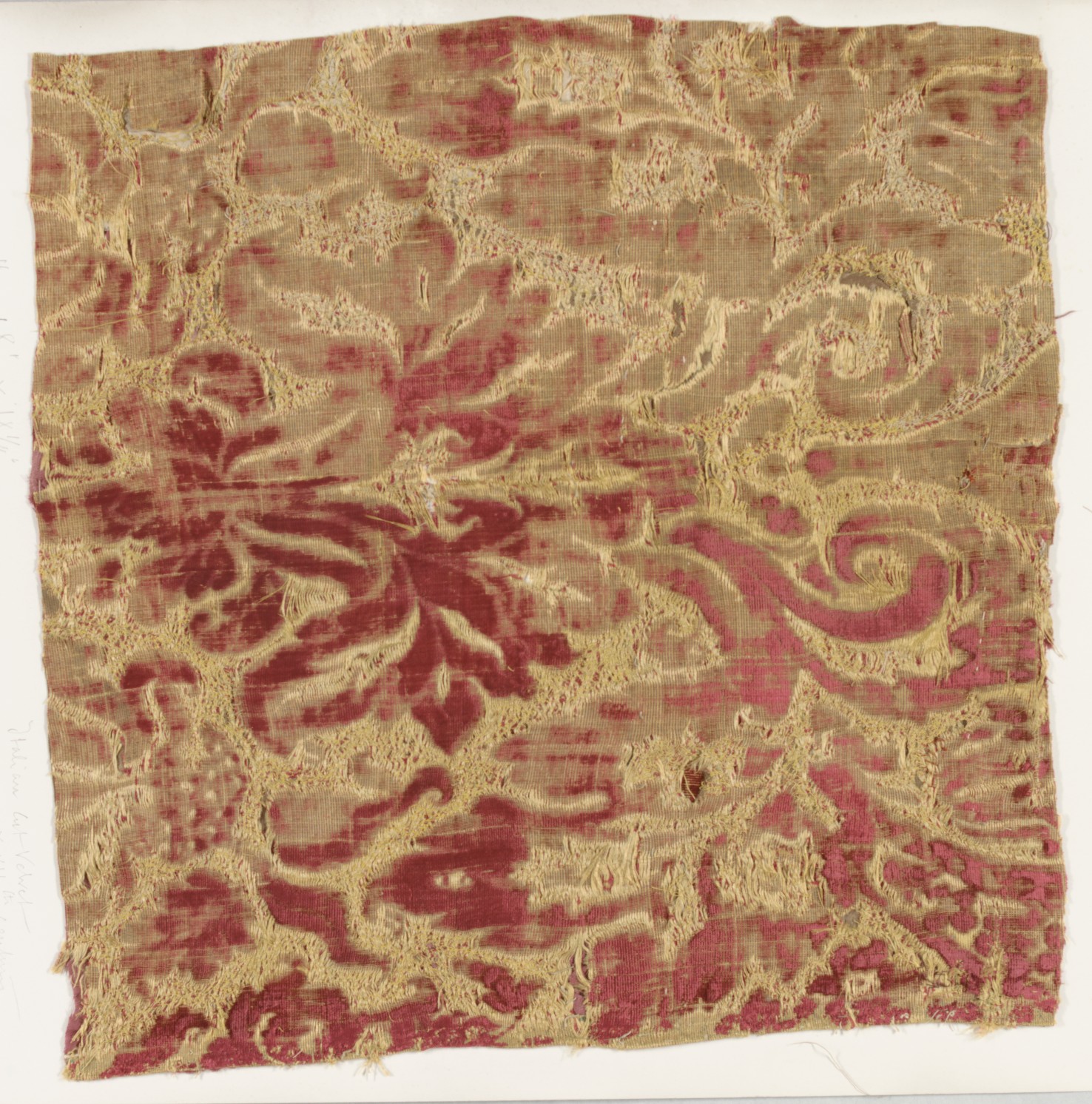
The Fragment as a Complete Narrative: Deconstructing Heritage Through Silk at Katherine Fashion Lab
In the rarefied domain of haute couture, where garments are often conceived as totalizing statements of opulence and perfection, Katherine Fashion Lab introduces a provocative counter-narrative with its standalone study titled "Fragment." This collection, drawn from the vast reservoir of Global Heritage and executed exclusively in silk, proposes that incompleteness is not a flaw but a profound aesthetic and philosophical position. As Lead Curator, I find this analysis essential for understanding how the Lab redefines luxury not through accumulation, but through deliberate, curated absence.
The Philosophical Underpinnings of the Fragment
The concept of the fragment has deep roots in art history, from the broken torsos of Hellenistic sculpture to the unfinished canvases of the Renaissance. Yet Katherine Fashion Lab elevates this idea from a merely historical reference to a contemporary design methodology. The "Fragment" study does not seek to reconstruct a lost whole; instead, it celebrates the inherent beauty of the partial, the torn, and the interrupted. This is a sophisticated departure from the typical Western couture obsession with seamless construction. By drawing on Global Heritage, the Lab acknowledges that many non-Western traditions—from Japanese kintsugi to Indian kantha stitching—have long revered repair and fragmentation as acts of love and cultural memory. The silk becomes a vessel for these layered histories, each thread a testament to resilience.
The choice of silk as the sole material is both deliberate and paradoxical. Silk is historically associated with imperial grandeur, smoothness, and unblemished surfaces. Here, it is intentionally distressed, frayed, and reassembled. The Lab’s technical team has developed proprietary methods to deconstruct silk without destroying its inherent luster. This process involves hand-tearing panels, leaving raw edges, and then re-weaving disparate silk fragments—some from antique Chinese brocades, others from modern Italian crepe de chine—into single, cohesive silhouettes. The result is a textile that is simultaneously fragile and strong, ancient and new.
Materiality and Technique: Silk as a Living Archive
The technical execution of "Fragment" demands a re-evaluation of what constitutes couture craftsmanship. Each garment begins with the curation of silk fragments sourced from global archives: a strip of 19th-century Japanese obi silk, a panel of Uzbek ikat, a remnant of French Lyon brocade. These are not merely decorative appliqués; they are structural components. The Lab’s artisans employ a technique they call "tensile patchwork," where each fragment is tensioned on a bias before being hand-stitched to its neighbor. This creates a dynamic interplay of drape and rigidity, allowing the silk to flow while maintaining the architectural integrity of the fragment.
One standout piece, a floor-length column gown, exemplifies this approach. The bodice is constructed from a single, asymmetrical piece of raw-edged silk charmeuse, its frayed hem left intentionally unfinished. The skirt is a mosaic of silk patches, each one a different weight and weave, stitched together with visible, contrasting silk threads. This is not a hidden seam; it is a declaration of the fragment. The viewer is invited to trace the journey of each piece, to imagine the hands that once wove or wore it. The garment becomes a living archive, a wearable museum of global textile heritage.
Color plays a crucial role in unifying these disparate elements. The palette is deliberately restrained: ivory, bone, charcoal, and oxidized gold. These hues allow the textures and weaves of the silk to speak, rather than relying on chromatic drama. The occasional flash of indigo or vermillion—drawn from a fragment of a South Asian sari border—serves as a powerful accent, a reminder of the fragment’s original context. This restraint is a mark of haute couture maturity: the ability to let material and concept drive the narrative, rather than spectacle.
Global Heritage as a Design Vocabulary
What distinguishes "Fragment" from other deconstructivist fashion is its explicit engagement with Global Heritage as a design vocabulary. The Lab does not appropriate; it collaborates with living traditions. For instance, the collection features a series of kimono-inspired jackets where the sleeves are constructed from fragments of Chinese qipao collars and Korean hanbok ribbons. This is not a pastiche but a dialogue—a conversation between cultures mediated by silk. The Lab’s research team worked with textile historians in Kyoto, Istanbul, and Oaxaca to source authentic fragments, ensuring that each piece carries a verifiable lineage.
The result is a collection that transcends geographic and temporal boundaries. A draped cape might incorporate a fragment of a 17th-century Persian velvet alongside a piece of modern Thai silk organza. The juxtaposition is jarring yet harmonious, forcing the wearer and viewer to reconsider what heritage means in a globalized world. Heritage is not a static relic; it is a dynamic, fragmented process of transmission and transformation. The "Fragment" study argues that our shared global heritage is itself a patchwork—a collection of broken pieces that we must actively reassemble, with care and respect.
The Standalone Study as a Curatorial Statement
Presenting "Fragment" as a standalone study—rather than part of a seasonal collection—is a curatorial decision that underscores its intellectual weight. This is not fashion as commerce; it is fashion as thesis. The Lab has designed the study to be experienced as a series of sartorial essays, each garment a chapter in a larger argument about beauty, memory, and materiality. The presentation itself eschews a traditional runway for an intimate gallery setting, where each piece is displayed on a minimalist mannequin, with its constituent fragments labeled and dated. This transforms the viewing experience into an act of scholarly inquiry.
For the wearer, engaging with a "Fragment" garment requires a shift in perspective. These are not clothes for passive consumption; they demand an active relationship. The raw edges may catch on a sleeve, the visible seams may shift with movement. This is intentional. The garment is designed to evolve with its owner, to collect new marks and memories. In this sense, the wearer becomes a co-creator, adding their own fragment—their own story—to the textile’s ongoing narrative.
Conclusion: The Fragment as a Complete Proposition
Katherine Fashion Lab’s "Fragment" study is a masterclass in conceptual couture. By grounding its deconstructive impulse in the tangible, tactile reality of silk and the rich, complex tapestry of Global Heritage, the Lab achieves something rare: a collection that is intellectually rigorous, emotionally resonant, and materially exquisite. The fragment is not a lack; it is a presence. It is a reminder that all beauty is contingent, all heritage is pieced together, and all luxury worth its name is a collaboration between past and present, between the whole and the broken. In this standalone study, Katherine Fashion Lab has not only analyzed the fragment—it has made it whole.