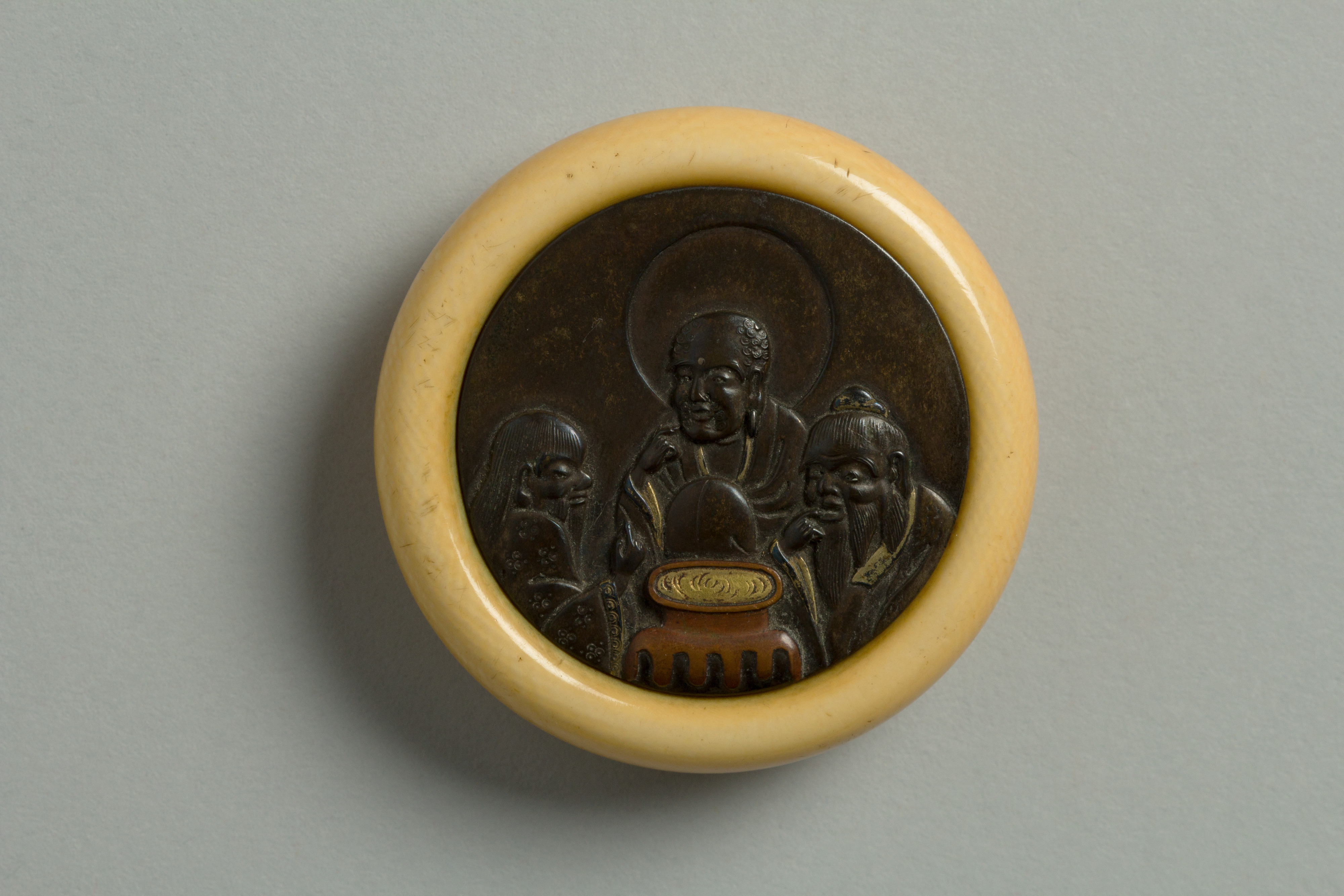
Heritage Analysis: Netsuke of The Three Wine Tasters (Confucius, Buddha, Laozi)
Introduction: The Artifact as Strategic Symbol
The Netsuke of The Three Wine Tasters, originating from Japan and rendered in ivory with a bronze disk inlaid with gold, is a masterwork of miniature sculpture and cultural synthesis. This artifact, depicting Confucius, Buddha, and Laozi sharing a single vat of wine, is not merely a decorative toggle for traditional Japanese attire. It is a profound statement of syncretic philosophy, historical adornment, and symbolic power. For Katherine Fashion Lab, positioning this Netsuke at the intersection of heritage and high-end luxury strategy for 2026 offers a unique opportunity to harness deep cultural narratives, elevate brand storytelling, and command premium market positioning. This analysis examines the artifact’s symbolic, spiritual, and material dimensions, culminating in a strategic framework for luxury integration.
Symbolic Power: The Triad of Philosophical Unity
The Netsuke’s central narrative—the three foundational figures of East Asian thought sharing wine—embodies a radical harmony. Confucius represents social order, ritual, and hierarchical virtue; Buddha embodies enlightenment, compassion, and transcendence of suffering; Laozi, the founder of Taoism, symbolizes natural spontaneity, simplicity, and alignment with the Tao. Their shared act of tasting wine is a metaphor for the convergence of seemingly opposing paths: Confucian duty, Buddhist detachment, and Taoist flow. This symbolic power is not static; it resonates with contemporary luxury consumers seeking meaning beyond materialism. In 2026, as high-net-worth individuals increasingly prioritize philosophical depth and ethical coherence in their purchases, this Netsuke becomes a talisman of intellectual sophistication. Katherine Fashion Lab can leverage this by positioning the artifact as a symbol of “unified wisdom,” appealing to clients who value cultural literacy and inner balance as status markers.
Historical Adornment: The Netsuke as Functional Art
Historically, the Netsuke served a practical purpose in Edo-period Japan (1603–1868), acting as a toggle to secure personal pouches (sagemono) to the sash of a kimono. Yet its function transcended utility. Carved from ivory, wood, or precious metals, Netsuke were status objects that displayed the wearer’s wealth, taste, and intellectual affiliations. The choice of ivory—a material both rare and ethically contentious today—underscores the artifact’s exclusivity. The bronze disk inlaid with gold adds a layer of metallic prestige, connecting the Netsuke to Japanese metalworking traditions that prized meticulous craftsmanship. For Katherine Fashion Lab, this historical context offers a blueprint for adornment as identity. In a 2026 luxury strategy, the Netsuke can inspire a collection of wearable art—brooches, pendants, or cufflinks—that marry heritage carving techniques with modern materials like recycled gold or ethically sourced gemstones. The key is to retain the artifact’s narrative density while adapting its form to contemporary accessories, thus honoring its lineage without replicating it.
Spiritual Meaning: The Wine as Metaphor for Transcendence
The wine shared by the three sages is a potent spiritual symbol. In Buddhist tradition, wine often represents delusion and attachment; in Confucian thought, it can signify ritual intoxication in moderation; in Taoism, wine is a vehicle for spontaneous joy and release from rigid norms. The Netsuke’s depiction of all three drinking together suggests a transcendence of doctrinal boundaries—a spiritual ecumenism that prefigures modern interfaith dialogue. This spiritual meaning aligns with the 2026 luxury consumer’s growing appetite for mindful consumption. High-end brands are increasingly integrating concepts of “sacred luxury” or “spiritual materialism,” where products are imbued with contemplative value. Katherine Fashion Lab can position the Netsuke as a meditative object, perhaps through limited-edition replicas accompanied by curated essays or guided reflections. By framing the artifact as a tool for personal introspection, the brand taps into a market segment that views luxury as a gateway to self-cultivation rather than mere accumulation.
Material Analysis: Ivory, Bronze, and Gold as Signifiers of Prestige
The Netsuke’s material composition—ivory, bronze, and gold—is a hierarchy of value. Ivory, once a symbol of imperial patronage, now carries complex ethical weight due to elephant conservation concerns. Bronze, an alloy of copper and tin, evokes durability and ancient ritual vessels. Gold, the ultimate signifier of wealth, is used sparingly as an inlay, suggesting restraint and refinement. For Katherine Fashion Lab, this material triad offers a strategic lesson in luxury hierarchy. In 2026, the brand can reinterpret these materials through sustainable alternatives: lab-grown ivory (polymer or bio-resin), patinated bronze derived from recycled sources, and fair-trade gold. The bronze disk’s inlay technique—known as zōgan in Japanese metalwork—can be revived as a signature artisan process, differentiating the brand through craft narratives. This material strategy not only aligns with ethical sourcing trends but also reinforces the Netsuke’s original aura of exclusivity and mastery.
2026 High-End Luxury Strategy: From Artifact to Brand Ecosystem
Integrating the Netsuke into Katherine Fashion Lab’s 2026 strategy requires a multi-layered approach that respects its heritage while innovating for contemporary luxury. The following strategic pillars are recommended:
1. Curatorial Storytelling: Launch a “Three Wine Tasters” capsule collection that includes limited-edition accessories (brooches, silk scarves, leather goods) inspired by the Netsuke’s iconography. Each piece should be accompanied by a digital passport detailing its design provenance, artisan maker, and philosophical symbolism. This transforms the product into an educational artifact, appealing to connoisseurs who value narrative over volume.
2. Experiential Retail: Create immersive pop-up spaces that replicate a Japanese tea house or scholar’s study, where clients can view the original Netsuke (or a high-resolution replica) while sampling fine teas or wines. This sensory engagement deepens emotional resonance and positions the brand as a steward of cultural heritage.
3. Collaborative Craftsmanship: Partner with contemporary Japanese carvers and metalworkers to produce a series of modern Netsuke—perhaps using alternative materials like carbon fiber, titanium, or fossilized mammoth ivory (to avoid ethical pitfalls). These pieces can be sold as investment-grade collectibles, complete with provenance certificates and artist interviews.
4. Digital and NFT Integration: Offer a digital twin of the Netsuke as a non-fungible token (NFT) with augmented reality (AR) features. Owners can “display” the artifact in their virtual homes or access exclusive content on Taoist and Buddhist philosophies. This bridges physical luxury with the metaverse, a key trend for 2026.
5. Philanthropic Ties: Allocate a percentage of proceeds from the collection to conservation efforts for Asian cultural heritage sites or ethical ivory alternatives. This aligns with the Netsuke’s spiritual message of harmony and positions the brand as a force for cultural preservation.
Conclusion: The Netsuke as a Blueprint for Thoughtful Luxury
The Netsuke of The Three Wine Tasters is far more than a historical curiosity; it is a strategic asset for Katherine Fashion Lab’s 2026 luxury positioning. Its symbolic power—the unity of Confucian order, Buddhist compassion, and Taoist spontaneity—offers a narrative antidote to the fragmentation of modern life. Its history of functional adornment provides a template for wearable art that communicates status and intellect. Its spiritual meaning invites consumers into a deeper relationship with their possessions. And its material composition challenges the brand to innovate ethically while preserving craft excellence. By treating this artifact not as a decorative motif but as a philosophical foundation, Katherine Fashion Lab can differentiate itself in a crowded luxury market, appealing to clients who seek beauty, meaning, and responsibility in equal measure. The Netsuke, in essence, is a mirror: reflecting not just the past, but the future of high-end strategy.