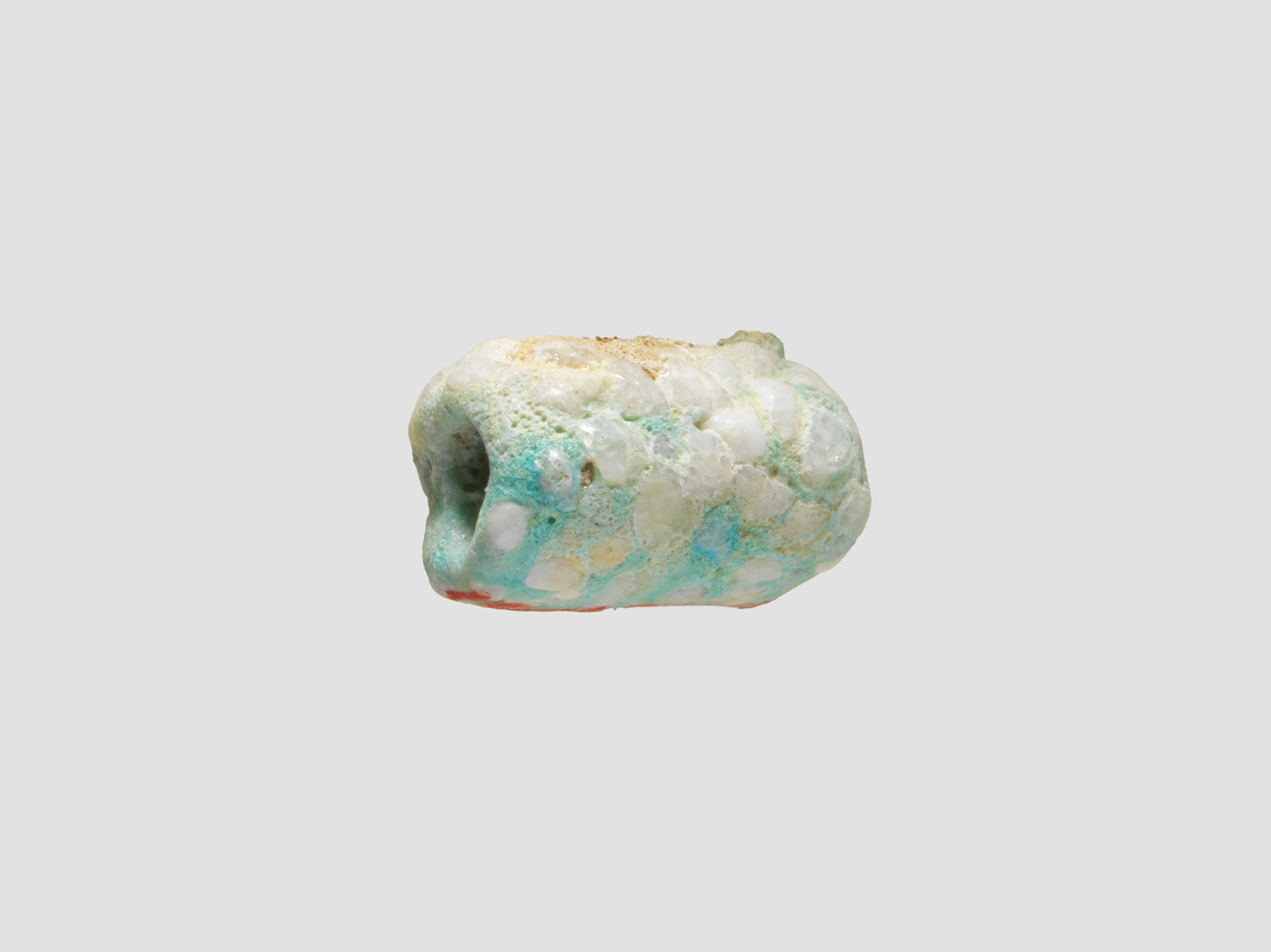
Heritage Analysis: Faience Ornamentation in Ancient Civilization
This strategic research paper, prepared for Katherine Fashion Lab, examines the ornamental legacy of faience in ancient civilizations, with a specific focus on its symbolic power, historical role in adornment, and spiritual meaning. By decoding these cultural dimensions, we derive actionable insights for a 2026 high-end luxury strategy that leverages heritage authenticity to elevate brand positioning in the competitive luxury market.
Historical Adornment and Material Significance
Faience, a non-clay ceramic material composed primarily of crushed quartz, alkaline salts, and coloring agents, emerged as a transformative medium in ancient Egypt, Mesopotamia, and the Indus Valley circa 4000 BCE. Its production required sophisticated kiln technology and precise chemical formulation, making it a marker of advanced craftsmanship and elite status. Unlike natural stones or metals, faience was a synthetic creation—a deliberate act of human ingenuity that mimicked the luster of turquoise and lapis lazuli, stones associated with divinity and royalty. This imitation was not deception but a form of symbolic substitution, allowing artisans to democratize sacred colors while retaining their spiritual potency.
In ancient Egypt, faience ornaments—amulets, beads, scarabs, and pendants—were central to both daily adornment and funerary practices. The material’s vibrant blue-green hue, achieved through copper oxide, evoked the life-giving waters of the Nile and the regenerative power of the sun. Worn by pharaohs, priests, and nobility, faience objects signaled social hierarchy and access to esoteric knowledge. For instance, the wedjat eye amulet, commonly crafted in faience, was believed to confer protection and healing, embedding the ornament with apotropaic function. Thus, historical adornment with faience was never purely aesthetic; it was a ritualized act of embodying cosmic order and divine favor.
Symbolic Power and Spiritual Meaning
The symbolic power of faience derived from its color, materiality, and iconographic associations. The color blue-green (Egyptian irtyu) represented fertility, rebirth, and the primordial waters of Nun, from which all creation emerged. This chromatic symbolism extended to the afterlife, where faience amulets placed on mummies ensured safe passage through the underworld. The djed pillar amulet, often made of faience, symbolized stability and resurrection. Similarly, Mesopotamian faience cylinder seals, engraved with mythological scenes, functioned as both administrative tools and talismans, linking the wearer to divine authority.
Spiritually, faience ornaments served as intermediaries between the human and the divine. In Egyptian practice, the shabti figurines—small faience statuettes placed in tombs—were believed to perform labor for the deceased in the afterlife. This belief system imbued the material with agency: faience was not inert but animate, infused with ka (life force) through ritual consecration. The act of wearing a faience scarab on the chest was thus a declaration of spiritual alignment, a wearable prayer for protection and transformation. For high-end luxury strategy, this historical precedent underscores that ornamentation can transcend decoration to become a vessel for meaning, narrative, and identity.
Strategic Relevance for 2026 High-End Luxury
The 2026 luxury landscape is defined by a demand for authenticity, sustainability, and experiential depth. Consumers increasingly seek brands that offer more than product—they desire connection to heritage, craftsmanship, and symbolism. Faience’s heritage provides a compelling blueprint for Katherine Fashion Lab to differentiate itself in a saturated market. Below are strategic directives derived from this analysis:
1. Material Storytelling as Brand Capital
Faience’s synthetic nature—crafted from humble materials into objects of profound value—mirrors the contemporary luxury ethos of transformation and intentionality. Katherine Fashion Lab can develop a signature collection using modern faience-inspired ceramics or glazed finishes, marketed not merely as ornaments but as “carriers of narrative.” Each piece should be accompanied by a digital or physical “provenance card” detailing its symbolic origins, akin to ancient amulet inscriptions. This strategy taps into the growing trend of heritage luxury, where material provenance justifies premium pricing.
2. Symbolic Color Psychology in Product Design
The faience blue-green palette can anchor a color strategy for Katherine Fashion Lab’s 2026 collection. This hue, associated with water, life, and regeneration, aligns with luxury consumers’ increasing focus on wellness and environmental consciousness. Limited-edition faience-toned ornaments—necklaces, brooches, or cufflinks—can be positioned as “modern talismans,” appealing to clients who view luxury as an extension of personal spirituality. The color’s historical link to protection also offers a subtle marketing angle for resilience in uncertain times.
3. Ritualized Consumption Experiences
Ancient faience ornaments were often consecrated through ritual. Katherine Fashion Lab can revive this practice by offering clients a “blessing ceremony” at point of sale—a private, guided experience where the ornament is symbolically charged with intentions (e.g., protection, creativity, success). This elevates the purchase from transaction to rite, fostering deep emotional loyalty. Such experiences are particularly resonant for high-net-worth individuals seeking meaning beyond material accumulation.
4. Collaborative Craftsmanship and Cultural Stewardship
Partnering with contemporary ceramicists or archaeological conservators can lend credibility to the faience-inspired line. Katherine Fashion Lab should commission limited runs using traditional faience techniques, emphasizing artisanal scarcity. This approach not only honors ancient knowledge but also aligns with luxury’s shift toward slow fashion and ethical production. Collaborations with museums (e.g., the British Museum’s Egyptian collection) can further authenticate the heritage narrative, creating cross-sector prestige.
5. Digital and Physical Integration
Faience’s symbolic power can be amplified through augmented reality (AR) technology. For example, scanning a faience-inspired ornament with a smartphone could reveal an animated visualization of its ancient meaning—a scarab rolling the sun, or a lotus blooming. This bridges historical spirituality with contemporary digital fluency, appealing to Gen Z and Millennial luxury buyers who value interactive brand experiences.
Conclusion
Faience ornamentation from ancient civilizations offers Katherine Fashion Lab a rich repository of symbolic power, historical depth, and spiritual resonance. By translating these elements into a 2026 luxury strategy, the brand can position itself as a curator of meaning in an industry often criticized for superficiality. The key lies in honoring the material’s heritage without mere replication—instead, reinterpreting its essence through modern craftsmanship, ritualized consumption, and narrative-driven marketing. In doing so, Katherine Fashion Lab will not only capture market share but also define a new standard for luxury as a conduit for cultural continuity and personal transformation.