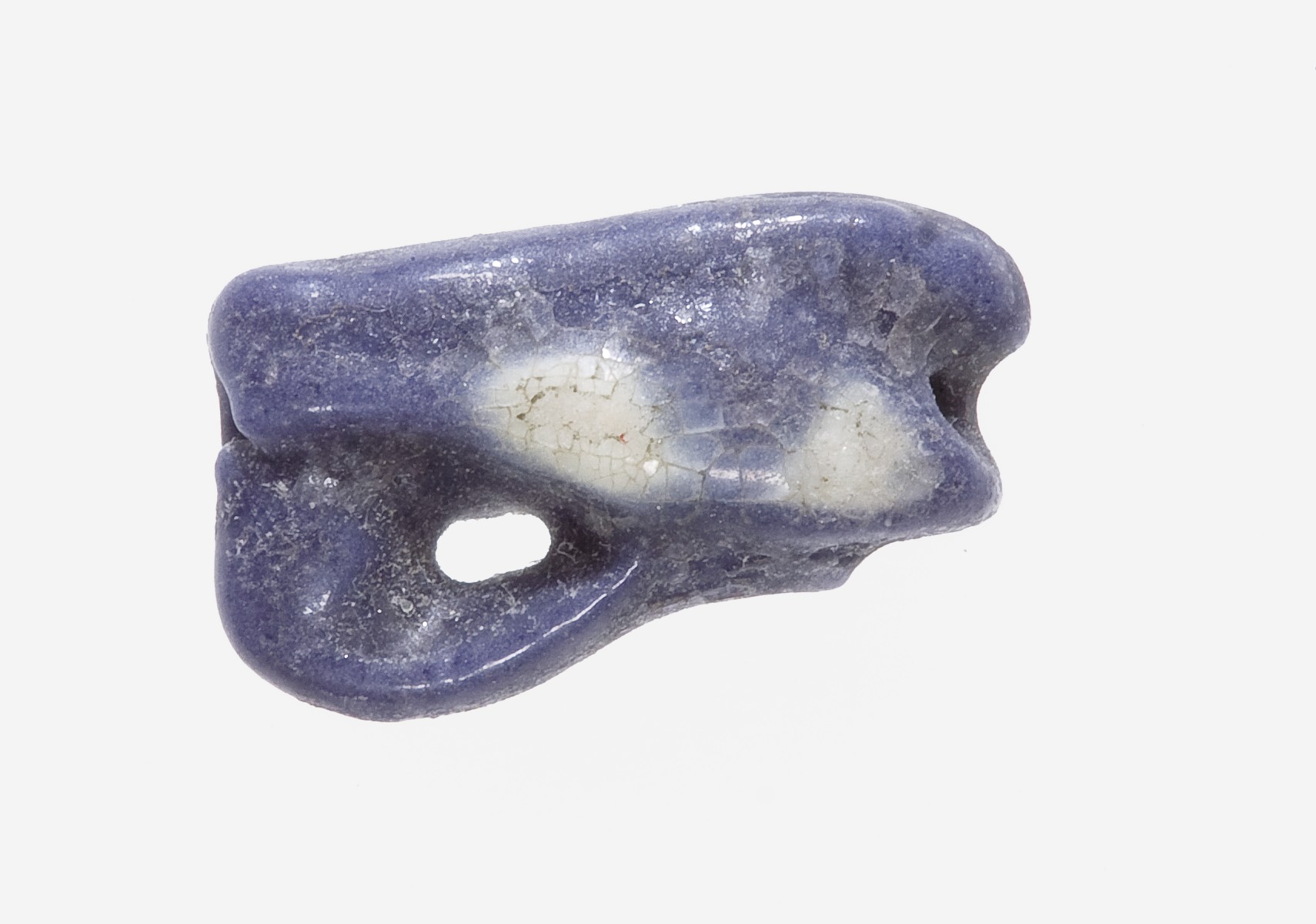
Heritage Analysis: The Sacred Eye Amulet
Symbolic Power and the Enduring Gaze
The Sacred Eye Amulet, rendered in violet and white faience, represents a profound synthesis of protective symbolism and aesthetic refinement. In ancient civilizations, particularly within the Nile Valley and Mesopotamian cultures, the eye motif—most famously the Eye of Horus or the wedjat—was not merely decorative but a potent talisman against malevolent forces. The violet hue, rare and labor-intensive to produce in antiquity, signified royalty, divinity, and spiritual transcendence, while white embodied purity, clarity, and the life-giving light of the sun. Together, these colors amplify the amulet’s core function: to guard the wearer from harm, restore wholeness, and channel cosmic energy. For Katherine Fashion Lab, this symbolic power offers a strategic foundation for a luxury narrative that transcends mere ornamentation, positioning the amulet as a conduit for personal empowerment and ancestral protection.
Historical Adornment and Material Significance
Faience, a non-clay ceramic material composed of crushed quartz or sand, was a hallmark of ancient craftsmanship, prized for its luminous, glass-like surface. The violet and white variant would have been achieved through metallic oxides—manganese or cobalt for violet, and tin or antimony for white—fired at high temperatures to create a durable, sacred object. Historically, such amulets were worn by pharaohs, priests, and elite members of society, often incorporated into funerary jewelry or daily adornment to ensure safe passage through life and the afterlife. The choice of faience over precious metals or gemstones underscores a philosophical commitment to symbolic value over material opulence; the amulet’s power derived from its form and color, not its monetary worth. For Katherine Fashion Lab, this historical context informs a high-end luxury strategy that privileges meaning over mass-market appeal. The medium of faience, with its ancient pedigree and sustainable composition, aligns with contemporary demands for ethical luxury, offering a tactile connection to a bygone era of artisanal excellence.
Spiritual Meaning and the Violet-White Dichotomy
The spiritual resonance of the Sacred Eye Amulet is deeply rooted in its chromatic duality. Violet, associated with the third eye chakra and higher consciousness in later esoteric traditions, was historically linked to the divine wisdom of gods like Thoth or Isis. White, conversely, symbolized the protective, maternal aspect of goddesses such as Neith or Hathor. In ancient Egyptian cosmology, the Eye of Horus was restored after a cosmic battle, representing healing, resurrection, and the cyclical nature of existence. The combination of violet and white thus embodies a synthesis of active protection and passive purification—a guardian that both sees and shields. For the modern wearer, this spiritual meaning translates into a talisman of resilience and clarity, offering a counterpoint to the chaos of contemporary life. Katherine Fashion Lab can leverage this spiritual depth to cultivate a clientele seeking authenticity and ritual in their luxury purchases, positioning the amulet as a daily meditation tool or a symbol of inner strength.
2026 High-End Luxury Strategy: The Amulet as Heritage Asset
To integrate the Sacred Eye Amulet into a 2026 high-end luxury strategy, Katherine Fashion Lab must adopt a multi-tiered approach that honors its heritage while appealing to discerning, culturally literate consumers. First, the amulet should be positioned as a limited-edition heritage artifact, with each piece accompanied by a provenance certificate detailing its ancient inspiration, material provenance, and symbolic significance. This narrative-driven marketing aligns with the luxury sector’s shift toward storytelling and experiential value, where the object’s history becomes a key differentiator from mass-produced goods.
Second, the violet and white faience medium offers a unique opportunity for sustainable luxury. By collaborating with contemporary artisans who replicate ancient faience techniques—using natural pigments and low-impact firing methods—Katherine Fashion Lab can appeal to eco-conscious high-net-worth individuals. This approach not only preserves traditional craftsmanship but also addresses the growing demand for transparency in luxury supply chains. The amulet’s material rarity, combined with its ethical production, justifies a premium price point that reflects both its historical value and modern relevance.
Third, the amulet should be integrated into a ritualistic product ecosystem. For example, a bespoke service could include a “sacred activation” ceremony, where the amulet is blessed or charged by a cultural historian or spiritual practitioner. This experiential layer transforms the purchase from a transaction into a transformative event, fostering deep brand loyalty. Additionally, the amulet could be offered as part of a capsule collection with complementary pieces—such as violet faience rings or white faience bracelets—that allow clients to build a personalized protective ensemble.
Fourth, the 2026 strategy must leverage digital heritage storytelling through immersive content. Virtual reality experiences that recreate ancient temples or workshops, combined with augmented reality try-ons, can engage a tech-savvy luxury audience while respecting the amulet’s sacred origins. Social media campaigns should highlight the amulet’s spiritual meaning, using micro-influencers in the wellness and fashion spaces to amplify its relevance. Keywords such as “ancient protection,” “violet faience,” and “sacred eye” should be optimized for search to capture niche interest among collectors and spiritual seekers.
Finally, pricing and distribution must reflect the amulet’s exclusivity. A limited run of 500 pieces, each numbered and housed in an archival box with a violet silk lining, would create scarcity and collector appeal. Retail partners should be carefully selected—only boutique luxury stores with a focus on heritage or wellness, or direct-to-consumer via a dedicated online platform. A pre-launch waitlist, offering early access to brand loyalists, can generate anticipation and social proof. The amulet’s price point should be set between $2,500 and $5,000, comparable to high-end fine jewelry but justified by its unique material and narrative.
Conclusion: The Amulet as a Luxury Paradigm
The Sacred Eye Amulet, in its violet and white faience form, is not merely a historical artifact but a blueprint for 2026 high-end luxury. Its symbolic power, historical adornment, and spiritual meaning offer a rich tapestry for narrative-driven branding, while its material and ethical dimensions align with contemporary luxury values. By positioning the amulet as a heritage asset, Katherine Fashion Lab can transcend seasonal trends, creating a timeless object that speaks to the human desire for protection, meaning, and beauty. In an era where luxury is increasingly defined by authenticity and purpose, the Sacred Eye Amulet stands as a testament to the enduring power of ancient wisdom—reimagined for the discerning modern collector.