Heritage Analysis: The American Memorial Brooch
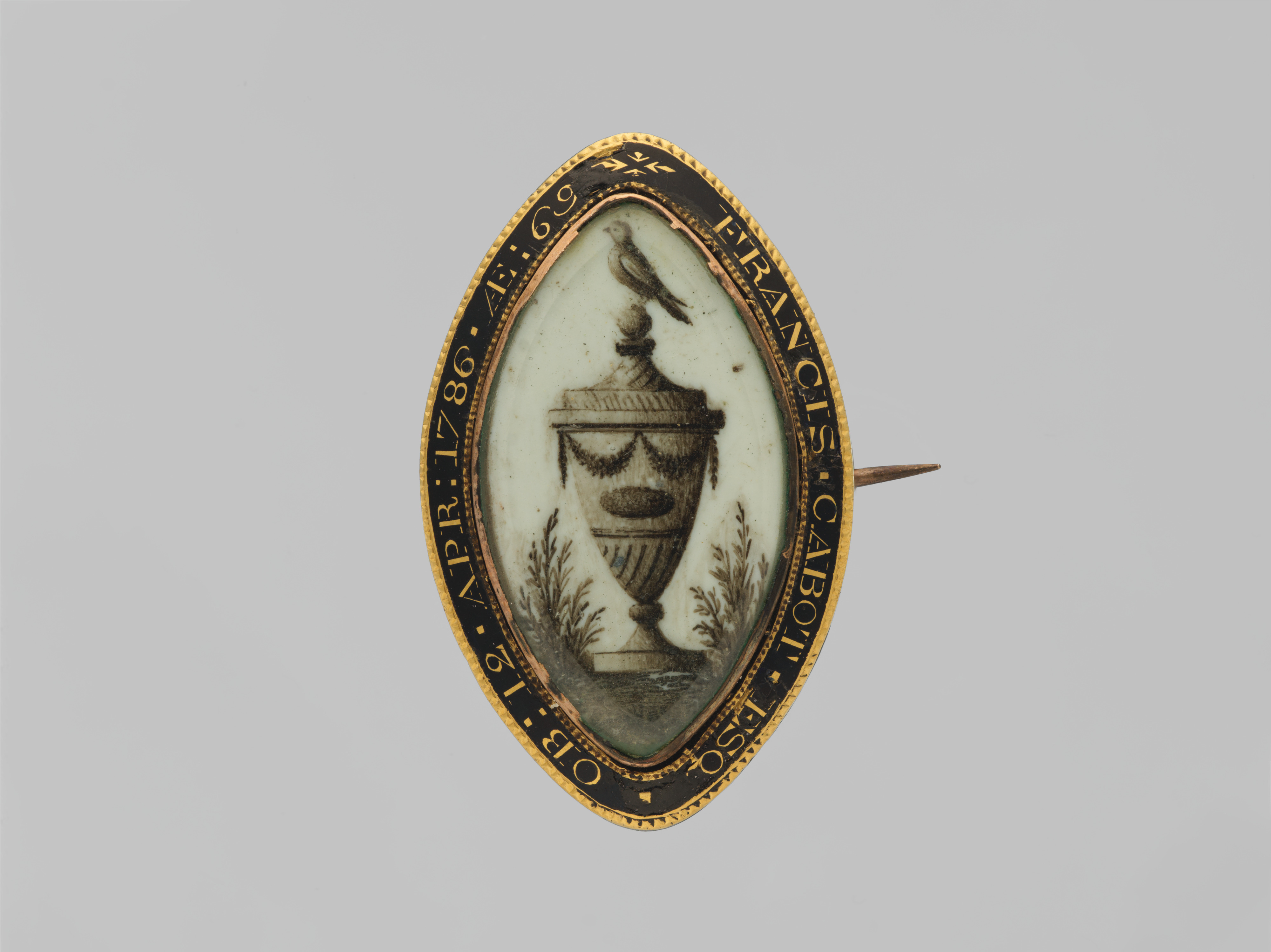
The Katherine Fashion Lab presents this strategic standalone research paper examining the American Memorial Brooch, an object of profound symbolic power and historical adornment. Crafted from watercolor on ivory, enamel, gold, copper, and beveled crystal, this piece embodies a unique intersection of personal grief, cultural memory, and artisanal luxury. This analysis deconstructs its heritage value, spiritual meaning, and proposes a 2026 high-end luxury strategy that leverages its narrative resonance for contemporary connoisseurs.
Historical Adornment and the American Context
The memorial brooch emerged as a distinct category of American jewelry during the 19th century, particularly following the Civil War. Unlike European mourning jewelry, which often emphasized elaborate black enamel and standardized motifs, the American tradition prioritized personalization and portraiture. The use of watercolor on ivory—a delicate, labor-intensive medium—signified both status and intimacy. The beveled crystal, acting as a protective lens, transformed the brooch into a wearable reliquary. This object was not merely decorative; it was a narrative device, worn close to the heart, serving as a tangible link to the departed. The combination of gold and copper, often gilded or chased, provided a durable yet precious frame, while enamel detailing—frequently in shades of black, white, or deep blue—conveyed the solemnity of remembrance. In the American context, such brooches were democratic in their emotional function but exclusive in their material execution, often commissioned by affluent families to commemorate a beloved patriarch, matriarch, or child lost to illness or war.
Symbolic Power and Spiritual Meaning
The symbolic architecture of this brooch is multilayered. The watercolor portrait captures the essence of the individual, not as an idealized icon but as a recognizable, mortal presence. This choice asserts the value of the individual life, a distinctly American and Protestant-influenced spiritual perspective. The beveled crystal creates a sacred space, separating the image from the wearer’s skin, yet allowing for intimate viewing. This act of looking inward—through the crystal—mirrors the spiritual practice of contemplation and memory. The enamel, often applied in funereal hues, symbolizes the permanence of loss, while the gold and copper represent the enduring value of the soul. Together, the materials create a dialectic: the fragility of life (ivory, watercolor) versus the permanence of memory (metal, crystal). This brooch is, in essence, a portable shrine. It holds spiritual meaning as a talisman against forgetting, a tool for ancestor veneration, and a declaration that the deceased continues to exist within the living community. The wearer, by displaying the brooch, performs a public act of devotion, asserting that grief is not private but a shared cultural experience.
Materiality as a Luxury Marker
From a luxury strategy perspective, the material composition of this brooch is critical. Watercolor on ivory is now largely prohibited due to conservation and ethical concerns, rendering such pieces irreplaceable artifacts. Hand-painted enamel requires master-level skill, with each firing risking failure. Beveled crystal cut to precise dimensions demands optical-grade craftsmanship. These are not mass-producible elements; they are the hallmarks of bespoke, artisanal luxury. The gold and copper base, often hand-fabricated, speaks to a pre-industrial era of jewelry making where the jeweler was also a sculptor and painter. For the 2026 high-end consumer, this material authenticity offers a powerful counter-narrative to the disposable, logo-driven luxury of the past decade. The brooch’s value is not in its weight or carat count, but in the labor, skill, and narrative embedded within each component. This aligns with the emerging luxury paradigm of “slow luxury” and “material storytelling,” where provenance and craftsmanship supersede ostentation.
2026 High-End Luxury Strategy: The Memorial Brooch as a Contemporary Archetype
To translate this heritage object into a viable 2026 luxury strategy, Katherine Fashion Lab proposes a three-pillar approach: Narrative Revival, Ethical Material Alchemy, and Experiential Commissioning.
Narrative Revival involves repositioning the memorial brooch not as a relic of death, but as an object of living memory. The 2026 luxury consumer—particularly Gen X and older Millennials—seeks objects that anchor identity in an era of digital ephemerality. A brooch worn to honor a living parent, a beloved mentor, or a transformative life event (a birth, a marriage, a career milestone) reframes the object from mourning to celebration of legacy. The brand should market this as “The Legacy Locket” or “The Portrait Pendant,” emphasizing continuity rather than loss. The spiritual meaning shifts from grief to gratitude, making the piece more accessible to a broader audience.
Ethical Material Alchemy addresses the ivory prohibition. The 2026 strategy must substitute watercolor on ivory with ethical alternatives: hand-painted miniature portraits on reconstituted stone, vitreous enamel on fine silver, or hypoallergenic ceramic. The beveled crystal can be replaced with lab-grown sapphire crystal or optical-grade borosilicate glass, offering superior clarity and durability. Gold and copper can be sourced from 100% recycled, certified supply chains. This transformation honors the original aesthetic while meeting contemporary ethical standards, thus appealing to the conscientious luxury buyer. The brand should commission master miniaturists—artists trained in botanical illustration or portrait painting—to execute each piece, ensuring each brooch is a unique work of art.
Experiential Commissioning is the final pillar. The purchase of a memorial brooch should be a curated, immersive process. Clients would visit a private atelier or engage via a secure digital portal to commission a portrait. The process includes a “Memory Mapping” session—a guided conversation with a brand historian to select symbolic enamel colors, metal finishes, and gemstone accents (e.g., a tiny pearl for purity, a garnet for enduring love). The finished piece is delivered with a leather-bound journal containing the watercolorist’s sketches and a written history of the symbolic choices. This transforms a brooch into a heirloom in process, not a static object. The 2026 price point for such a commission should be positioned at $15,000–$50,000, reflecting the intensive labor, narrative depth, and ethical sourcing. This is not jewelry; it is wearable biography.
Conclusion
The American Memorial Brooch, with its watercolor-on-ivory intimacy and protective crystal, offers Katherine Fashion Lab a profound template for 2026 luxury. Its symbolic power—as a shrine to memory, a testament to individual worth, and a masterpiece of material storytelling—resonates deeply with the contemporary desire for authenticity, ethics, and emotional resonance. By reviving its narrative, alchemizing its materials ethically, and commissioning each piece as an experiential journey, this heritage object can be reborn as a cornerstone of high-end luxury strategy. The brooch is not a relic of the past; it is a blueprint for the future of meaningful adornment.