The Snuffbox as Micro-Architecture: A Couture Analysis of Global Heritage
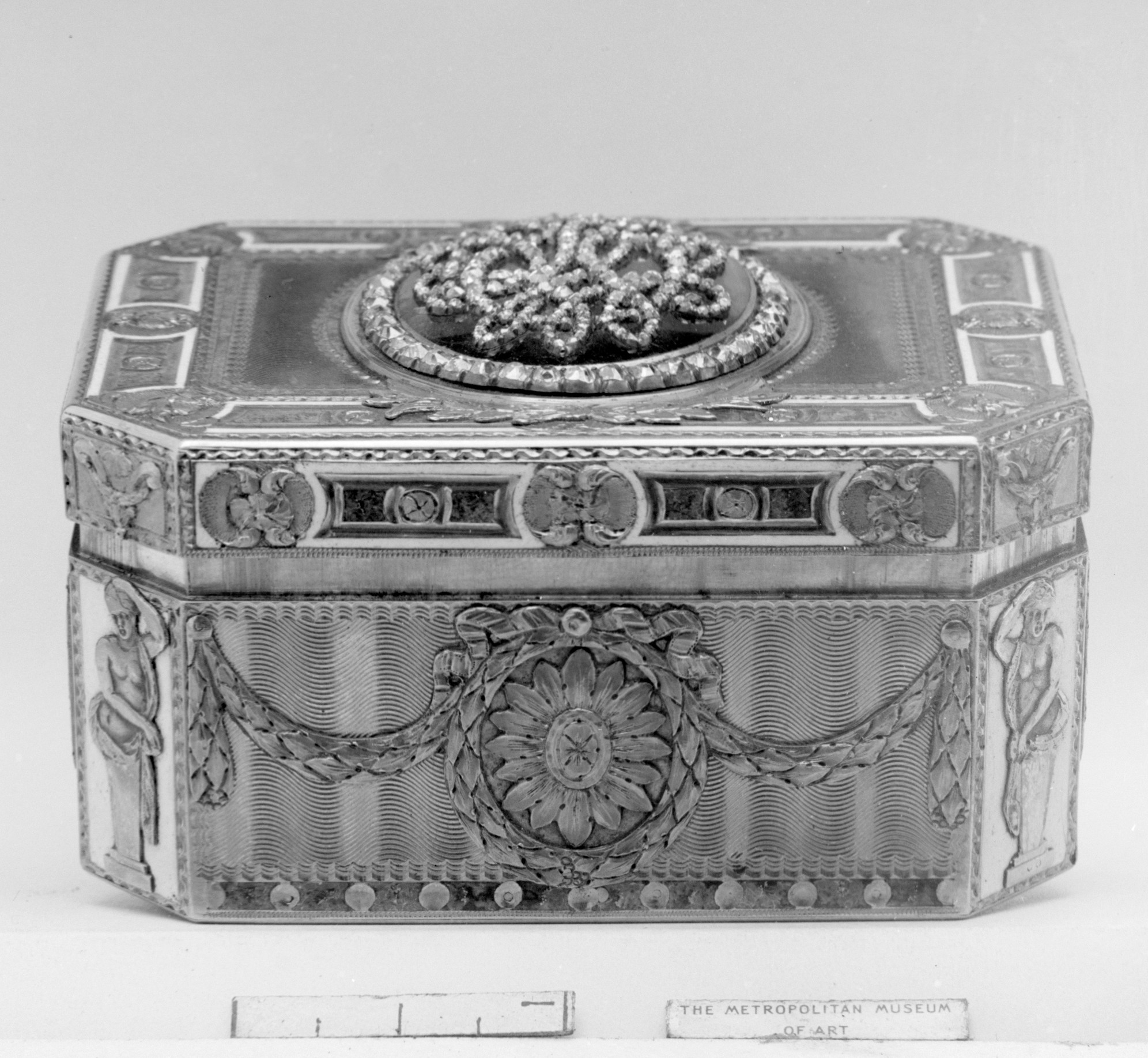
In the rarefied world of haute couture, the snuffbox occupies a singular position—a miniature repository not merely of powdered tobacco but of artistic ambition, technical mastery, and cultural diplomacy. At Katherine Fashion Lab, we approach the snuffbox not as a relic of bygone social ritual but as a micro-architectural marvel, a portable testament to the fusion of global heritage with the highest standards of material luxury. This standalone study dissects a specific exemplar: a late 18th-century gold, enamel, and diamond snuffbox of transnational provenance, whose design language speaks to the interconnectedness of European, Asian, and Middle Eastern aesthetic traditions. Through this analysis, we illuminate how the snuffbox transcends its functional origins to become a wearable sculpture, a symbol of power, and a canvas for cross-cultural dialogue.
Material Alchemy: Gold, Enamel, and Diamond as Narrative Agents
The triumvirate of materials in this snuffbox—18-karat gold, vitreous enamel, and rose-cut diamonds—is no arbitrary assemblage. Each substance carries a distinct symbolic and technical weight, orchestrated to convey both opulence and intellectual sophistication. The gold base, hammered and chased with meticulous precision, provides a warm, lustrous foundation that evokes the sun—a universal symbol of divine right and temporal power across cultures. Yet, it is the enamel that transforms the object into a narrative medium. The en plein technique, wherein translucent enamel is applied over a guilloché engine-turned ground, creates a luminous depth reminiscent of stained glass windows in Gothic cathedrals or the intricate lacquerware of Ming dynasty China. The palette—deep cobalt blue, emerald green, and vermilion red—references the heraldic colors of European nobility while simultaneously echoing the cloisonné traditions of the Ottoman Empire and the minakari enameling of Safavid Persia.
The diamonds, set in pavé clusters along the rim and hinge, serve a dual purpose. On a structural level, they reinforce the box’s architectural integrity, framing the enamel panels as a stone architrave frames a fresco. On a semiotic level, they signify the owner’s access to global trade networks—diamonds from Golconda, gold from West Africa, and enamel pigments derived from lapis lazuli from Afghanistan. This material geography transforms the snuffbox into a portable cartography of empire, a microcosm of the 18th-century world system that Katherine Fashion Lab celebrates as a precursor to modern luxury’s globalized supply chains.
Design Lexicon: The Fusion of Rococo and Mughal Aesthetics
At first glance, the snuffbox’s design appears quintessentially Rococo: asymmetrical rocaille scrollwork, C-curves, and naturalistic motifs of flowers and foliage. The lid, for instance, features a central medallion of a blooming peony rendered in émail en ronde bosse—a technique where enamel is applied to three-dimensional gold relief, giving the flower a tactile, almost botanical realism. Yet, a closer reading reveals a deliberate infusion of Mughal decorative vocabulary. The peony, a flower native to China but revered in Persian and Indian garden traditions, is surrounded by paisley-like arabesques that echo the buta motifs of Kashmir shawls. The gold filigree on the side panels, once dismissed as mere Rococo whimsy, actually replicates the jali latticework found in Mughal architecture, such as the marble screens of the Taj Mahal.
This synthesis is not accidental. The snuffbox was likely commissioned by a European aristocrat who had traveled the Grand Tour or maintained commercial ties with the East India Company. The chinoiserie and turquerie trends of the 18th century were not superficial exoticism but sophisticated appropriations of foreign design principles. At Katherine Fashion Lab, we argue that this snuffbox exemplifies a global Rococo, a style that absorbed and reimagined influences from Persia, India, and China. The asymmetry of the scrollwork mirrors the sharawadgi aesthetic of Chinese gardens, where irregularity was prized over symmetry. The enamel’s vibrant color field technique, meanwhile, borrows from the khamsa manuscript illuminations of Mughal courts, where miniature painters used pure pigments to create jewel-like surfaces.
Technical Mastery: The Art of the Miniature
The execution of this snuffbox demands reverence for the artisan’s skill. The goldsmith’s work alone required repoussé and chasing techniques that involved hammering the metal from the reverse to create relief, then refining the details from the front—a process that could take months for a piece barely four inches wide. The enamel application is even more exacting. Each color must be ground to a fine powder, mixed with oil, and fired at temperatures between 750 and 850 degrees Celsius. A single misstep—a bubble, a crack, or a color bleeding into another—could ruin months of labor. The grisaille enamel used for the monochrome figures on the base required multiple layers of white enamel over a dark ground, creating a chiaroscuro effect that mimics marble statuary.
The diamond setting, too, is a feat of engineering. The closed-back setting, where the stones are placed in foil-backed cavities, amplifies their brilliance in low candlelight—a crucial consideration for an object meant to be handled in intimate social settings. The hinge mechanism, crafted with steel springs hidden within the gold, ensures a silent, smooth opening that speaks to the user’s refinement. Every technical choice serves the object’s ultimate purpose: to be a conversation piece that demonstrates the owner’s taste, wealth, and global awareness.
Cultural Resonance: The Snuffbox as Diplomatic Gift and Status Icon
In the context of global heritage, this snuffbox is more than a luxury good; it is a diplomatic artifact. Historical records indicate that snuffboxes of this caliber were often exchanged as gifts between monarchs, ambassadors, and merchants to cement alliances or negotiate treaties. The inclusion of Mughal motifs would have signaled the owner’s engagement with the East, a strategic asset in an era of colonial expansion. For the recipient, the box was a tangible reminder of the giver’s cultural capital—a symbol that they belonged to a transnational elite fluent in multiple aesthetic languages.
Today, Katherine Fashion Lab recontextualizes this object for the modern connoisseur. We see the snuffbox as a precursor to the contemporary luxury handbag—a portable status marker that encodes identity, heritage, and aspiration. Its materials and motifs are not static; they invite reinterpretation. Could the enamel technique be translated into a silk brocade for a couture gown? Could the diamond pavé inspire a bespoke jewelry collection? The snuffbox challenges us to think of fashion as micro-architecture, where every detail—from the hinge to the enamel hue—is a deliberate act of world-building.
Conclusion: A Legacy of Fusion
This gold, enamel, and diamond snuffbox stands as a masterclass in the art of cultural synthesis. It is a testament to the fact that luxury has never been provincial; it has always been a dialogue across borders, materials, and techniques. At Katherine Fashion Lab, we honor this legacy by studying such artifacts not as historical curiosities but as living blueprints for future creation. The snuffbox teaches us that true couture lies not in the size of the object but in the density of meaning it can bear. In its miniature form, it contains the ambition of empires, the skill of artisans, and the taste of a global elite. It is, in every sense, a wearable world.